Nana Banana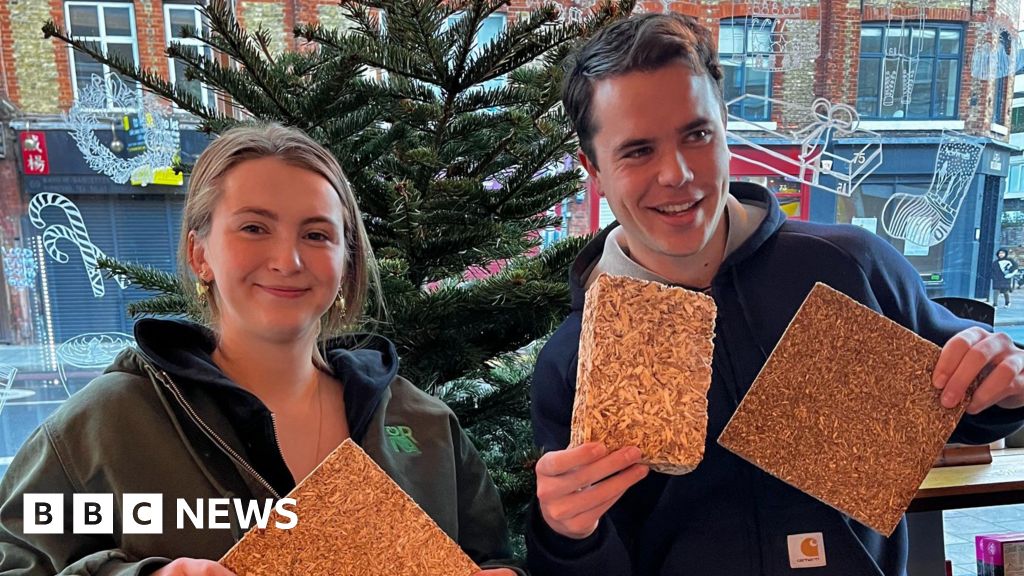
However, amidst this challenge, a vibrant landscape of innovative schemes is emerging across London, offering residents more environmentally conscious alternatives to simply throwing their trees away. These initiatives are not just about disposal; they are about reimagining the lifecycle of the festive fir, giving it a renewed purpose and significantly reducing waste.
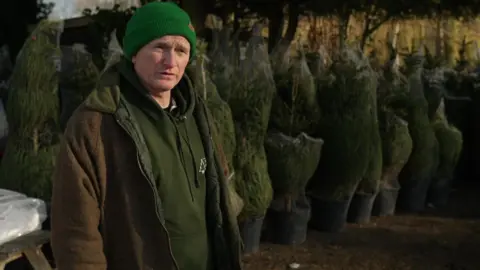
One particularly popular and growing option gaining traction is the concept of renting a living Christmas tree instead of purchasing a cut one destined for eventual discard. Leading this charge in the capital is London Christmas Tree Rental, a company founded on the simple yet powerful premise of reuse. All the trees offered by the service are carefully potted, nurtured, and returned after the festive season to be grown on at a dedicated farm, ready to grace homes again the following year.
"Just simply, rent, water, return," explains Jonathan Mearns, the visionary founder of London Christmas Tree Rental, from one of his bustling London hubs. He emphasizes the straightforward nature of the process, designed to be as convenient as it is eco-friendly for busy city dwellers. "You can rent via our website, pick your dates, come along to one of the hubs to choose your tree, water it, bring it back, and then it grows on." The operational model is elegant in its simplicity: customers select their tree from one of four strategically located hubs across London, including a popular spot in Dulwich, south-east London. They enjoy the tree throughout December, ensuring it’s well-watered to maintain its vitality, and then return it post-Christmas. From these hubs, the trees embark on a journey back to a sprawling farm where they are cared for, allowed to recuperate, and continue their growth cycle until the next festive season.
The beauty of this model lies not only in its environmental benefits but also in the unique bond it fosters between the tree and its temporary custodians. Many customers cherish the opportunity to be reunited with the very same tree year after year, witnessing its subtle growth and development. "Sometimes people come back and say, ‘is that really my tree?’" Mearns recounts with a smile, highlighting the personal connection forged. "We get pictures and we’ll compare, and they’ll say actually it is, it’s just grown a little bit, so people love it." This continuity adds a layer of sentimentality to the sustainable choice, transforming a transient decoration into a cherished, growing part of family traditions. A satisfied customer, interviewed by BBC London at a collection point, shared their enthusiasm: "We’ve been doing it about four years now. I just like the idea, it’s more environmentally friendly." This sentiment resonates with a growing number of Londoners seeking to align their holiday celebrations with their environmental values. The logistical challenge of managing thousands of potted trees, ensuring their health, and coordinating pickups and returns is significant, but Mearns’ team has honed the process, making it a seamless experience for customers and a viable solution for urban sustainability.
While some trees are enjoying a longer lifespan through rental, others, having fulfilled their purpose as cut trees, are finding an entirely new lease of life through pioneering repurposing initiatives. In Peckham, another vibrant corner of south-east London, The ORNA Group is at the forefront of this transformation, dedicated to converting discarded Christmas trees into valuable construction materials. This innovative approach addresses the waste problem head-on, transforming what was once seen as refuse into a resource.
Hugo Knox, one of ORNA Group’s co-founders, shares the origin story of this ingenious venture, which began with a very hands-on encounter with Christmas tree waste. "Back in November 2019, I left my first job coming out of university," he recalls. "I rang up one of my close friends, Max. I said, look, ‘it’s Christmas, Christmas trees, shall we give it a go?’" What started as a modest, door-to-door operation selling trees and offering installation services in Camberwell quickly blossomed into a seasonal business. This direct experience on the streets of London provided Knox with an invaluable, albeit stark, insight into the sheer volume of post-Christmas tree waste. "But from that I learned a lot about Christmas tree waste and saw all of the waste first-hand in the streets of London, and that’s what led to ORNA Group," he explains. The problem was undeniable, and the entrepreneurial spirit ignited a search for a solution beyond mere disposal.
The environmental impact of discarded trees, particularly those sent to landfill, is indeed significant, a point underscored by expert analysis from organizations like the Carbon Trust. Their research indicates that, on average, a real Christmas tree produces approximately 3.5kg of carbon dioxide emissions over its lifetime. However, a 2m tree that is unceremoniously sent to landfill, where it decomposes anaerobically (without oxygen), can have a substantially larger carbon footprint, soaring to an estimated 16kg. This is primarily due to the production of methane, a potent greenhouse gas, during anaerobic decomposition. The Carbon Trust further advises that an artificial tree, if used consistently over several years, generally results in lower overall emission levels compared to buying a new cut tree each year, highlighting the complexities of sustainable choices.
Understanding these figures reinforces the critical importance of effective recycling schemes. Thankfully, most London boroughs have established robust programs where residents can ensure their real trees are collected and recycled, diverting them from landfill. Comprehensive information on specific council schemes, including designated collection days and drop-off points, is readily available through resources like London Recycles, encouraging widespread participation in responsible tree disposal.
At the heart of ORNA Group’s innovation is their workshop, where collected trees undergo a fascinating metamorphosis. Here, real trees, meticulously gathered from homes and businesses across London, are first chipped down into smaller, manageable fragments. These wood shavings are then skillfully combined with natural binders, forming the basis for entirely new, sustainable construction materials. This process not only prevents waste but also creates a valuable product.
Caelo Dineen Vanstone, a material scientist and another co-founder of the start-up, elaborates on the intricate process. "When it arrives here, it’s mostly unprocessed," she explains, gesturing around the busy workshop. "The trees have come straight out of houses or businesses in different forms, but it comes here chipped up into the right consistency." The transformation begins with the raw, chipped material. Dineen Vanstone describes a sophisticated process involving the "cooking and modifying natural ingredients before combining them with the tree waste to create a homogenous wet material." This carefully formulated mixture is then likely pressed and dried, yielding durable, eco-friendly panels or other construction components. The scientific ingenuity lies in selecting the right natural binders that effectively bond the wood fibres, creating a stable material with desirable properties like insulation or sound absorption, offering a green alternative to traditional, often energy-intensive building materials.
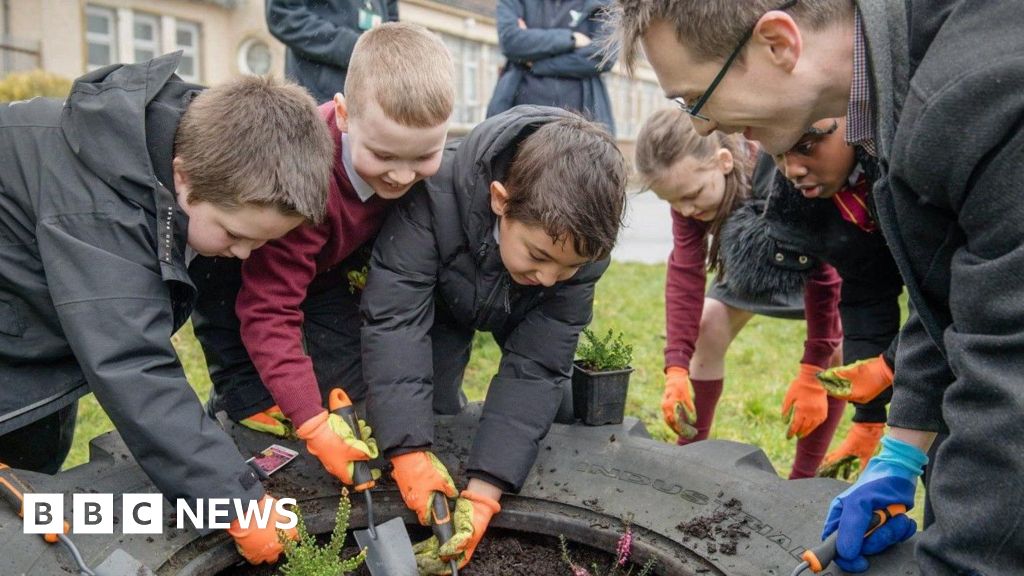
Beyond the technical innovation, ORNA Group is also deeply committed to community engagement, particularly with young people. The project actively works with youth, demonstrating how seemingly small, individual actions can collectively contribute to a much larger positive impact on the environment. "We’re not trying to change the world quite yet," Dineen Vanstone says with a thoughtful expression, encapsulating the group’s grounded philosophy. "But it’s just about trying to make our street corner a little bit nicer and trying to do something positive rather than doing something that’s going to impact our future generations in a negative way." This localized approach, focusing on tangible change within the immediate community, serves as a powerful model for inspiring broader environmental stewardship. It’s about empowering the next generation with practical examples of sustainability and showing them that innovation can turn waste into worth.
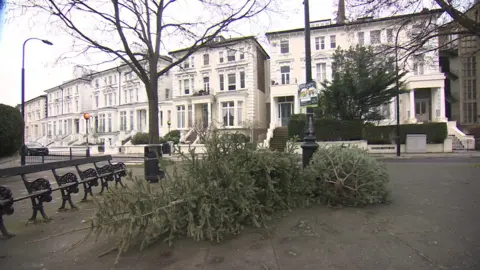
The transformation of London’s post-Christmas landscape, from a scene of waste to one of opportunity, is a testament to the ingenuity and commitment of individuals and businesses. Whether through the cyclical life of a rented tree or the pioneering repurposing into building materials, these initiatives are not just cleaning up after the holidays; they are fundamentally reshaping our relationship with natural resources and paving the way for a more sustainable urban future. As London continues to grow, such innovative approaches will be crucial in ensuring that its festive spirit leaves behind a positive legacy, rather than an ecological burden.

 George Anjay
 Ramos Leo
 Nakalama John