George Anjay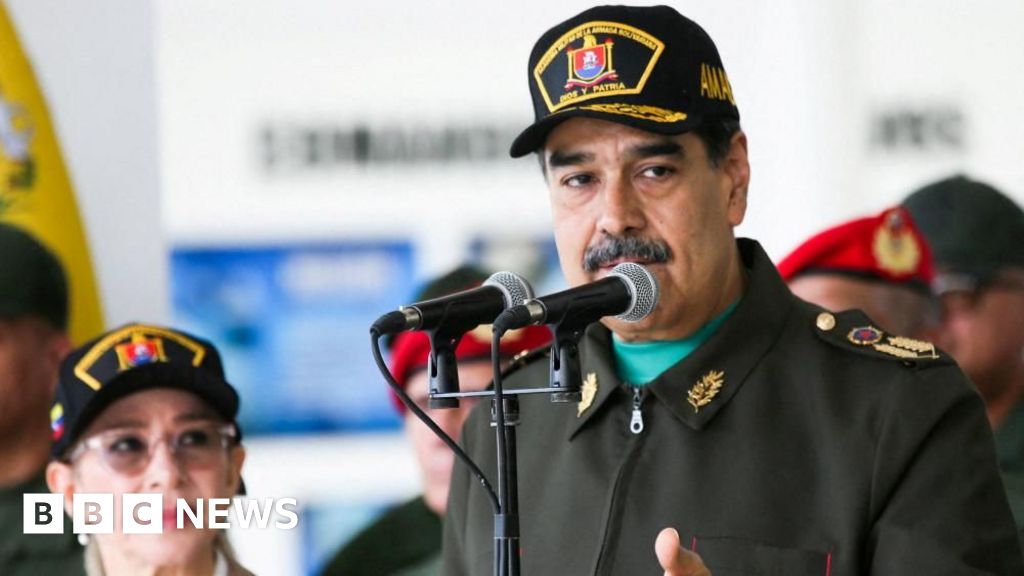
Venezuelan President Nicolás Maduro has signaled a potential shift in diplomatic engagement, stating on Thursday that he is open to dialogue with the United States concerning drug trafficking and oil, a notable overture following weeks of intensified pressure from the Trump administration. In an interview broadcast on Venezuelan state television, Maduro declared his readiness for discussions with the U.S. "wherever they want and whenever they want," a broad invitation that leaves the specifics of any future negotiations open-ended. However, he notably sidestepped a direct question regarding President Donald Trump’s assertion that the U.S. had conducted a strike on a docking facility within Venezuela, an alleged operation by the CIA that, if confirmed, would mark the first known U.S. military action on Venezuelan soil.
This conciliatory stance from Maduro emerges against a backdrop of escalating U.S. military operations in the Caribbean and eastern Pacific. For the past three months, U.S. forces have been actively targeting vessels suspected of narcotics smuggling. These interdiction efforts have culminated in over 30 strikes on boats, resulting in the deaths of more than 110 individuals since the U.S. initiated its first strike on a vessel in international waters on September 2nd. The most recent reported strike occurred on Wednesday, when two boats allegedly carrying drugs were hit, leading to the deaths of five individuals on board, according to statements from the U.S. military.
The specific incident involving the "dock area" was publicly disclosed by President Trump on Monday, who described a "major explosion" following a U.S. strike on a location linked to alleged Venezuelan drug boats. Reports from CNN and the New York Times, citing sources close to the matter, indicated that the blast was the result of a CIA drone strike, a development that would signify a significant escalation in U.S. covert operations within Venezuela. Yet, during his interview, Maduro remained deliberately vague when pressed about the veracity of this attack, stating that it was "something we could talk about in a few days."
Beyond the critical issue of drug trafficking, Maduro also expressed his openness to discussions on oil and migration, two other areas of significant contention between the two nations. The Trump administration has, in recent months, placed a strong emphasis on combating the influx of illicit drugs, particularly fentanyl and cocaine, into the United States. This focus has been accompanied by concrete actions, including a doubling of the reward for information leading to Maduro’s capture and the announcement of plans to designate the Maduro government as a Foreign Terrorist Organization (FTO).
Maduro, however, has consistently refuted claims of his involvement in drug cartels, instead accusing the U.S. of leveraging its "war on drugs" as a pretext to orchestrate his removal from power and to gain access to Venezuela’s substantial oil reserves. Counter-narcotics experts, however, offer a more nuanced perspective, suggesting that Venezuela plays a relatively minor role in the global drug trade, primarily serving as a transit country for narcotics produced elsewhere. While its neighbor, Colombia, remains the world’s foremost producer of cocaine, the majority of these drugs are believed to reach the U.S. through alternative routes, bypassing Venezuela.
Adding another layer to the complex relationship, President Trump has, without presenting concrete evidence, accused Maduro of deliberately exacerbating the U.S. immigration crisis by "emptying his prisons and insane asylums" and forcing inmates to migrate to the United States. This accusation comes amidst a severe economic crisis and widespread repression in Venezuela, which has prompted an estimated eight million Venezuelans to flee the country since 2013, with a significant number heading towards the U.S.
The U.S. has also intensified its efforts to curb oil exports from Venezuela through sanctions, targeting oil tankers entering and leaving the country. A notable incident occurred on December 10th when U.S. forces seized an oil tanker off the Venezuelan coast, alleging it was used to transport sanctioned oil from both Venezuela and Iran. Venezuela vehemently condemned this action as an act of "international piracy." Since that seizure, the U.S. has intercepted another oil tanker and pursued a third, underscoring its commitment to enforcing sanctions on Venezuela’s crucial oil sector.
The Trump administration has characterized its operations against alleged drug boats as part of a non-international armed conflict against suspected traffickers. However, legal experts have raised concerns that these actions may contravene established international laws governing armed conflict. The U.S. has not provided public evidence to substantiate claims that the targeted vessels were indeed carrying drugs. Nevertheless, the U.S. Southern Command has maintained its position, asserting that "intelligence confirmed the vessels were transiting along known narco-trafficking routes and engaged in narco-trafficking," thereby justifying its aggressive interdiction campaign. Maduro’s overture for dialogue, therefore, presents a potential opening for de-escalation and negotiation on these multifaceted issues, though the path forward remains uncertain given the history of strained relations and differing narratives.


 Ramos Leo
 Roy Suryo
 atisusanti
 Nakalama John