 Nana Banana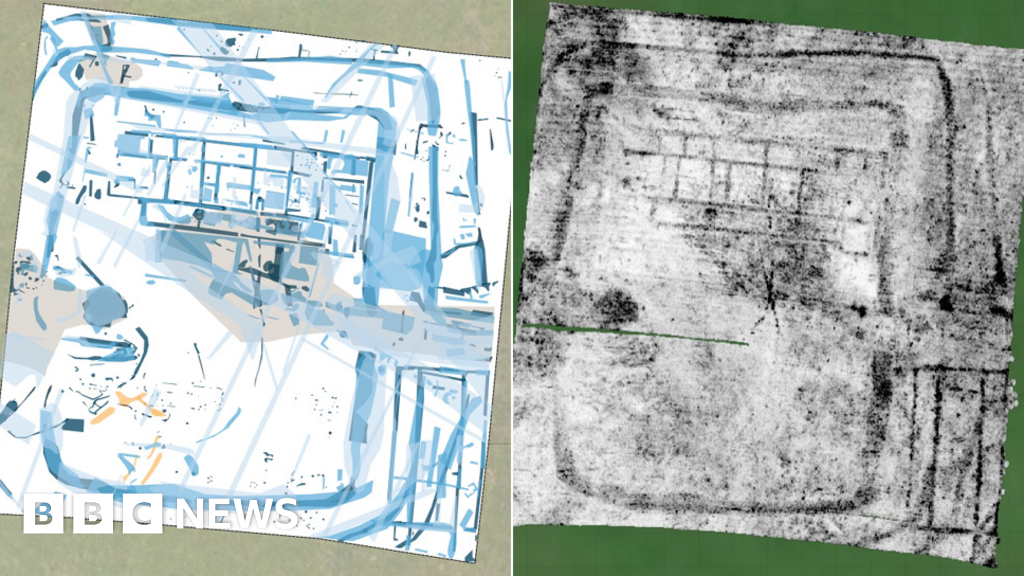
Archaeologists have unearthed what is being hailed as the largest Roman villa ever discovered in Wales, a truly "amazing discovery" that experts believe holds the potential to be a regional equivalent of "Port Talbot’s Pompeii." The dramatic revelation, made beneath the tranquil expanse of Margam Country Park, has sent ripples of excitement through the archaeological community and promises to fundamentally reshape understanding of Roman Britain’s western frontier.
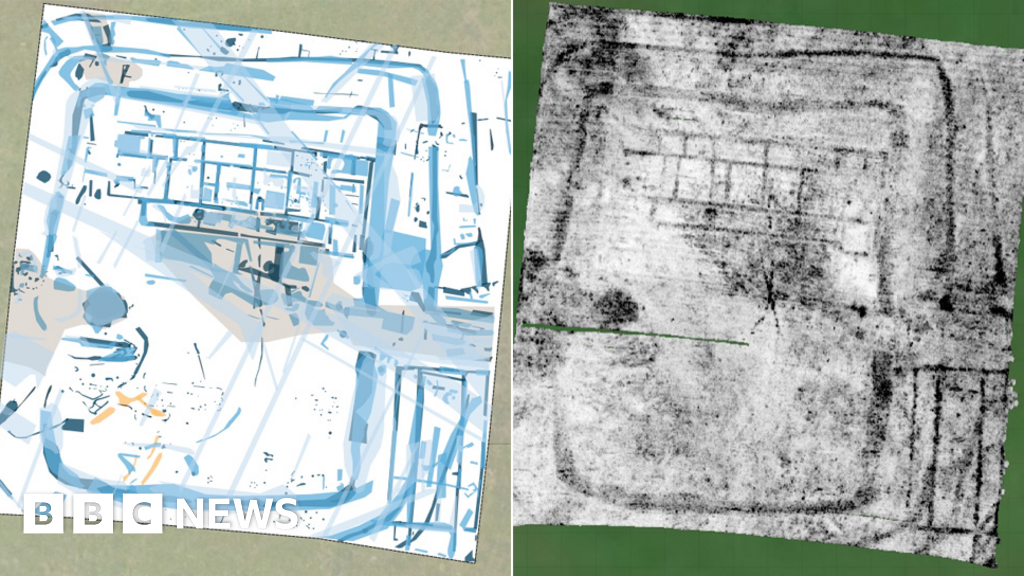
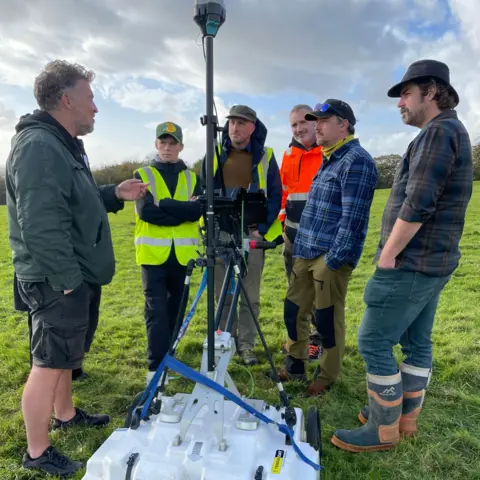
The initial moment of discovery was one of pure astonishment, as described by project lead Dr. Alex Langlands, co-director of Swansea University’s Centre for Heritage Research and Training. "My eyes nearly popped out of my skull," he recounted, reflecting on the moment ground-penetrating radar (GPR) scans first revealed the unmistakable outline of a vast, intricate structure hidden just beneath the surface. This cutting-edge geophysical survey technique, which sends radar pulses into the ground and measures the reflected signals, allowed the team to map subterranean features without disturbing the soil, providing a remarkably clear picture of the buried architecture.
What makes this particular find so extraordinary, and indeed warrants the comparison to the famously preserved Roman city of Pompeii, is its location. Margam Country Park, a historical deer park for centuries, has remained largely untouched by the destructive forces of modern agriculture and construction. Unlike many other Roman sites across Britain that have suffered degradation from repeated ploughing, or have been built over, the villa’s remains are believed to be exceptionally well-preserved, lying less than a metre below the ground. This pristine state offers an unparalleled opportunity for future excavation and study, promising a wealth of information about Roman life, architecture, and administration in Wales.
The collaborative effort behind this groundbreaking discovery involved a consortium of dedicated partners, including Swansea University, Neath Port Talbot Council, and Margam Abbey Church. Together, they have expressed immense enthusiasm, stating that the find offers "unparalleled information about Wales’ national story." The initial findings were shared exclusively with BBC News, ahead of a wider public announcement, underscoring the significance and widespread interest in this monumental archaeological event.
The journey to this discovery began with geophysical surveys commissioned as part of a broader "ArchaeoMargam" project. This initiative, funded by the UK government, aimed not only to uncover hidden heritage but also to engage local school pupils and the wider community in learning about the area’s rich history. Utilising sophisticated scanning devices, the team meticulously mapped potential archaeological features lurking underground. It was during this systematic survey that they "struck gold," uncovering the precise footprint of a monumental 572 square metre Roman villa, further enhanced by surrounding fortifications.
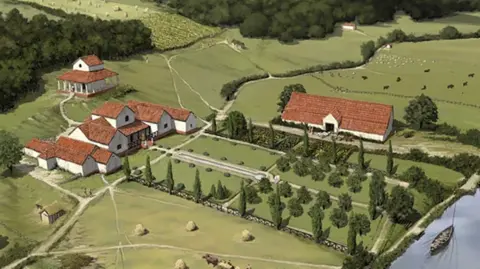
Dr. Langlands offered a detailed preliminary description of the unearthed structure. He characterised it as a "really impressive and prestigious" building, indicative of considerable wealth and status. Based on the GPR data, it appears to be a "corridor villa," a common type of Roman villa featuring a long corridor or veranda running along one side, connecting various rooms. This particular example boasts two distinct wings and a veranda spanning its front, extending approximately 43 metres (141 feet) in length. The internal layout appears to include six primary rooms facing the front, with two corridors leading to a further eight rooms at the rear. Such an elaborate design strongly suggests that the villa was once the residence of a major local dignitary, a person of considerable influence and power within the Roman provincial administration. "This would have been quite a busy place," Langlands elaborated, envisioning it as the nerve centre of a substantial agricultural estate, a hub of activity with numerous people coming and going daily. The sheer scale and sophistication hint at finely decorated interiors, possibly adorned with statues, frescoes, and elaborate mosaic floors – features typically associated with high-status Roman residences.
The Margam villa’s significance is amplified by its context within Welsh Roman archaeology. While Wales boasts numerous known Roman remains, the vast majority are military camps and forts, reflecting Rome’s initial conquest and control of the indigenous tribes. Grandiose civilian estates like the Margam villa are far less commonly found. As a standalone structure, it now stands as the largest villa yet discovered in Wales, a fact that will compel experts to "rewrite the way we think about south Wales in the Romano-British period," according to Langlands. This challenges the long-held perception of this part of Wales as merely a "borderland" or the "edge of empire." Instead, the discovery suggests that the region hosted buildings and communities as sophisticated and high-status as those found in the agricultural heartlands of southern England. It also reinforces the historical importance of Margam itself, a place that may even have lent its name to the historic region of Glamorgan, positioning it as one of the most important centres of power in ancient Wales.

Christian Bird of TerraDat, the Welsh firm responsible for conducting the geophysical surveys, corroborated the exceptional quality of the findings. He noted that the images were "remarkably clear, identifying and mapping in 3D the villa structure, surrounding ditches and wider layout of the site." Beyond the main villa, the scans also revealed a substantial 354 square metre aisled building situated to the south-east. The archaeological team speculates that this ancillary structure served either as a large barn for agricultural storage or as a communal meeting hall, further indicating the self-sufficient and administrative nature of the estate. The presence of a defensive enclosure around the villa complex also suggests a degree of security consciousness, perhaps reflecting the turbulent nature of the Roman frontier or the need to protect valuable assets.
To safeguard this invaluable heritage, the villa’s precise location is being kept under wraps for the time being, a necessary precaution against the threat of rogue metal detectorists and illegal artefact hunting. Dr. Langlands stressed that the immediate priority is conserving the site, ensuring its long-term protection. This will be followed by further detailed survey work and, crucially, the securing of funding for future excavation. It is in this context that Langlands’ "Port Talbot’s Pompeii" analogy truly resonates. While some archaeologists might be wary of such comparisons, he believes it is justified due to the extraordinary levels of preservation indicated by the survey data. The fact that the land has served as a deer park for hundreds of years means it has escaped the extensive damage inflicted by centuries of ploughing, which has often fragmented and obscured archaeological evidence at other villa sites. "There’s a really exciting prospect that we’ve got really good survival of archaeological evidence," he enthused, "and the potential therefore to tell a huge amount about what life was like back in the first, second, third, fourth and maybe even into the 5th Century." This offers an unprecedented window into the daily lives, economic activities, and cultural practices of Romano-British elites in a region previously thought to be less Romanized.
The broader implications of this find for the local community are significant. Further details of the team’s findings are set to be shared at an open day at Margam Abbey Church on 17 January, an event eagerly anticipated by locals. Margaret Jones, a retired teacher from Port Talbot with a deep-seated interest in local history, has already secured her ticket and voiced her profound excitement. "I’m still a bit shellshocked at the thought that this place where I played, where my children and grandchildren have played – that under our feet was this incredible house," she shared, her voice brimming with wonder. "It’s out of this world." She also highlighted the positive impact this discovery could have on Port Talbot, a town that has recently endured "so many disappointments," including major job losses at the local steelworks. "This will put us on the map… and we’ll be proud," she affirmed, articulating a sense of renewed hope and civic pride.
Harriet Eaton, the Heritage Education Officer for Neath Port Talbot Council, who also runs a Young Archaeologist Club, echoed this sentiment. She described the discovery as "just incredible" and "something we couldn’t dream of." Her vision includes future community excavations, providing hands-on opportunities for local residents to connect directly with the history unfolding beneath their feet, fostering a deeper appreciation for their shared heritage.
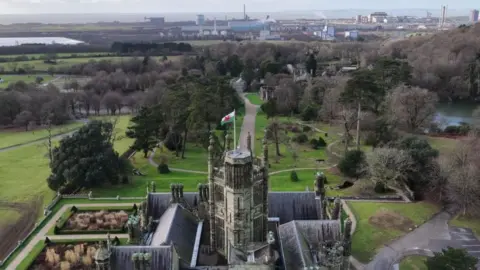
For Michael Wynne, the manager of Margam Country Park, which is owned and operated by the local council, the villa find represents a crucial missing piece of the historical puzzle. The park already boasts an impressive array of historical attractions, including an Iron Age hillfort, the ruins of a 12th-century abbey, and a magnificent Victorian castle. Yet, the Roman period had remained a relative enigma. "It’s a really unusual find this far west and of such a significant size – it will really add to our knowledge of Welsh and local history," Wynne stated. He anticipates that this remarkable discovery will not only enrich academic understanding but also serve as a powerful magnet for tourism, attracting "more visitors to Margam Park, to Neath Port Talbot and to Wales generally." He concluded, optimistically, that "It’s a really good news story," one that promises to bring both historical enlightenment and economic benefit to the region. The Margam villa stands poised to become a cornerstone of Welsh heritage, a testament to the enduring legacy of Roman influence in a land once considered its distant periphery.



 Ramos Leo
 Nakalama John
 George Anjay