
 Ramos Leo
London has achieved a significant milestone in public safety, with the Metropolitan Police reporting the lowest homicide rates in the capital since 2014, and indeed the lowest on record when factoring in population growth. New figures released by the force reveal that 97 homicides were recorded in 2025, marking a remarkable reduction in fatal violence across the city. This translates to a rate of just 1.1 homicides per 100,000 people, placing London notably below comparable international metropolises such as New York (2.8), Berlin (3.2), and Milan (1.6), highlighting the city’s improving safety profile relative to its global peers.
The positive trend extends significantly to teenage homicide, a particularly distressing aspect of urban violence that peaked in 2021 with 30 young lives lost. In 2025, this figure plummeted to eight, representing the lowest level since 2012. This substantial drop indicates a meaningful impact on preventing young people from becoming victims of fatal violence, a key focus for police and community initiatives.
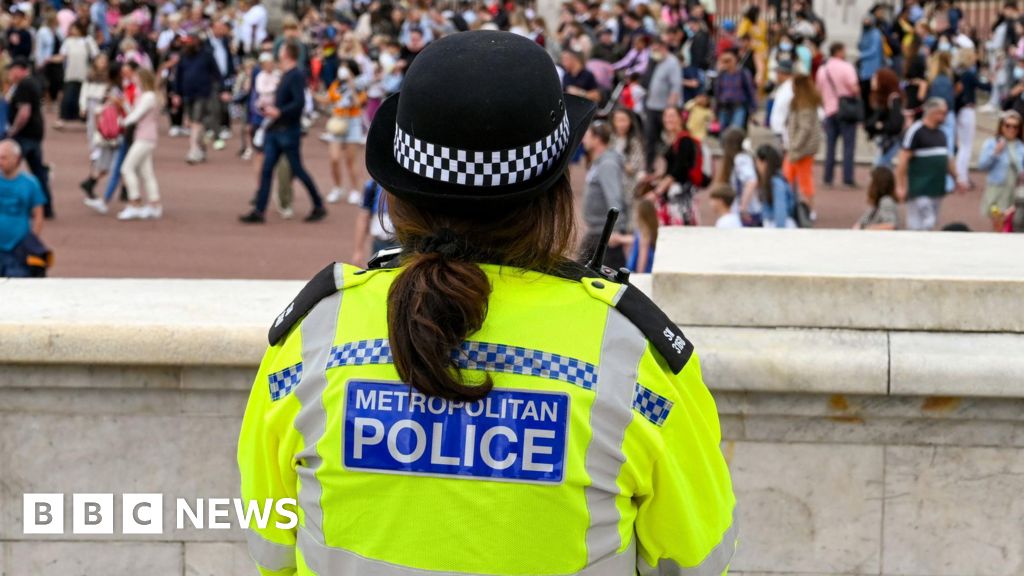
These encouraging local figures coincide with broader national improvements. The latest crime statistics for England and Wales, released by the Office for National Statistics (ONS), show a fall in the number of homicides to their lowest level since current reporting methods began in 2003. Police recorded 518 homicides in the year leading up to June 2025. This represents a 6% decrease from the 552 recorded in the preceding year and a substantial 27% reduction compared to the pre-pandemic total of 710 in 2019-20. This national trend underscores a concerted effort across the country to tackle serious violence.
Met Police Commissioner Sir Mark Rowley acknowledged the profound impact of this progress, stating that while "every murder is a tragedy," the reduction means "fewer families had been ‘shattered’ by violence." He attributed the decline to a multi-faceted approach, emphasizing "targeted police action against organised criminal gangs" and a greater integration of modern surveillance technologies, including live facial recognition. Sir Mark elaborated that this success is "the product of amazing police work as we attack with ever more precision the most dangerous men who carry weapons, who groom children into gangs, who prey on women." The force’s strategy involves intelligence-led operations designed to disrupt criminal networks and proactively remove dangerous individuals from the streets, thereby preventing potential homicides.
Crucially, Sir Mark also lauded the role of prevention work, specifically highlighting London’s Violence Reduction Unit (VRU), established by Mayor Sadiq Khan in 2019. He praised the VRU for its "important part in turning around the lives of teenagers targeted by drug dealers," recognizing that enforcement alone is not sufficient to address the root causes of violence.
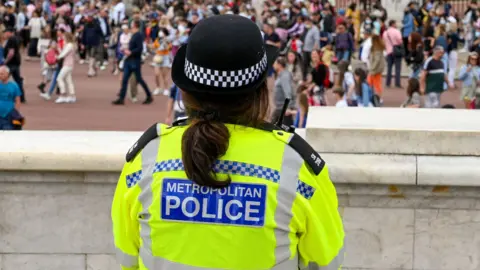
The VRU employs a public health approach to tackling violence, delivering targeted interventions aimed at preventing young people from being drawn into gangs and violent lifestyles. Its initiatives include placing dedicated youth workers within police custody suites and hospital emergency departments, offering immediate support and diversion opportunities to vulnerable young people. The unit also actively works to address systemic issues such as school exclusions, which can leave young people more susceptible to exploitation. Lib Peck, director of the VRU, acknowledged that "there is clearly more to do" but asserted that the data demonstrates "consistent" progress. She underscored the dramatic improvement, noting that "When we were set up more than six years ago, London’s homicide rate of young people was three times higher than it is today," a testament to the long-term impact of their strategic interventions. The tragic case of 14-year-old Kelyan Bokassa, who was repeatedly stabbed while sitting on a bus in Woolwich and was among the eight teenage victims last year, serves as a stark reminder of the devastating consequences of youth violence and the ongoing urgency of the VRU’s mission.
Despite the positive homicide figures, Commissioner Sir Mark Rowley acknowledged that a sense of insecurity persists among some Londoners. He suggested that social media content, particularly in "ever more angry, polarised, partisan times," contributes to this perception, often prioritizing "opinion or mischief" over objective facts. He stressed the importance of relying on objective data, like the homicide statistics, to affirm that "London is relatively safe."
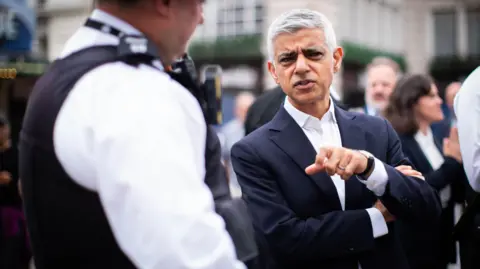
Mayor Sadiq Khan echoed this sentiment, lamenting that many had "been trying to talk London down." He referenced past criticisms from figures like former US President Donald Trump, who once accused the mayor of doing a "terrible job" and claimed "crime in London is through the roof," perpetuating a long-running spat between the two. Sir Sadiq proudly defended London, stating, "Whether it’s President Donald Trump, whether it’s politicians concentrated in Europe, this country, or other parts of the world, I can understand why they hate London. We are diverse, we are progressive, we are liberal, we are successful, but even the harshest critics of London would have to accept these figures are remarkable."
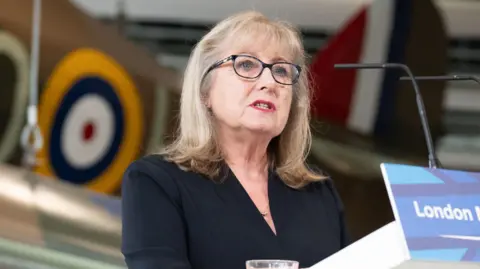
However, the celebratory tone was tempered by ongoing scrutiny of the Met Police’s internal affairs and broader crime trends. Susan Hall, the leader of the London Conservatives, praised the force for the reduction in homicides but accused the mayor of "cherry-picking figures." She highlighted persistent concerns about rising violence against women and girls, as well as the continued operation of grooming gangs in London. Hall emphasized that "Women are not feeling safe at the moment and some of the statistics coming out are showing they are not as safe as they used to be." She pointed to public advice circulating on social media about being cautious with expensive jewellery and watches due to high rates of mobile phone theft – "A phone is stolen every six minutes" – suggesting that while such warnings might increase vigilance, they also contribute to public fear. The mayor countered that the Met is actively targeting dangerous sexual offenders under the V100 scheme and taking action against gangs involved in mobile phone theft, demonstrating a commitment to addressing these other areas of concern.
Beyond homicides, the ONS data reveals a mixed picture for overall crime in England and Wales. While violence with injury saw a 14% decrease, sexual offences recorded an 11% rise. Shoplifting and mobile phone theft have also soared in recent years, impacting public perception of safety and underscoring the complexities of crime trends. In London specifically, while knife crime recorded by police nationally fell, it had been on the rise in the capital since the pandemic, although the latest year-on-year figures show a marginal reduction (15,639 offences in the 12 months to June 2025, down slightly from 15,644 in the previous 12 months). This indicates that while fatal knife crime has fallen, the prevalence of knife offences remains a significant challenge.
The success of preventative measures is further evidenced by a 43% fall in NHS hospital admissions of under-25s injured with knives since 2019, according to the VRU. Roisin Kelville, operations manager for the St Giles charity, which embeds youth workers in four London hospitals, confirmed the tangible impact of their work. These teams support young people brought to hospitals after stabbings or shootings, aiming to divert them from cycles of violence. Kelville explained the importance of addressing "transgenerational trauma" and emotional regulation among young people, noting a significant drop in referrals from 229 in 2023 to 150 last year. She observed a dip in violence during school summer holidays over the past two years, traditionally a peak period, attributing this to the "21st Century of the village" mentality fostered by the VRU, which promotes a "massive collective effort" to support young people.
However, the long-term sustainability of these effective programs is a growing concern. Kelville expressed worry about continuous funding, stating, "We’ve got a model that’s working. We can’t stop now because we’ve seen a massive drop [in referrals], we need to keep the momentum going." Oliur Rahman, co-chief executive officer of Active Communities Network, echoed calls for long-term and sustainable funding, advocating for it to be channelled directly to grass-roots community groups. His organization leads the MyEnds network in Southwark, which consists of local "unsung heroes" building trust within diverse and deprived communities, often where confidence in authorities has eroded. Rahman emphasized that young people now benefit from more support, contrasting it with years of cuts to policing and youth centers that previously left them vulnerable. "There was no-one there then to divert them off the streets. Their parents had no-one to talk to. Statutory services are oversubscribed with young people, and that’s where the youth work now has played a big impact in reducing that violence against young people."
The Met Police itself faces significant challenges, including a forecasted drop in officer numbers to 31,258 by March this year, down from 33,766 in May 2024, due to an estimated £20m budget gap. This comes amidst ongoing efforts to restore public confidence following a series of internal scandals. A recent internal review, covering a decade up to March 2023, revealed that 131 officers and staff committed crimes or misconduct after not being properly vetted, including one officer, Cliff Mitchell, who was allowed to join despite a previous child rape allegation. These issues underscore the pressure on the force to not only tackle external crime but also to address internal failings.
Sir Mark acknowledged the "tough" operating environment but affirmed the force’s commitment to progress. "What we have to do is get sharper and more precise," he stated, highlighting continued investment in data and technology to identify and remove the most dangerous individuals from the streets, thereby making the greatest impact on public safety. While London celebrates a significant reduction in homicides, the ongoing efforts to address other crime categories, improve police confidence, and secure long-term funding for vital community initiatives remain critical to ensuring a safe and secure future for all its residents.


 Nakalama John
 atisusanti

 George Anjay