
 atisusanti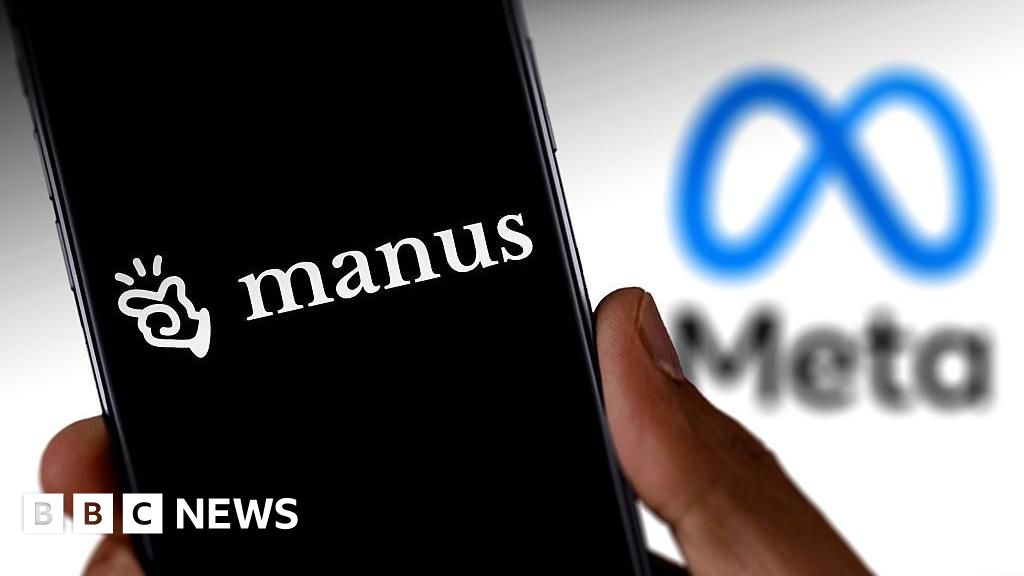
Meta has announced its strategic acquisition of Manus, a pioneering AI firm with Chinese roots, signaling a significant escalation in its ambition to enhance its technological capabilities. This landmark deal, with financial analysts from Bloomberg and The Wall Street Journal speculating a valuation exceeding $2 billion (£1.48 billion), positions Meta to significantly bolster its artificial intelligence prowess by integrating Manus’s advanced "agent" technology. These sophisticated AI agents are designed to perform complex tasks with minimal human intervention, revolutionizing user interaction by enabling capabilities such as automated trip planning and dynamic presentation creation. In a formal blog post, Meta articulated its vision: "Manus’s exceptional talent will join Meta’s team to deliver general-purpose agents across our consumer and business products, including Meta AI." This acquisition underscores Meta’s commitment to developing a more intuitive and powerful AI ecosystem, moving beyond current conversational AI models towards proactive, task-oriented digital assistants.
The strategic rationale behind Meta’s acquisition of Manus is further illuminated by industry expert Barton Crockett, an analyst at Rosenblatt Securities. Crockett described the move as a "natural fit" for Meta, aligning perfectly with CEO Mark Zuckerberg’s overarching "vision of personal AI" driven by the transformative potential of AI agents. Manus, which strategically relocated its operations to Singapore from China, has consistently strived to differentiate itself in the highly competitive AI development landscape. Its core differentiator lies in its claim of developing "truly autonomous" agents. Unlike many contemporary chatbots that require continuous user prompting to achieve desired outcomes, Manus asserts that its agents possess the capability to independently plan, execute, and complete tasks in strict accordance with initial instructions. This level of autonomy represents a paradigm shift in how users will interact with AI, moving from reactive queries to proactive task management.
The underlying philosophy of Manus is deeply rooted in its mission to "extend human reach" by creating general-purpose agents that act as collaborators, augmenting rather than replacing human efforts. This vision resonates strongly with Meta’s long-term strategic objectives. The company itself views its acquisition by Meta as a profound "validation" of its innovative approach and relentless pursuit of advanced AI agent capabilities. Xiao Hong, the chief executive and one of Manus’s Chinese founders, expressed optimism in a dedicated blog post on the company’s website, stating, "Joining Meta allows us to build on a stronger, more sustainable foundation without changing how Manus works or how decisions are made." This statement reassures Manus’s existing user base and employees about continuity while highlighting the enhanced resources and platform Meta provides. Hong further elaborated on the collaborative future, "We’re excited about what the future holds with Meta and Manus working together and we will continue to iterate the product and serve users that have defined Manus from the beginning." This commitment to ongoing product development and user satisfaction suggests a seamless integration strategy.
Meta has explicitly confirmed that, as an integral part of the acquisition agreement, it will continue to operate and offer Manus’s AI services to its existing and future clientele. This move is not an isolated incident but rather a continuation of Meta’s aggressive strategy to solidify its dominance in the rapidly evolving AI sector through strategic acquisitions of promising start-ups. This acquisition follows a pattern of significant investment in AI. Notably, in June, Meta invested a substantial $14 billion to acquire a 49% stake in Scale AI, a company specializing in data labeling for AI development. Furthermore, the deal secured Scale AI’s CEO a prominent leadership role within Meta’s AI development initiatives, indicating a deep integration of expertise.
This significant investment in Scale AI coincided with a broader increase in Mark Zuckerberg’s commitment to the company’s AI strategy. This intensified focus also involves actively recruiting top talent from rival AI powerhouses. Reports suggest Meta has been actively "luring talent from rivals like OpenAI," indicating a concerted effort to assemble a world-class AI research and development team. The acquisition of Manus further reinforces this strategy, bringing in a specialized team and proprietary technology focused on AI agents, a critical component for the future of human-computer interaction and intelligent automation. The integration of Manus’s autonomous agent technology is expected to accelerate Meta’s ability to deliver AI-powered solutions that are not only more intelligent but also more proactive and user-centric, potentially redefining how individuals and businesses leverage artificial intelligence in their daily lives and operations. The implications of this acquisition extend beyond immediate product enhancements, potentially shaping the future trajectory of AI development within Meta and the broader technology industry. The focus on general-purpose agents suggests a move towards AI that can understand and execute a wide range of complex tasks, moving beyond narrow AI applications towards more versatile and adaptable intelligent systems. This could lead to significant advancements in areas such as personalized learning, advanced research assistance, and sophisticated digital workforce augmentation. The strategic importance of Manus’s technology cannot be overstated, as it represents a crucial step towards realizing the vision of truly intelligent and autonomous digital companions. The company’s ability to develop agents that can operate independently, plan, and execute tasks without constant human oversight is a significant leap forward in the field of artificial intelligence. Meta’s investment in this area demonstrates a clear understanding of the future direction of AI and its potential to transform various sectors. The collaboration between Meta and Manus is poised to unlock new possibilities and drive innovation in the AI landscape, ushering in an era of more capable and integrated AI solutions. The financial implications of the deal, while not officially disclosed, are understood to be substantial, reflecting the perceived value of Manus’s technology and talent. This acquisition is a clear indicator of Meta’s unwavering commitment to leading the AI revolution and its willingness to make significant investments to achieve this goal. The company’s strategic foresight in acquiring specialized AI firms like Manus positions it advantageously in the ongoing race to develop the most advanced and impactful artificial intelligence technologies. The seamless integration of Manus’s operations and its talented team is paramount to realizing the full potential of this acquisition, ensuring that the innovation and expertise that defined Manus continue to flourish within Meta’s expansive ecosystem. The future of AI agents, as envisioned by both Meta and Manus, promises a more intuitive, efficient, and collaborative relationship between humans and intelligent machines, fundamentally altering the digital landscape and our interaction with technology.



 Roy Suryo
 Nana Banana
 Nakalama John
 George Anjay