Ramos Leo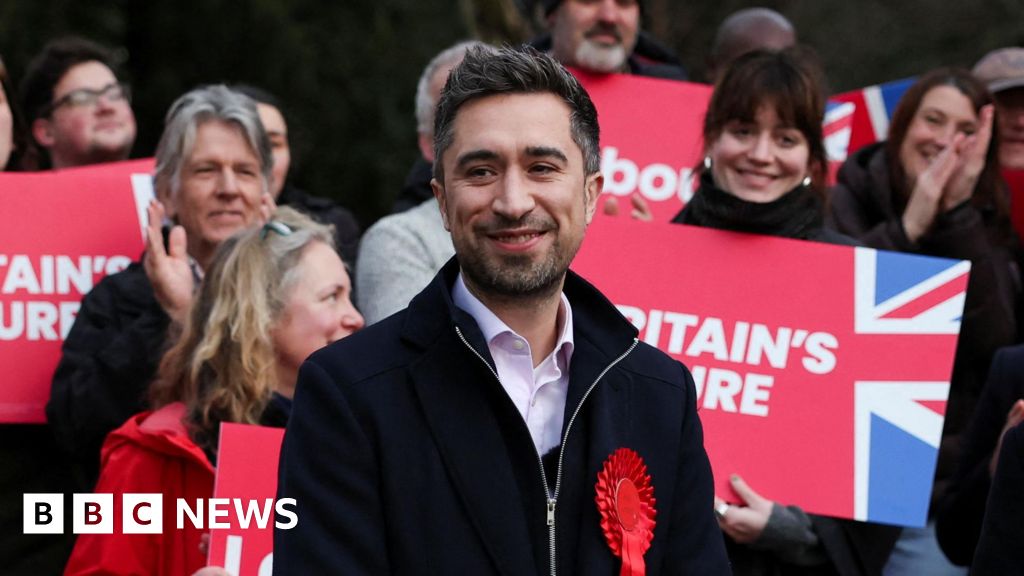
A planned visit by a Jewish Member of Parliament to a school within their own constituency was abruptly cancelled following significant concerns raised by local pro-Palestinian campaigners. The incident, which took place in September but only recently came to light, has ignited a fervent debate about political neutrality in educational institutions, freedom of expression, and the escalating tensions surrounding the Israel-Gaza conflict on British soil.
Damien Egan, the Labour MP for Bristol North East, was scheduled to visit Bristol Brunel Academy, a secondary school situated in his constituency. However, the visit was opposed by Palestine Solidarity Bristol, who explicitly cited Egan’s perceived support for Israel as the reason for their objection. The group publicly stated that his stance on the ongoing conflict rendered him unwelcome in local schools, leading to the cancellation of an event intended to foster democratic engagement among students.
The cancellation, though occurring months prior, gained national attention when Communities Secretary Steve Reed highlighted it during a speech to the Jewish Labour Movement at the weekend. While Reed did not name Egan directly, his impassioned remarks left little doubt about the gravity of the situation. He recounted the experience of a "colleague who is Jewish, who has been banned from visiting a school and refused permission to visit a school in his own constituency, in case his presence inflames the teachers." Reed condemned the incident as an "absolute outrage," vowing that those responsible would be "called in, and they will be held to account for doing that, because you cannot have people with those kinds of attitudes teaching our children. You just can’t have it." These strong words from a senior government minister underscore the deep concern within political circles regarding the intimidation of Jewish public figures and the potential for politicization within the education system. Reed’s intervention suggests a readiness to challenge institutions that might be perceived as capitulating to activist pressure, particularly when it impacts the ability of elected representatives to engage with their constituents.
Damien Egan, a high-achieving alumnus of the Cabot Learning Federation (CLF) to which Bristol Brunel Academy belongs, confirmed the event’s cancellation but chose to decline further comment. His reticence likely reflects the highly sensitive and politically charged nature of the issue, particularly for a Jewish MP navigating the complex landscape of public opinion on the Israel-Palestine conflict. Jewish MPs across the political spectrum have reported an increase in abuse and intimidation since the events of October 7th, making public engagements fraught with additional challenges and security concerns.
Bristol Brunel Academy, through a spokesperson, provided a detailed account of the events leading to the postponement. They affirmed that Mr. Egan, like other local MPs from various political parties, had been invited to visit the school in September. The purpose of the visit was educational: to discuss democracy, the role of an MP, and to inspire students who might consider similar career paths. The school emphasized that on the evening before Egan’s scheduled visit, they were made aware of plans for a public protest outside the premises. Crucially, this protest was timed to coincide with the end of the school day. Faced with the potential for disruption and safety concerns for students and staff entering and exiting the school, the academy made the decision to postpone the visit. Their statement clarified that the decision was made "to ensure everyone would continue to feel safe when entering and exiting school and to prevent any disruption to our students’ learning." The school also noted that they have remained in contact with Mr. Egan, and an alternative date for his visit was arranged "some time ago," indicating an intent to reschedule rather than a permanent ban. Furthermore, they confirmed having consulted with the police and followed their advice, highlighting the practical security considerations involved.
Palestine Solidarity Bristol, the group instrumental in the protest, had proudly announced the cancellation on 5 September via a social media post. They celebrated the event being "axed" after "concerns were raised by the National Education Union trade union staff group, parents and local constituents." Their post explicitly framed the cancellation as "a clear message" that politicians who support Israel’s actions in Gaza "are not welcome in our schools." This statement reveals a deliberate strategy to use schools as a battleground for political messaging, drawing a clear line in the sand regarding the acceptability of certain political views within educational settings. The group’s assertion that their actions represented the collective voice of various stakeholders, including the NEU staff group, became a point of contention.
Responding to these claims, a spokesperson for the National Education Union (NEU) clarified that its head office had "no knowledge that the school had rescinded the invite to the local MP" until media reports surfaced on Monday. This directly contradicted Palestine Solidarity Bristol’s claim of NEU staff group involvement at a union-wide level. The NEU spokesperson went on to articulate the union’s general position, affirming the value of MPs engaging with schools on critical issues such as school funding, teaching intensity, and the impact of social media on young people. They also upheld the democratic right of constituents to express their views to MPs on national and international issues, including the "extraordinary human suffering in Gaza." However, the NEU spokesperson carefully balanced this by stating that the union "believes in democratic engagement. Central to that is dialogue and discussion, and sometimes this will include a robust exchange of views." Significantly, the spokesperson added a strong condemnation of prejudice, asserting that the union was "an organisation rooted in anti-racism in all forms, including antisemitism." This nuanced response from the NEU seeks to uphold the right to protest and express strong views, while simultaneously distancing the national body from any specific action that could be construed as antisemitic or an outright ban on an MP, and emphasizing the importance of dialogue over outright exclusion.
The incident at Bristol Brunel Academy serves as a stark illustration of how the Israel-Gaza conflict has reverberated through British society, intensifying existing divisions and creating new fault lines in unexpected places, including schools. The decision to cancel or postpone an MP’s visit due to protest raises profound questions about the role of educational institutions. Are schools meant to be neutral spaces for learning and civic education, or can they legitimately become sites for political activism and protest, particularly on highly sensitive international issues? The school’s stated reason for postponement – ensuring safety and preventing disruption – highlights the difficult balancing act faced by headteachers and school authorities. They are tasked with maintaining a safe and conducive learning environment while navigating the pressures of local politics and community activism.
The Communities Secretary’s strong reaction underscores broader governmental concerns about antisemitism and the intimidation of Jewish public figures. Since the October 7th attacks, antisemitic incidents in the UK have surged to unprecedented levels, creating a climate of fear and vulnerability within Jewish communities. Incidents like the one involving Damien Egan contribute to a feeling that Jewish individuals, including elected representatives, are being held to account for actions and policies of a foreign government, simply because of their identity. This conflation of Jewish identity with Israeli government policy is often seen as a hallmark of contemporary antisemitism.
Furthermore, the episode touches upon the fundamental principles of democratic engagement and freedom of speech. While constituents undoubtedly have the right to express their views to their elected representatives, including through protest, the question arises as to when such protest crosses the line into intimidation or effectively silences an MP’s ability to perform their duties. If an MP is deemed "unwelcome" in a school within their own constituency due to their stance on an international issue, it could set a dangerous precedent, potentially chilling democratic participation and limiting the ability of representatives to engage with the very people they serve. It also forces schools into a difficult position of adjudicating political acceptability rather than focusing on their core educational mission.
The specific context of Bristol, a city known for its vibrant and often robust protest culture, may also contribute to the dynamics of such an event. The strong presence of activist groups and the readiness to mobilize can create an environment where institutions feel significant pressure to respond to public sentiment. The role of social media in amplifying protest plans and subsequently celebrating the outcome cannot be understated, as it allows for rapid mobilization and public dissemination of messages, sometimes before institutions can fully react or provide their own narrative.
As the political landscape continues to be shaped by global events, the incident involving MP Damien Egan and Bristol Brunel Academy serves as a potent reminder of the complex challenges facing British society. It forces a critical examination of how democratic principles, educational integrity, and community safety are maintained in an era of heightened political polarization and increased activism, particularly when sensitive international conflicts cast long shadows over domestic life. The ongoing dialogue between the school and Mr. Egan, and the eventual rescheduling of his visit, offer a glimmer of hope for a path forward that prioritizes engagement and understanding over exclusion and division.


 George Anjay
 Nakalama John
 atisusanti