
 Nana Banana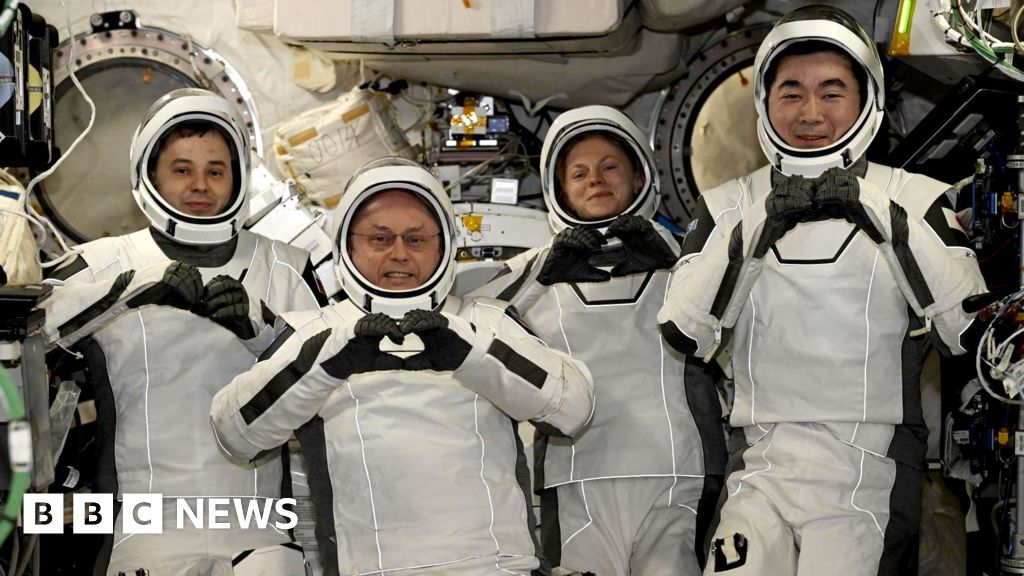
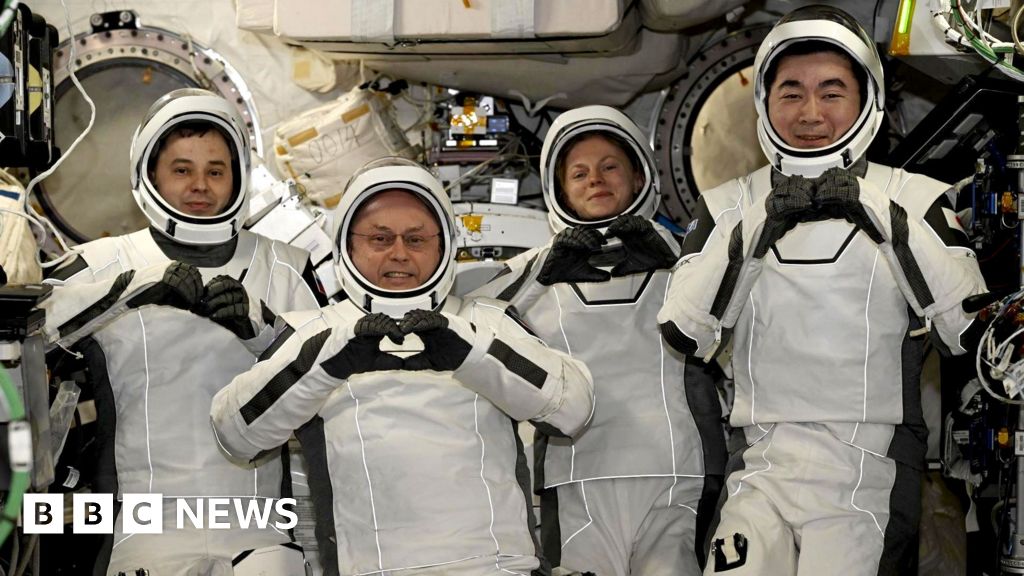
Four international astronauts have made an unprecedented early return to Earth from the International Space Station (ISS), concluding a mission cut short by a serious medical issue involving one of the crew members. The "bittersweet" departure marks the first time in the ISS’s 26-year history that an evacuation due to a health concern has been necessary, underscoring the inherent risks and complexities of human spaceflight. After an eleven-hour journey from orbit, the crew splashed down safely off the coast of California, where medical teams were ready to receive them.
The mission, designated Crew 11, was composed of NASA astronauts Mike Fincke and Zena Cardman, Japan Aerospace Exploration Agency (JAXA) astronaut Kimiya Yui, and Russian cosmonaut Oleg Platonov. They had arrived on the orbital outpost on August 1st, expecting to complete a standard six-and-a-half-month research mission, with their return initially scheduled for mid-February. However, the sudden onset of a medical condition last week prompted an urgent re-evaluation of their mission timeline.
The first public indication of an issue came when a scheduled spacewalk by Fincke and Cardman was abruptly called off. Hours later, NASA confirmed that a crew member had fallen ill, though details regarding the individual or the nature of the ailment remain undisclosed, citing privacy concerns. NASA affirmed that the affected astronaut was in stable condition, a testament to the initial care provided on orbit and the rapid response protocols.
The decision to evacuate was not taken lightly, involving extensive consultation between flight surgeons, mission control centers in Houston and Moscow, and the respective space agencies. While the ISS is equipped with basic medical supplies and astronauts receive extensive training in emergency procedures, it does not carry a dedicated physician. For serious conditions, the ultimate solution often involves a return to Earth, where comprehensive medical facilities and specialists are available. This incident highlights the critical limitations of remote medical care, even in the most advanced orbital laboratory.
Speaking during the emotional handover ceremony, NASA astronaut Mike Fincke described the situation as "bittersweet." Despite the unfortunate circumstances, he emphasized the collective well-being of the crew, stating in a social media post that all members onboard were "stable, safe, and well cared for." Fincke, a seasoned veteran of spaceflight, passed control of the ISS to Russian cosmonaut Sergey Kud-Sverchkov, who now leads a significantly reduced crew.
The International Space Station, a marvel of international collaboration, orbits Earth at an altitude of approximately 250 miles, completing 16 orbits daily at a speed of 17,500 miles per hour. It serves as a unique microgravity laboratory, conducting wide-ranging scientific research across disciplines such as biology, human physiology, material science, and astrophysics. The data gathered helps scientists understand the effects of long-duration space travel on humans, animals, and plants, crucial knowledge for future deep-space missions to the Moon and Mars. It is a joint endeavor of five major space agencies: NASA (United States), Roscosmos (Russia), ESA (European Space Agency), JAXA (Japan), and CSA (Canada).
The early departure of Crew 11 leaves the ISS with a skeletal crew of just three astronauts: NASA’s Chris Williams and Roscosmos cosmonauts Sergey Kud-Sverchkov and Sergei Mikaev. This reduced complement will undoubtedly increase the workload for the remaining residents, who must continue to manage the station’s complex systems, maintain its habitability, and carry out ongoing scientific experiments until another four-person crew arrives in February.
Cosmonaut Kud-Sverchkov, accepting the new responsibilities, demonstrated remarkable resolve. "Despite all the changes and all the difficulties, we are going to do our job onboard ISS, performing all the scientific tasks, maintenance tasks here, whatever happens," he affirmed on Monday. In a moment of poignant solidarity reflecting the unique bond of spacefarers, he then issued his first command as station commander: a group hug. This gesture underscored the spirit of cooperation and resilience that defines life on the orbital outpost, even in the face of unexpected challenges.
The incident is unprecedented in the continuous human habitation of the ISS, which has been permanently crewed since November 2000. However, early mission terminations due to health issues have occurred twice before in the history of human spaceflight, both involving Soviet space stations. In 1985, cosmonaut Vladimir Vasyutin and his crew returned from the Salyut 7 space station four months ahead of schedule due to a severe urological issue that deteriorated despite medical guidance from Earth. Two years later, in 1987, cosmonaut Aleksandr Laveykin was forced to leave the Mir space station early after developing a heart arrhythmia, which was detected during a routine medical check. These historical precedents, while distant, serve as stark reminders of the ever-present medical challenges in the harsh environment of space.
The need for medical preparedness in space is becoming increasingly critical as humanity looks beyond low-Earth orbit. With ambitious plans for lunar outposts, potential human missions to Mars, and the burgeoning space tourism industry, the question of how to provide comprehensive medical care in increasingly remote and self-sufficient environments is paramount. Space experts widely agree that dedicated medical professionals, or at least highly advanced telemedicine capabilities and autonomous diagnostic tools, will be essential for future long-duration missions. The current incident on the ISS serves as a timely reminder that while engineering and scientific prowess can overcome many hurdles in space, the delicate intricacies of human health remain one of the most significant and unpredictable variables in humanity’s quest to explore the cosmos. The safe return of Crew 11, while premature, is a testament to the robust emergency response systems in place, but also a catalyst for further innovation in space medicine.




 Nakalama John
 George Anjay
 Ramos Leo

 atisusanti