
 George Anjay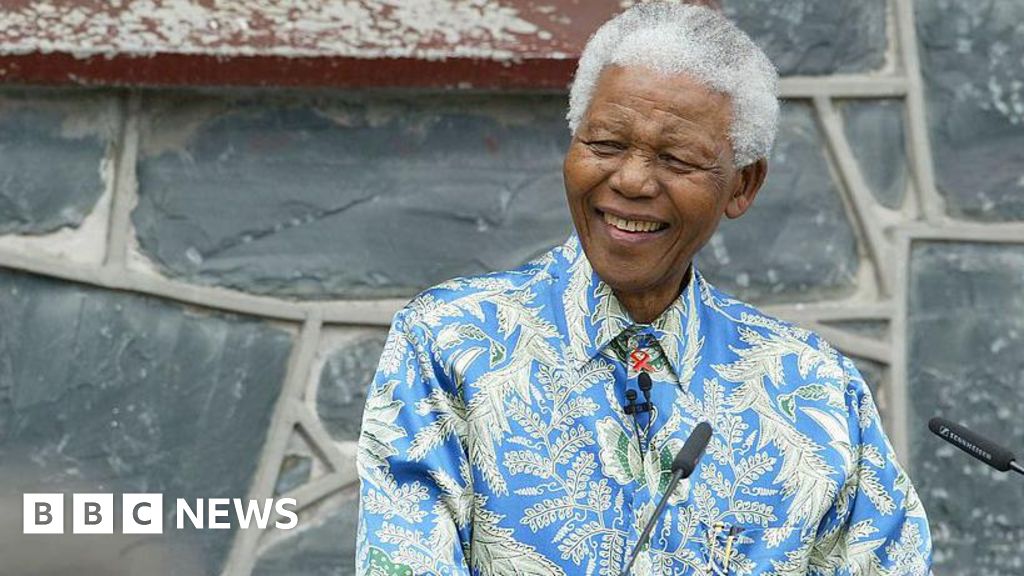
A pivotal South African court battle has concluded with a landmark ruling, allowing for the potential sale and export of over 70 personal artefacts belonging to anti-apartheid icon Nelson Mandela. The Supreme Court of Appeal has dismissed an appeal by the country’s heritage body, the South African Heritage Resources Agency (Sahra), effectively greenlighting the dispersal of items that include the cell key from Robben Island, a pair of Mandela’s signature Aviator sunglasses, and one of his distinctive floral shirts. These cherished possessions, slated for auction in the United States, are owned by Mandela’s eldest daughter, Makaziwe Mandela, and Christo Brand, a former Robben Island warden who developed a close relationship with the former president during his 27-year incarceration.
Sahra’s attempt to halt the sale, based on the assertion that these items constitute national heritage and are thus legally protected from export, has been overturned by the court. The agency first became aware of the impending auction through a British newspaper article in late 2021, which suggested the Robben Island cell key alone could fetch upwards of £1 million (approximately $1.35 million). Following this discovery, Sahra contacted Guernsey, the US auction house managing the sale, requesting the suspension of the auction and the repatriation of the artefacts to South Africa.
The collection slated for auction is extensive and deeply personal. Beyond the key, sunglasses, and shirts, it includes a meticulously preserved copy of the 1996 South African Constitution, personally signed by Mandela, and one of his evocative charcoal drawings. Also part of the lot are Mandela’s identity card, a tennis racquet he used during his time on Robben Island, and significant gifts bestowed upon him by global leaders, including former US President Barack Obama and his wife, Michelle. Makaziwe Mandela’s stated intention for the proceeds of the sale is to fund the construction of a memorial garden at her father’s grave in Qunu, located in the Eastern Cape province.
The Supreme Court of Appeal’s ruling hinges on its interpretation of the National Heritage Resources Act, finding Sahra’s application of the law to be excessively broad. Crucially, the court noted that while Makaziwe Mandela and Christo Brand provided detailed justifications for why their respective items should not be classified as heritage objects, Sahra failed to articulate the specific grounds upon which it deemed them to be so. The implications of this ruling are significant, raising questions about the definition and ownership of national heritage, particularly when personal belongings of historical figures are involved. It remains unclear whether the authorities will pursue further legal avenues to prevent the sale. The BBC has reached out to the Department of Sport, Arts and Culture for comment on the matter.
Makaziwe Mandela, Mandela’s only daughter from his first marriage, expressed her profound relief and satisfaction with the Supreme Court’s judgment. She sharply criticized Sahra, accusing the heritage agency of presuming to understand her father’s final wishes more intimately than his own family. "Nobody is more invested in ensuring Tata’s [Mandela’s] legacy endures in the way he would want to be remembered than those who carry his name," she asserted, emphasizing the deep personal connection and commitment she and her family hold to preserving Mandela’s memory. She also clarified that no definitive decisions have yet been made regarding the ultimate disposition of the items intended for auction.
The legal dispute has ignited a broader debate within South Africa and beyond, highlighting divergent perspectives on how to honour and preserve the legacy of Nelson Mandela. Some government supporters and members of the public argue that any item directly connected to Mandela should remain within South Africa, safeguarded for the education and inspiration of future generations. This viewpoint underscores a belief that Mandela’s historical significance transcends personal ownership, making his artefacts a collective national treasure.
Conversely, a significant segment of the population believes that Mandela’s immediate family should retain the autonomy to decide the fate of his personal belongings. This perspective emphasizes the importance of familial rights and the intimate knowledge that family members possess regarding the wishes and sentiments of their loved ones. Proponents of this view often point to the fact that Mandela himself, a figure who championed individual freedoms and self-determination, might have endorsed his family’s right to make such decisions.
Nelson Mandela’s passing in 2013 at the age of 95 marked the end of an era. His life was a testament to unwavering commitment to justice and equality. He led the African National Congress (ANC) in its formidable struggle against apartheid, a brutal system of institutionalized racial segregation and discrimination that characterized South Africa for decades. His release from prison in 1990, after 27 years of unjust imprisonment, was a moment of global jubilation and a turning point in the fight for freedom.
Mandela’s tireless efforts and moral leadership were recognized with the Nobel Peace Prize in 1993, an honour he shared with then-President F.W. de Klerk, who played a crucial role in dismantling apartheid. This shared accolade symbolized a nation on the cusp of transformation. In 1994, Nelson Mandela made history by becoming South Africa’s first democratically elected president, ushering in a new era of reconciliation and nation-building. His presidency was characterized by efforts to unite a deeply divided country and establish a non-racial democracy. The ongoing debate surrounding the sale of his personal items reflects the complex and enduring impact of his life and legacy on South Africa and the world.



 Ramos Leo
 Nakalama John