George Anjay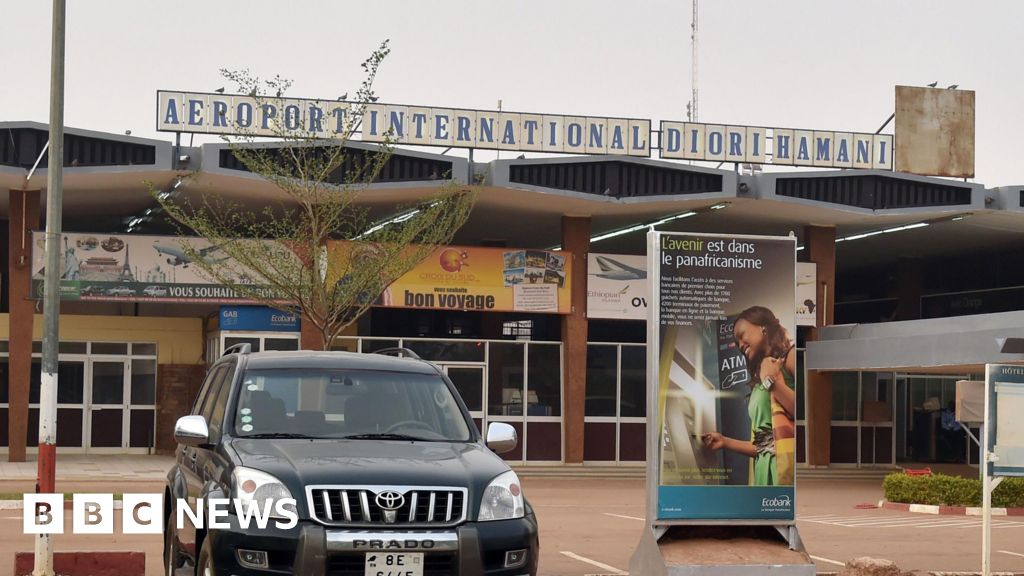
Sustained heavy gunfire and multiple loud explosions rocked the vicinity of Niger’s Diori Hamani International Airport in the capital, Niamey, in the early hours of Thursday, sending tremors of unease through the region. Eyewitness accounts and chilling video footage circulating widely depicted air defense systems actively engaging what appeared to be unidentified projectiles in the pre-dawn darkness. The intense exchange, which reportedly began shortly after midnight, lasted for approximately two hours before a tense calm descended, according to residents of neighborhoods adjacent to the airport. While an official statement later suggested the situation was "under control," details remain scarce, and the precise cause of the disturbance, along with any potential casualties, remains unconfirmed.
The Diori Hamani International Airport, a critical piece of infrastructure, also serves as a home to Niger’s air force base. Its proximity, approximately 10 kilometers (six miles) from the presidential palace, underscores the strategic significance of the incident. Niger, currently under the governance of a military junta led by Abdourahamane Tiani, who seized power in a 2023 coup deposing the democratically elected civilian president, finds itself in a precarious geopolitical position. The nation, like its Sahelian neighbors Burkina Faso and Mali, has been grappling with the persistent threat of jihadist insurgencies, which have inflicted a devastating toll of violence across the region.
Adding another layer of complexity to the nation’s challenges is its status as a significant global producer of uranium. Recent developments have seen a substantial uranium shipment, destined for export, held up at the Niamey airport. This logistical impasse is a direct consequence of unresolved legal and diplomatic disputes stemming from the military government’s decision to nationalize the country’s uranium mines. The nationalization, a bold move impacting foreign interests, has created friction and uncertainty surrounding the future of Niger’s crucial mineral exports.
The Foreign Affairs ministry, in a statement to the Anadolu news agency, offered a terse reassurance, with an unnamed official stating, "The situation is under control. There is no need to worry." However, the official declined to provide further elaboration on the nature of the incident. Intriguingly, the same official indicated that investigations were underway to ascertain whether the gunfire and blasts were connected to the protracted issue surrounding the stalled uranium shipment. This suggestion hints at a potential link between the unrest and the ongoing economic and political tensions related to Niger’s vital uranium resources.
The immediate aftermath of the gunfire and explosions was characterized by apprehension and speculation among residents and observers alike. The sudden eruption of heavy weaponry so close to the capital’s main air hub, which also serves a military purpose, naturally raised concerns about internal security or external threats. The fact that air defense systems were reportedly activated suggests a potential aerial dimension to the incident, though the nature of the "unidentified projectiles" remains a critical unanswered question.
Niger’s current political landscape is marked by the aftermath of the July 2023 coup. The ousting of President Mohamed Bazoum led to international condemnation and sanctions, although some of these have since been eased. The new military leadership has sought to reassert national sovereignty, a move that has manifested in policy shifts such as the nationalization of uranium mines. This assertive stance, while potentially popular domestically, has created diplomatic and economic headwinds for the country.
The presence of jihadist groups in the broader Sahel region continues to be a significant security concern. These groups have demonstrated a capacity for sophisticated attacks, and their activities have destabilized vast swathes of territory. Any unusual military activity in Niger, especially near key infrastructure like the airport, inevitably triggers concerns about potential spillover effects or direct involvement of these extremist elements. However, the official statements, however vague, have not directly attributed the incident to jihadist activity.
The strategic importance of the Diori Hamani International Airport extends beyond its role as a civilian travel hub. As the location of an air force base, it is integral to Niger’s defense capabilities. Any disruption or threat to this facility carries significant implications for national security. The fact that air defense systems were deployed suggests a response to a perceived threat in the airspace.
The stalled uranium shipment further complicates the narrative. Uranium is a critical export for Niger, and its nationalization by the current government has been a point of contention with international partners, particularly France, which historically had significant interests in Niger’s uranium sector. The unresolved legal and diplomatic issues surrounding this shipment could potentially create vulnerabilities or attract unwanted attention. It is plausible that the unrest could be linked to efforts to resolve these issues, either through overt or covert means, or it could be an unrelated event that has inadvertently amplified existing tensions.
The limited information provided by official sources underscores the challenges in obtaining reliable updates in Niger’s current political climate. The military government, while seeking to project an image of control, has also been cautious in its public pronouncements. The reference to determining whether the gunfire was linked to the uranium shipment suggests that the authorities are exploring multiple possibilities, indicating a degree of uncertainty about the incident’s origins.
The international community will be closely monitoring developments in Niamey. Niger’s strategic location in the Sahel, its role in counter-terrorism efforts, and its significance as a uranium producer make it a country of considerable geopolitical interest. Any instability or escalation of conflict in Niger has the potential to reverberate across the region and impact global supply chains, particularly for critical minerals.
The incident serves as a stark reminder of the volatile security and political environment in Niger. The combination of internal security challenges, regional instability, and complex economic interests creates a potent mix of factors that can contribute to unexpected events. The coming days will be crucial in understanding the full implications of the gunfire and blasts near the Niamey airport and in discerning the true nature of the threat, or threats, that prompted such a forceful response. The official assurances of control, while welcome, will need to be substantiated by clearer information and a resolution to the underlying causes of the disturbance. The lingering questions about the unidentified projectiles and their potential connection to the stalled uranium shipment add a layer of intrigue and concern to an already complex situation.




 atisusanti
 Nakalama John
 Ramos Leo
 Roy Suryo