Ramos Leo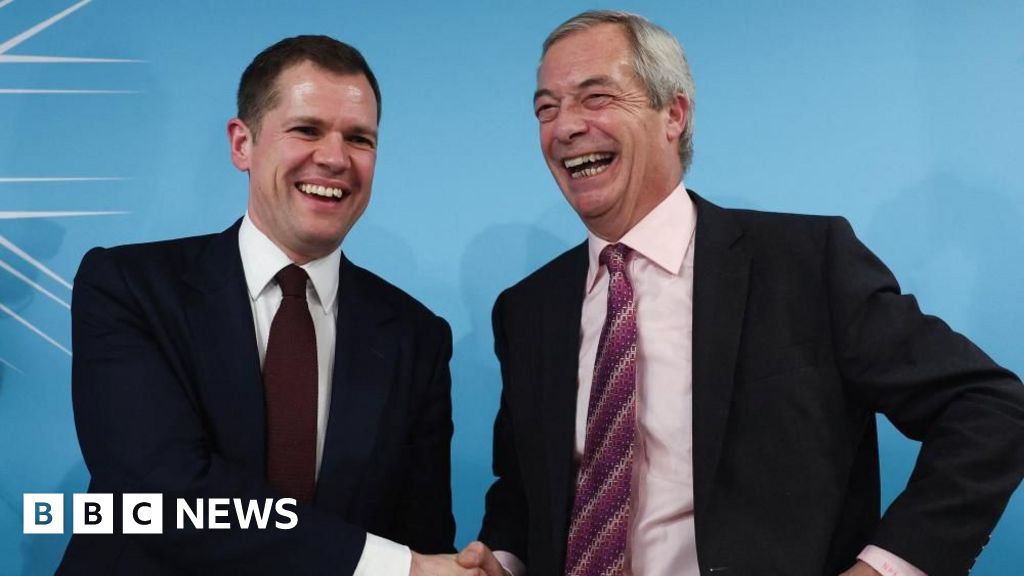
This unfolding political saga began with a strategic move by Conservative leader Kemi Badenoch, a tactical masterstroke designed to wrest control of the narrative. Having caught wind of Jenrick’s imminent departure, Badenoch pre-empted his jump, pushing him overboard herself rather than allowing him the dignity of his own resignation. This decisive action, while demonstrating Badenoch’s ruthless political acumen and firm grip on party discipline, inadvertently accelerated Jenrick’s path to Reform UK, condensing what might have been weeks or months of deliberation into a matter of hours. Her intervention, intended to contain the damage, inadvertently transformed a potential slow leak into a sudden, dramatic rupture.
While Badenoch’s move was tactically astute for the Conservatives in the short term, strategically, it is Reform UK that continues to show regular momentum and magnetism, particularly towards disaffected Conservatives. Jenrick’s defection is not merely another tick in Reform’s column; it represents a pivotal waymarker in the ongoing, seismic remoulding of the Right of British politics. It stands as the biggest coup for Farage to date, an undeniable validation of his party’s growing influence and a powerful rebuttal to the persistent jibe from opponents that Reform is merely a "one-man band." Jenrick, a former Immigration Minister and ex-member of the Privy Council, held significant stature within the Conservative Party, having served in various ministerial roles and been considered a potential future leader. His move lends Reform a new level of credibility and intellectual heft, demonstrating its capacity to attract not just protest votes, but also experienced political operators.
The Conservative Party, so long the leviathan of British politics, a formidable electoral machine that dominated the political landscape for generations, has been in a state of precipitous decline. Crushed by the electorate in recent local elections and consistently trailing Labour by significant margins in national polls, the party has been leaking support like a burst pipe towards Reform UK. The reasons are manifold: public disillusionment with government performance, particularly on issues like immigration and the economy; a perceived drift away from traditional conservative values; and an electorate hungry for a more radical, anti-establishment voice. The loss of Jenrick, one of its most high-profile and articulate figures, further deepens the party’s existential crisis, stripping it of a valuable voice and reinforcing the narrative of a party in terminal disarray.
Inevitably, Jenrick’s defection was met with a chorus of cries of betrayal from his former Conservative colleagues, who promptly indulged in the ritual sledging of his character. One anonymous shadow cabinet minister, deploying a literary flourish, claimed Jenrick "was overwhelmed by personal ambition in a Macbeth type way." This accusation, invoking the Shakespearean anti-hero synonymous with vaulting ambition and treachery, sought to delegitimise Jenrick’s move as a self-serving act rather than one of principle. However, Jenrick was quick to parry this attack. Given that he had recently been widely considered the bookies’ favourite to be the next Conservative leader, and was now joining a party with a very prominent and successful leader in Nigel Farage, he argued it was "a bit rich" to attribute his defection solely to personal ambition. His counter-argument implied that his move was driven by a genuine belief in Reform UK’s direction and policies, a more principled stand than one driven by a desperate grab for power. This exchange highlights the brutal, personal nature of political defections, where loyalty and ambition are perpetually at loggerheads.
Nigel Farage now faces a familiar critique: that given the steadily increasing number of Tory defectors he is welcoming, does he truly lead a distinctive, new, insurgent force, or merely "Conservatives 2.0"? This perception is a double-edged sword for Reform UK. While attracting experienced politicians from the established parties adds gravitas, it also risks blurring the lines between Reform and the very political establishment it purports to challenge. Farage, ever the astute media operator, was quick to counter this narrative, highlighting to this reporter that Reform UK had welcomed a former Green councillor earlier in the week and planned to unveil a Labour defector the following week. Yet, the undeniable truth remains: the vast majority of Reform’s recent high-profile signings are indeed former Conservatives. This is a perception the party knows it must manage astutely, lest it be seen as a mere splinter group rather than a genuine alternative. Labour, meanwhile, was quick to seize on this perceived hypocrisy, pointing out various past instances where Farage had been incredibly critical of Jenrick, questioning the sincerity of their newfound political alliance. Such tactical attacks aim to undermine the credibility of both Farage and Jenrick, portraying the defection as an opportunistic alignment rather than a genuine ideological shift.
However, in short, defections, and the intense media scrutiny they attract, are ultimately a "nice problem for a party to have." For Reform UK, it signifies growth, relevance, and a tangible shift in the political landscape – a far better alternative than the political oblivion many predicted for it. It brings legitimacy, media attention, and, crucially, experienced political talent to a party often dismissed as amateurish or fringe. For the Conservatives, however, each defection further erodes public trust, fuels internal dissent, and signals a party losing control of its narrative and its members.
A final, intriguing thought lingers regarding the medium and long-term consequences of Kemi Badenoch’s ruthlessness in giving Robert Jenrick the boot. Farage himself admitted he had initially thought there was only a 60/40 chance that Jenrick would join his party. Those odds, barely better than tossing a coin, suggest a decision that was finely balanced, perhaps still open to influence or delay. Yet, Jenrick appeared at Reform HQ, his defection a fait accompli. What critical conversations between Jenrick and Farage, which might have unfolded over days, weeks, or even months, had to be rushed into a matter of hours following Badenoch’s decisive intervention? Did this accelerated timeline force compromises or agreements that, under different circumstances, might have been more thoroughly vetted? Such hasty arrangements, forged under immense pressure and with little time for intricate negotiation, could potentially store up significant trouble for both men in the months ahead. Discrepancies in policy, disagreements over strategy, or a lack of full ideological alignment, if glossed over in the rush, could resurface, leading to internal friction or public embarrassment. The full ramifications of this dramatic day, driven by both principle and political expediency, will undoubtedly continue to unfold, shaping the future trajectory of the British Right and the broader political landscape. Let’s see.




 George Anjay
 Nakalama John
 atisusanti