George Anjay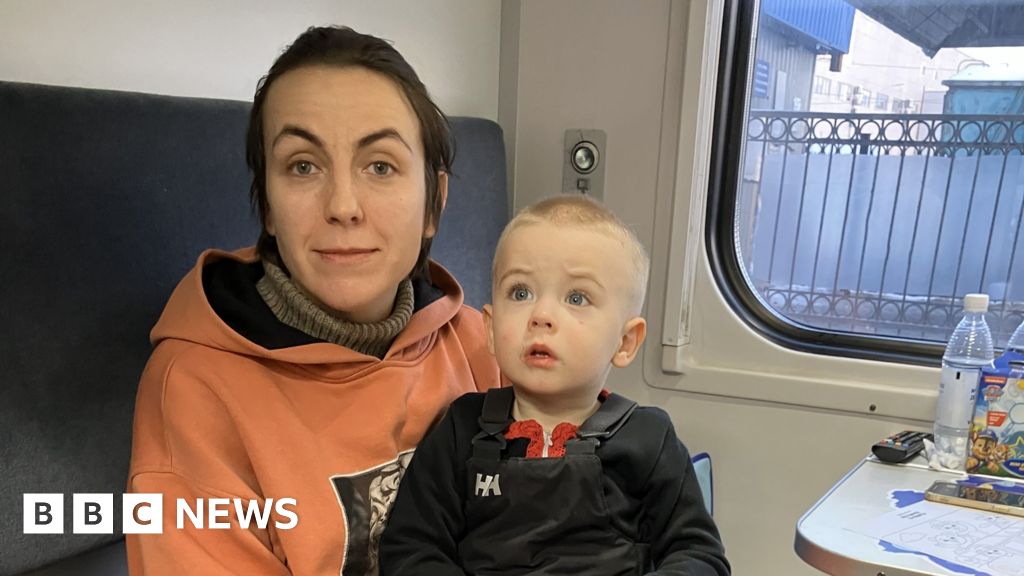
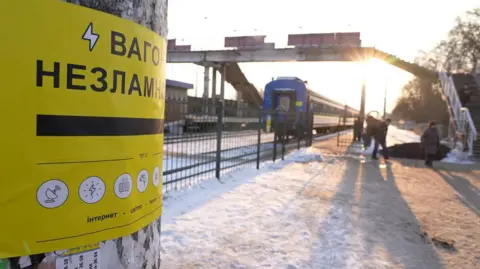
At a suburban Kyiv railway station, two carriages painted in the distinctive blue and white livery of Ukrainian Railways sit stoically on the main platform, their diesel engines humming a low, persistent tune against the steady fall of snow. The train, a symbol of resilience and ingenuity, is not destined for any distant city but serves a far more immediate and vital purpose: providing warmth, power, and a much-needed respite for dozens of individuals and families left stranded without essential utilities. These are Ukraine’s "Invincibility Trains," a critical initiative born from the dual onslaught of a brutal winter and relentless Russian attacks, designed to bolster public morale and offer a sliver of comfort amidst the deepening crisis.
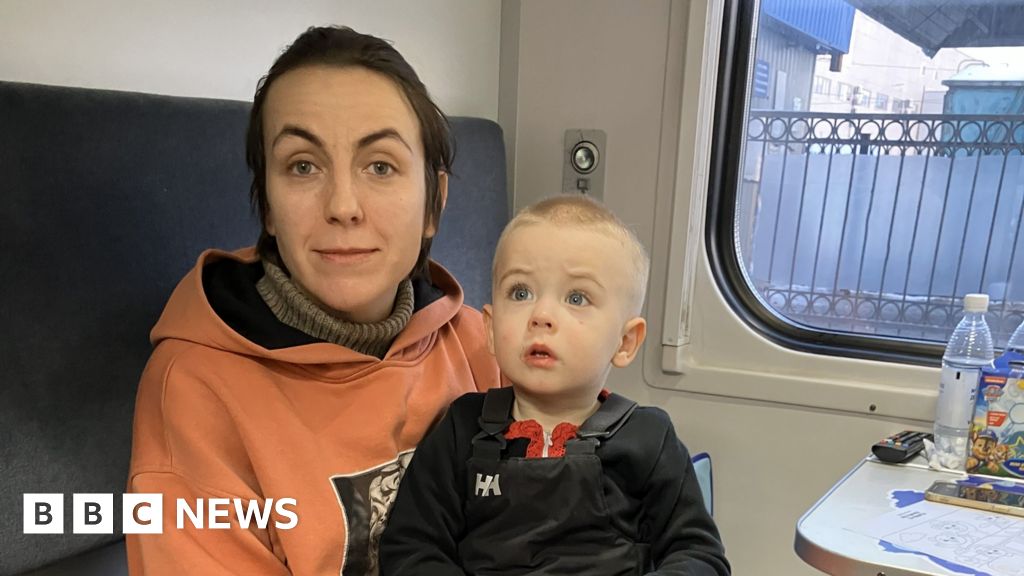
Inside one of the carriages, Alina watches her infant son, Taras, engrossed in toys provided by international charities that support this lifeline service. "It’s winter and it’s rather cold outside," she remarks, an understatement that barely scratches the surface of the reality. With the biting wind-chill, temperatures in Kyiv have plummeted to a stark -19C this week, creating an environment of profound and dangerous cold. "I live in a new building on the 17th floor, but we have no elevator, no electricity and no water supply," Alina explains, her voice tinged with weariness. As Taras plays, she finds solace in the fact that this train offers a relatively safe and comfortable haven, even a place for her daughter to connect with friends. The train also provides a welcome distraction for Alina, whose husband toils all day in a factory. However, her composure cracks as she recounts the loss of her 54-year-old father, killed on the front lines two years ago during a summer offensive near Bakhmut. Regaining her strength, Alina expresses her gratitude for the train’s relief, a welcome escape from both the harsh weather and the constant threat of nightly Russian strikes.
Ukraine’s President Volodymyr Zelensky has unequivocally accused Russia of deliberately weaponizing the bitter winter, orchestrating attacks on power stations, energy storage facilities, and other critical infrastructure. In a move that sparked considerable debate, Kyiv’s Mayor, Vitali Klitschko, suggested that residents who could should consider leaving the capital to alleviate the strain on vital resources. This comment was swiftly seized upon by Russia as an indication of capitulation and defeatism. Yet, despite these immense hardships, a profound stoicism prevails among many Kyiv residents, who remain resolute in their determination to endure.
For Yulia Mykhailiuk, Ihor Honcharuk, and their one-year-old son Markiian, this stoicism translates into practical, albeit desperate, measures. They resort to heating building bricks on a gas stove in an attempt to warm their small apartment. Their current dwelling, located in an older Soviet-era apartment block on the eastern bank of the Dnipro River, is a temporary relocation after their own home sustained partial damage in a Russian attack last August. "We’ve had electricity today for something like four minutes," Ihor shares, his voice heavy. "All of our charging stations and power banks have no energy left in them." Yulia observes, with a touch of grim irony, "For the first time in a while we have a real winter in Ukraine. With this -12 to -16 cold and no heating, the apartment gets cold pretty soon."
The large batteries that the couple, like many city residents, have acquired to charge during fleeting moments of electricity are rendered useless for heating appliances due to their rapid depletion. For now, bundling their baby in multiple layers of clothing is their primary solution. However, Yulia reveals that by the weekend, they intend to follow Mayor Klitschko’s advice and temporarily leave Kyiv for her parents’ home outside the city. She emphasizes, however, that this is a personal decision, not one made under duress from the mayor’s office. The energy crisis is not the sole catalyst for their departure. Directly across the courtyard from their temporary residence, a recent Russian drone strike inflicted significant damage on an apartment block, affecting several homes.

Kyiv’s predicament is compounded by the sheer volume of Russian airstrikes targeting both residential buildings and critical infrastructure. As a metropolis housing over three million people, the widespread power outages have a devastating impact on a vast population. The most recent Russian assaults on energy installations in the capital and other major cities have created a cumulative effect far more severe than anything experienced previously. Mayor Klitschko reported that strikes on Monday night resulted in the most extensive power outage the city had yet witnessed, with over 500 residential buildings remaining without electricity on Tuesday. "Compared to all previous winters, the situation now is the worst," Olena Pavlenko, president of the Kyiv-based think tank DiXi Group, told the Kyiv Independent. "Every time it’s harder to recover. Everything is under ice, and repairs of cables and grids are now two to four times more complicated."
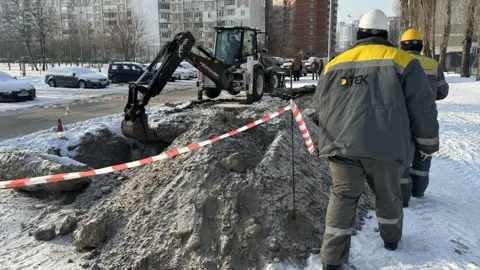
Around the clock, and across the sprawling city, engineers from private energy companies and the municipal authority are engaged in a relentless battle to repair power plants that have been directly struck or indirectly affected by Russian attacks. On a particularly frigid morning, dedicated engineers were observed employing mechanical diggers and working with their bare hands to locate and mend damaged power cables supplying the massive multi-occupancy tower blocks on the river’s eastern bank. City authorities have repeatedly urged residents and businesses to refrain from using high-energy consumption devices, as their usage severely strains the already fragile power grid. When electricity does return, the surge in demand can cause the system to collapse, leading to the very cable damage being witnessed. However, the engineer in charge acknowledged the temporary nature of their efforts. "It will take years and years. We are currently working literally in emergency modes," stated Andrii Sobko from the DTEK Grids repair crew. "The equipment is literally operating at its critical parameters so that at least the residents have light." As the war continues its brutal march, it is increasingly difficult to find anyone in Ukraine who has not been directly and profoundly impacted by the conflict.

Stanislav, or "Stas" as he is known, has also sought refuge on the Invincibility Train to find warmth, connect with friends, and charge his phone. The eleven-year-old vividly recounts the opening days of the war nearly four years ago, recalling the bright flashes in the sky, a "bright orb," as Russia unleashed its initial attacks. Today, it is the pervasive threat of Russian drones that haunts his nights. "When I hear something flying it’s really scary, because you don’t know if it will explode now, or if it will fly on and you survive." Perched on the top bunk of the carriage where he sits with a friend, Stas speaks with disarming frankness about the war’s impact on his generation. "I forget the times when there was no war, I don’t remember those moments – life is difficult," he says, his smile wide and his demeanor remarkably ebullient.
The train draws a diverse crowd, all seeking warmth, comfort, or companionship. However, a conversation with an elderly lady, who humbly states her discomfort pales in comparison to the soldiers on the front lines, is abruptly cut short by the familiar, high-pitched wail of an air raid alert echoing from their phones. The conductor swiftly orders everyone off the train and directs them towards a shelter approximately a kilometer away. Many opt to return home instead, to the cold and their interrupted power supplies. Yet, all – including Stas and Alina – express their intention to return the following day.
There is a pervasive sense of resilience in Kyiv, a collective effort to put on a brave face. This exceptionally cold winter, even by Ukrainian standards, will eventually recede, and the energy crisis will likely ease. However, the overarching fear that looms largest for most is that, despite pockets of optimism at the close of the previous year, there remains no discernible end in sight to the war itself, and the inevitable, devastating loss of life it continues to inflict.
Additional reporting by Firle Davies and Mariana Matviechuk.




 Ramos Leo
 Nakalama John

 atisusanti