Nana Banana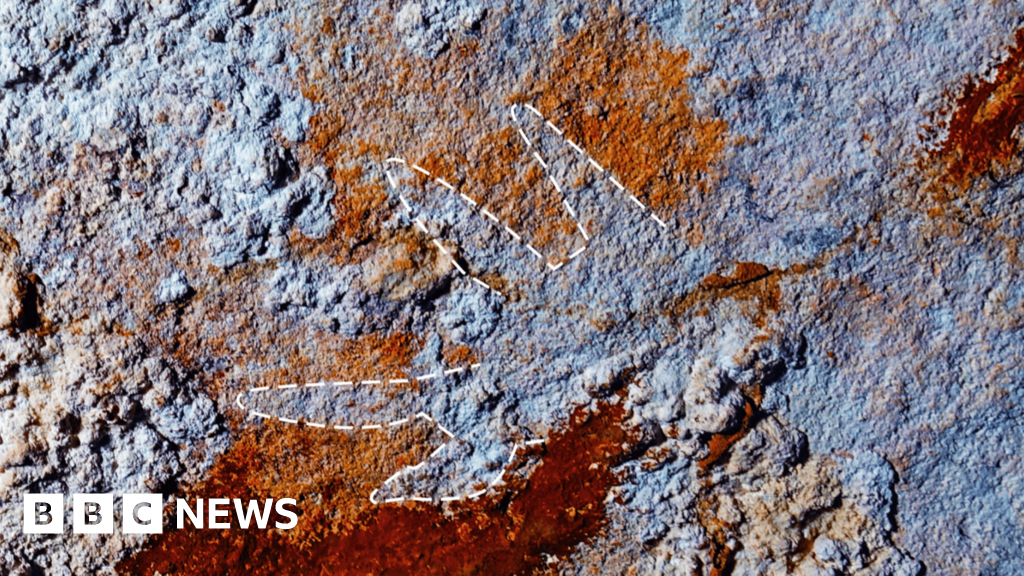
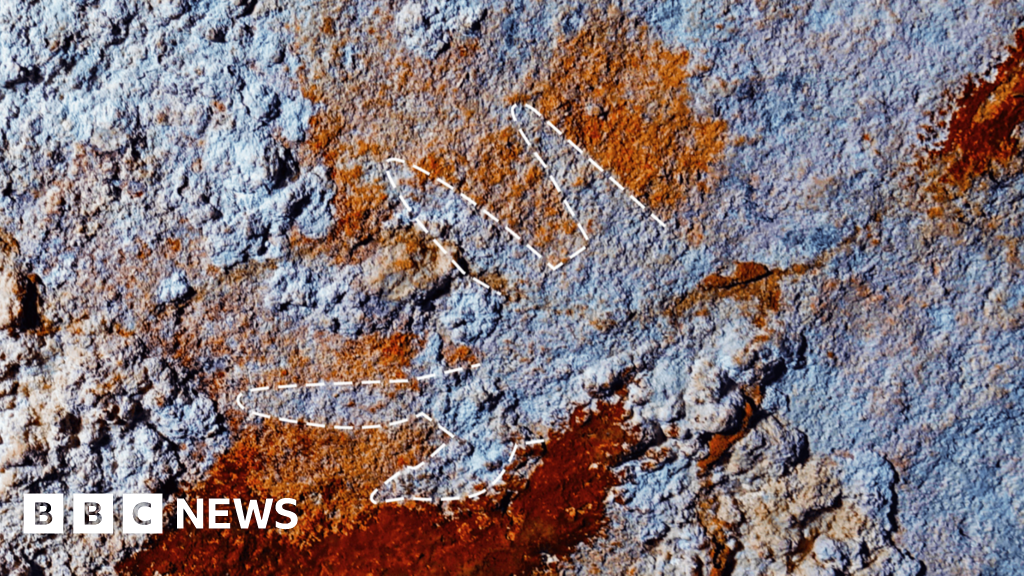
The red outline of a hand, found within the limestone cave of Liang Metanduno on Muna, a small island off southeastern Sulawesi, offers compelling evidence that Homo sapiens possessed advanced abstract thinking much earlier and more geographically widespread than previously understood. The dating, achieved through uranium-series analysis of mineral crusts overlying the pigment, provides a robust minimum age, lending irrefutable weight to its antiquity. This precise dating method examines the radioactive decay of uranium isotopes in the calcium carbonate formations (speleothems) that accumulate on top of or beneath the cave art, offering a chronometer for the artwork itself. This precision stands in contrast to some earlier datings of European cave art which have faced scrutiny due to methodological debates.
For decades, the prevailing academic view, often termed the "Eurocentric" model, posited that the explosion of human creativity and abstract thought occurred primarily in Ice Age Europe, around 40,000 years ago. Iconic sites like Altamira and El Castillo in Spain, with their spectacular depictions of animals and early symbols, fostered the idea of a sudden "cognitive big bang" in France and Spain, from which sophisticated cultural practices then diffused. However, a series of pivotal discoveries over the past decade, particularly in Southeast Asia and Africa, has systematically dismantled this Eurocentric narrative. The Sulawesi findings, spearheaded by an international team including Professor Adam Brumm of Griffiths University in Australia and Professor Maxime Aubert, are at the forefront of this paradigm shift.
Professor Brumm emphasizes that the latest discovery firmly entrenches the emerging consensus: human creativity was not a singular European awakening but an innate characteristic of our species, with roots stretching back to our African origins. He recounted how, during his university days in the 1990s, the "creative explosion" was taught as a distinctly European phenomenon. "But now," he states, "we’re seeing traits of modern human behaviour, including narrative art in Indonesia, which makes that Eurocentric argument very hard to sustain." The evidence now points to a much deeper and more widespread story of human ingenuity, suggesting that the capacity for complex symbolic expression was an intrinsic part of the Homo sapiens toolkit long before our ancestors ventured into Europe.

What makes this particular hand stencil so significant is not merely its age, but the deliberate modification of its form. The ancient artist did not simply press their hand against the cave wall and spray pigment around it, a common technique for hand stencils globally. Instead, after the initial stencil was created, the outlines of the fingers were meticulously altered – narrowed and elongated to mimic a claw. This intentional transformation, as Brumm highlights, is "a very us thing to do." It signifies a level of artistic intent and symbolic manipulation beyond mere representation; it’s an act of imaginative abstraction, transforming a natural form into something conceptually different. This sophisticated cognitive leap underscores the early development of symbolic thinking, a cornerstone of human intelligence that underpins language, religion, and scientific reasoning. In contrast, while Neanderthals also created cave art in Spain around 64,000 years ago (though its dating is debated), there is no equivalent evidence of such deliberate, creative transformation of natural forms within their known artistic repertoire.
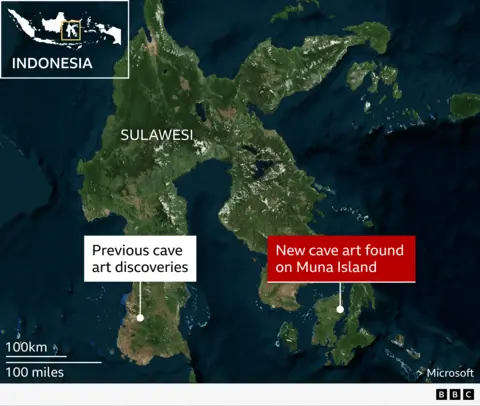
The geographical location of this latest find further amplifies its importance. Previous groundbreaking discoveries of ancient cave art in Sulawesi, dating back to 40,000, 44,000 (a hunting scene), and 51,200 years ago (a narrative pig and human painting), all came from the Maros Pangkep karst region in the island’s southwest. The fact that this much older, 67,800-year-old stencil was found on Muna, a separate satellite island on the opposite side of Sulawesi, strongly suggests that the practice of making images on cave walls was not an isolated, local experiment. Instead, it indicates a widespread, deeply embedded cultural tradition among the early human populations that traversed and settled this vast region. This distribution pattern reinforces the idea that symbolic art-making was a pervasive aspect of their societies, rather than a localized anomaly.
Moreover, the timeline established by this discovery has direct and significant implications for understanding the migration patterns of early Homo sapiens and their arrival in ancient Sahul, the vast landmass that once connected Australia and New Guinea during periods of lower sea levels. For many years, based largely on DNA studies and most archaeological sites, the mainstream view held that the ancestors of Aboriginal Australians first reached Sahul around 50,000 years ago. However, with robust evidence now confirming Homo sapiens were settled on Sulawesi and creating complex symbolic art at least 67,800 years ago, it makes it considerably more plausible that earlier, more controversial archaeological evidence for human presence in northern Australia by approximately 65,000 years ago is indeed accurate. Adhi Agus Oktaviana, from Indonesia’s national research and innovation Agency (BRIN), posits, "It is very likely that the people who made these paintings in Sulawesi were part of the broader population that would later spread through the region and ultimately reach Australia." This discovery thus helps to bridge the chronological gap and solidify the narrative of an earlier human expansion into Oceania.
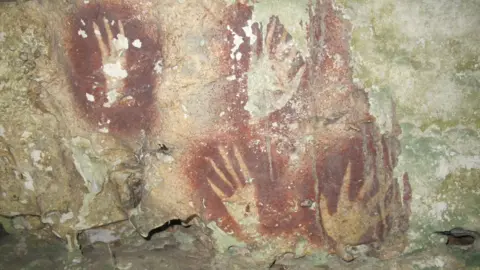
Cave art serves as a critical marker for the evolution of human cognition because it represents a profound shift from merely reacting to the environment to actively interpreting, representing, and sharing conceptual narratives about it. These early paintings and engravings demonstrate a capacity for abstract thought that underpins all complex human endeavors. They are not just records of existence but expressions of identity, belief systems, and shared stories, a level of communication and symbolic representation unmatched by any other species. The continuous use of sites like Liang Metanduno, where other, much younger paintings on the same panel date as late as about 20,000 years ago, further illustrates the enduring cultural significance of these locations. This single cave served as a focal point for artistic activity spanning at least 35,000 years, highlighting a sustained engagement with symbolic expression across generations.
Professor Aubert emphasizes that the cumulative weight of discoveries in Sulawesi, alongside very old figurative and narrative paintings, is shaping a new consensus. It indicates that the capacity for symbolic thought and artistic expression was present in humans for a very long time, certainly when they embarked on their journey out of Africa, and likely even before. This latest finding is not just a chronological adjustment; it’s a redefinition of the human story, painting a picture of an inherently creative species whose imaginative faculties were deeply ingrained and globally dispersed from very early stages of our journey across the planet. The red claw hand from Sulawesi stands as a powerful testament to the enduring mystery and profound depth of human creativity, challenging us to rethink the very origins of what makes us uniquely human.



 George Anjay
 Ramos Leo
 Nakalama John