
 Nana Banana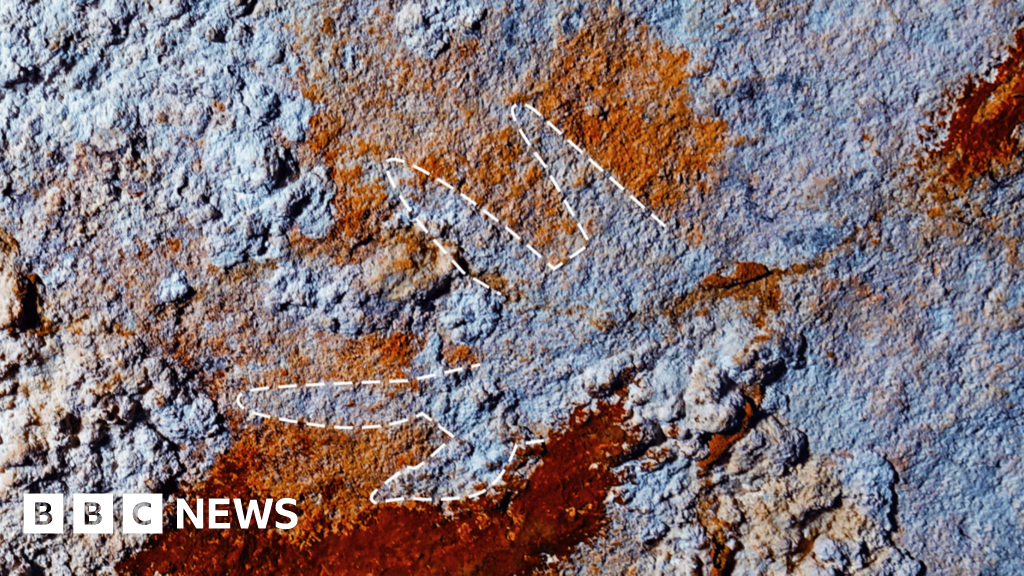
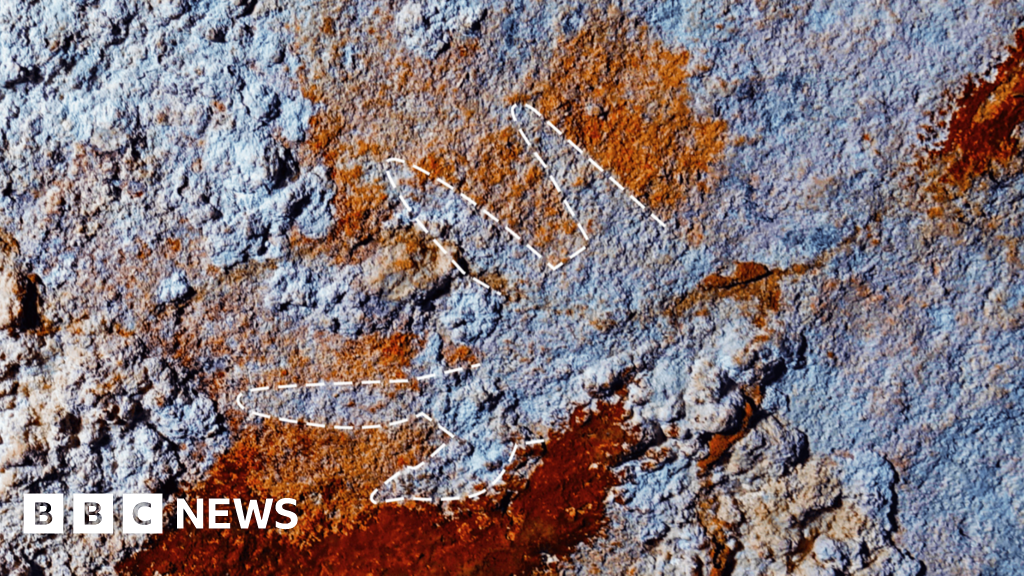
What makes this particular hand stencil even more extraordinary is not just its age, but its artistic modification. Researchers observed that the red outline of the hand, initially a simple impression, had its fingers deliberately reworked and elongated to create a distinctive, claw-like motif. This intentional alteration, far from being a mere imprint, suggests an early and sophisticated leap in symbolic imagination and abstract thought, indicating a level of creative manipulation previously unexpected for such an ancient period. This creative transformation, as Professor Adam Brumm of Griffiths University in Australia described it, is "a very us thing to do," highlighting a uniquely human capacity for imaginative reinterpretation of reality.
The profound implications of this discovery extend beyond merely revising the age of the oldest known art. It significantly strengthens the argument that our species, Homo sapiens, had successfully navigated and settled the vast Australia–New Guinea landmass, collectively known as Sahul, approximately 15,000 years earlier than some prevailing theories suggest. For years, the mainstream archaeological view, often supported by DNA studies and the dating of most archaeological sites, placed the arrival of Homo sapiens in Sahul around 50,000 years ago. However, the firm evidence of sophisticated symbolic art being created on Sulawesi as early as 67,800 years ago makes it considerably more probable that controversial archaeological findings indicating human presence in northern Australia by about 65,000 years ago are indeed accurate. Adhi Agus Oktaviana, from Indonesia’s national research and innovation Agency (BRIN), emphasized this link: "It is very likely that the people who made these paintings in Sulawesi were part of the broader population that would later spread through the region and ultimately reach Australia."
Over the past decade, a series of remarkable discoveries across Sulawesi has systematically dismantled the long-held "Eurocentric" notion that artistic expression and abstract thinking in our species burst into existence suddenly during the Ice Age in Europe, subsequently spreading outward. Cave art is widely regarded as a pivotal marker in human evolution, signifying the point when humans began to engage in truly abstract and symbolic thought processes – the very foundations of language, religion, and scientific inquiry. Early paintings and engravings are not merely passive reactions to the environment; they represent a profound shift towards actively representing the world, sharing narratives, and forging collective identities in ways that no other species is known to have achieved.
Professor Brumm, co-leader of the research project, articulated the paradigm shift in thinking, telling BBC News that the latest findings, published in the esteemed journal Nature, solidify the emerging consensus that humanity’s cognitive "awakening" was not confined to Europe. Instead, creativity appears to be an innate characteristic of our species, with evidence tracing its roots back to Africa, where Homo sapiens first evolved. He recalled his university education in the 1990s, where the "creative explosion in humans" was taught as a phenomenon occurring in a specific part of Europe. "But now we’re seeing traits of modern human behaviour, including narrative art in Indonesia, which makes that Eurocentric argument very hard to sustain," Brumm stated, underscoring the global reach of early human innovation.
The previous record-holder for the oldest reliably dated cave art was a red hand stencil in Maltravieso cave in Western Spain, dated to be at least 66,700 years old. However, this dating has been a source of considerable academic contention, with some experts expressing skepticism about its accuracy. The new Sulawesi find, with its robust dating, effectively bypasses this debate.

The significance of Sulawesi as a hotspot for ancient art has been building over several years. In 2014, hand stencils and depictions of animals dating back at least 40,000 years were first reported from the region. This was followed by the discovery of a hunting scene estimated to be at least 44,000 years old, and then a complex narrative painting featuring a pig and human figures, dated to at least 51,200 years ago. Each subsequent discovery, as Professor Maxime Aubert of Griffiths University explained, progressively pushed back the timeline for sophisticated image-making. "We started with minimum ages of at least 40,000 years, the same time as in Europe, but by getting closer to the pigment we’ve pushed the rock art in Sulawesi back by at least another 28,000 years," Aubert noted, highlighting the dramatic re-evaluation of human artistic history.
The ancient graffiti artist responsible for the latest discovery employed a technique akin to spray-painting. They pressed their hand flat against the cave wall, then blew or spat a mouthful of pigment – likely a red ochre solution – around it. Upon removing the hand, a negative outline was left behind on the rock. The fragmentary hand stencil found in Liang Metanduno was overlain by thin mineral crusts. It was the precise uranium-series dating of these crusts, formed over the pigment, that yielded the minimum age of 67,800 years, cementing its status as the world’s oldest reliably dated cave art.
Crucially, the artist’s intervention extended beyond simple pigment application. After the initial stencil was created, the outlines of the fingers were meticulously altered – narrowed and elongated to achieve the distinctive claw-like appearance. This act of creative transformation, turning a simple handprint into a symbolic motif, offers a compelling glimpse into the advanced cognitive capabilities of these ancient artists. Professor Brumm pointedly contrasted this experimentation with the art attributed to Neanderthals in European caves around 64,000 years ago, noting a lack of similar creative manipulation, though Neanderthal art dating itself remains a subject of intense academic dispute.
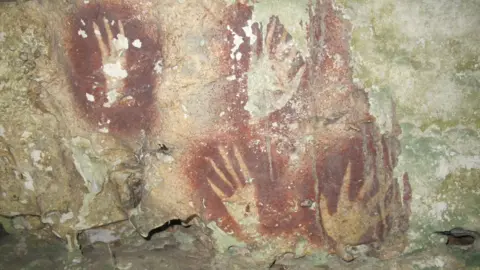
Until this latest discovery on Muna, all significant rock art findings in Sulawesi had originated from the Maros Pangkep karst region in the island’s southwest. The fact that this much older stencil has emerged on the opposite side of Sulawesi, on a distinct satellite island, holds significant implications. It strongly suggests that the practice of creating images on cave walls was not an isolated or local experiment but rather a deeply ingrained cultural trait, widespread among the human populations that dispersed across the broader region. This geographical spread indicates a robust and prevalent artistic tradition.
Professor Brumm also highlighted the extensive fieldwork conducted by Indonesian colleagues, which has unveiled "hundreds of new rock art sites" across remote areas. These sites reveal that some caves were utilized repeatedly for artistic purposes over tens of thousands of years. At Liang Metanduno itself, other, much younger paintings on the same panel – some dating as late as approximately 20,000 years ago – demonstrate that this single cave served as a continuous focal point for artistic activity spanning at least 35,000 years, a testament to its enduring cultural significance.
The geographical position of Sulawesi, situated along the northern sea route connecting mainland Asia with ancient Sahul, means these dates have direct and critical implications for understanding the migration patterns of the ancestors of Aboriginal Australians. For many years, the consensus based on genetic studies and most archaeological evidence suggested Homo sapiens first reached Sahul about 50,000 years ago. However, with robust evidence of sophisticated symbolic art being produced on Sulawesi by at least 67,800 years ago, it lends substantial weight to the controversial archaeological claims of human presence in northern Australia by around 65,000 years ago.

The once dominant "European big bang" theory of the mind posited that a sudden cognitive explosion occurred in Europe around 40,000 years ago, marked by the simultaneous appearance of cave paintings, carvings, ornaments, and new stone tools in France and Spain, shortly after Homo sapiens arrived there. Spectacular Ice Age cave art found in iconic sites like Altamira and El Castillo reinforced the idea that symbolism and artistic expression switched on almost overnight in Ice Age Europe.
However, this narrative has been progressively challenged. Engraved ochre, beads, and abstract marks discovered at South African sites such as Blombos Cave, some dating back between 70,000 and 100,000 years, conclusively demonstrated that symbolic behavior was already well-established in Africa long before any European "big bang." Along with the increasingly older and more complex figurative and narrative paintings emerging from Sulawesi, a new, more nuanced consensus is being shaped. Professor Aubert conveyed this evolving understanding to BBC News: "What it suggests is that humans would have had that capacity for a very long time, at least when they left Africa – but probably before that." This latest discovery further solidifies the view that human creativity is an ancient, deeply embedded, and widespread characteristic of our species, fundamentally rewriting the origins of human artistic and abstract thought.



 Ramos Leo
 atisusanti
 Nakalama John
 George Anjay

 Roy Suryo