
 Nakalama John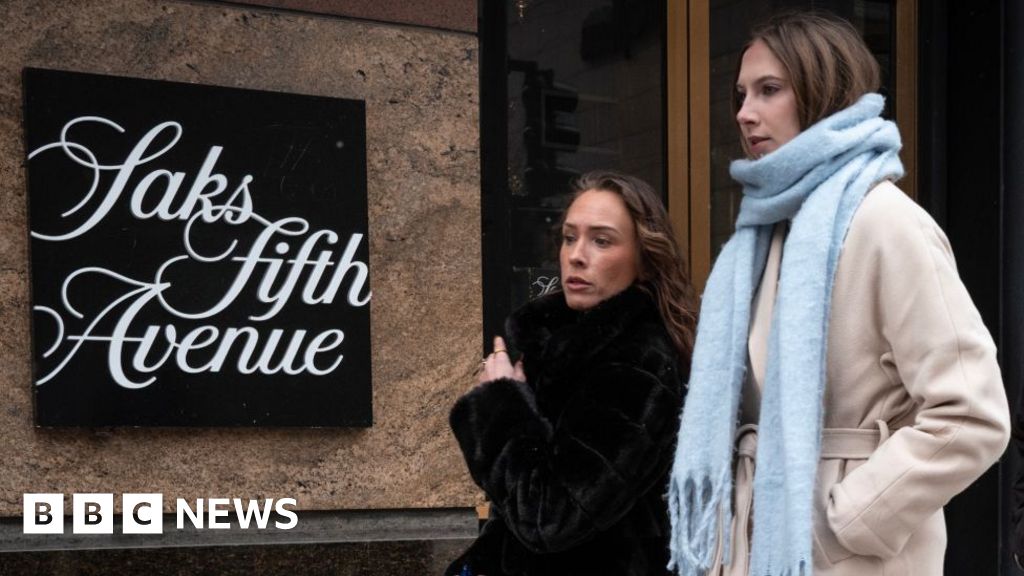
On a recent January morning, tourists admired the rows of Balenciaga and Burberry handbags on display at Saks Fifth Avenue’s flagship midtown Manhattan location. The opulent displays, shimmering with designer labels and aspirational glamour, seemed to project an image of unwavering luxury and robust inventory. Yet, beneath this polished facade, a quiet conversation on the second floor hinted at a deeper malaise, exposing the severe financial troubles gripping one of America’s most iconic luxury department stores.
Penelope Nam-Stephen, a longtime and loyal customer, approached the Diptyque counter, seeking a specific home fragrance she had consistently purchased from Saks for years. Nam-Stephen, who seamlessly navigates life between New York City and Boston, had been taken aback to find the coveted product conspicuously unavailable at the Boston store just after Christmas. Holding onto hope, she ventured into the Manhattan flagship, anticipating that its larger scale and prominence would guarantee a more robust inventory. "Do you have anything in the Berries fragrance?" she inquired of an employee. His terse, disheartening response cut through the store’s luxurious hum: "Everything is out of stock – candles, diffusers." This seemingly isolated incident was, in fact, a stark symptom of a systemic crisis.
Saks Global, the ambitious conglomerate that now owns both Saks Fifth Avenue and Neiman Marcus, is reportedly on the precipice of filing for bankruptcy protection. This imminent financial restructuring casts a long shadow over the future of the luxury retailer, sparking profound uncertainty and urgent questions among its loyal clientele, critical vendor partners, and anxious investors alike. The once-unassailable institution finds itself struggling desperately to shore up its finances, grappling with a confluence of strategic missteps and market pressures.
Saks’s deepening financial woes are largely traced back to a pivotal and highly controversial decision in 2024: the acquisition of rival luxury giant Neiman Marcus by Saks Fifth Avenue’s parent company, a deal valued at an eye-watering $2.7 billion. Executives at the time had championed the merger as a transformative move, confidently asserting that it would unlock significant cost efficiencies, generate powerful synergies, and ultimately bolster the market positions and profitability of both venerable brands. The vision was to create an unparalleled luxury retail powerhouse, capable of dominating the high-end market.
However, the department store landscape was already fraught with challenges long before this ambitious merger. Both Saks Fifth Avenue and Neiman Marcus had been under immense strain, burdened by escalating debt loads and struggling to adapt to rapidly shifting consumer shopping habits. The inexorable rise of e-commerce, coupled with the growing popularity of direct-to-consumer (DTC) luxury brands, had steadily eroded the traditional department store model. Saks Fifth Avenue, specifically, had begun reporting alarming double-digit quarterly sales declines as early as 2023, a clear indicator of underlying issues that the merger was ostensibly designed to fix.
Tragically, the heralded benefits of the acquisition never materialized. Instead, the deal compounded existing problems. The newly formed Saks Global failed to make a crucial $100 million interest payment to its creditors, which was due in late December 2025. This missed deadline was directly tied to the approximately $2.2 billion of debt that the company had specifically incurred to finance the Neiman Marcus merger. A payment default of this magnitude is a grave signal of severe liquidity issues and impending financial distress, further eroding creditor confidence.
The missed payment came amidst mounting frustration from Saks’s network of vendors, who had been bemoaning months-long, systemic payment delays. Many of these suppliers, from renowned luxury houses to smaller, artisanal brands, had been forced to halt shipments of their products to Saks, creating a critical bottleneck in inventory. The lack of timely payments meant a critical disruption to the supply chain, directly translating into empty shelves and unavailable items, as customer Penelope Nam-Stephen discovered. Saks Global, notably, remained silent, failing to respond to repeated requests for comment on these inventory shortages and its plan to address the mounting vendor payment crisis.
Further compounding the instability, the company’s former chief executive, Marc Metrick, abruptly resigned from his post in early January 2026. His departure, swift and unannounced, added another layer of uncertainty to the unfolding drama. He was swiftly replaced by Richard Baker, Saks’s executive chairman, a figure instrumental in orchestrating the ill-fated Neiman Marcus deal. Baker’s return to the helm, a direct consequence of the crisis, suggested a desperate attempt to stabilize the sinking ship.
A potential restructuring process at Saks Global, which also oversees the prestigious Bergdorf Goodman brand, would not necessarily spell the immediate closure of Saks stores. Bankruptcy protection, typically Chapter 11 in the U.S., allows a company to reorganize its business affairs, debts, and assets under the supervision of a bankruptcy court, often enabling it to continue operating while developing a plan to repay its creditors. However, retail analysts and longtime vendors remain deeply skeptical, questioning whether the company can genuinely regain its footing after the profound strategic missteps tied to the acquisition just over a year ago.
"This company has exhibited all of the characteristics of a train wreck," declared Mark Cohen, the former head of retail studies at Columbia Business School, mincing no words. Cohen’s scathing assessment underscores the deep-seated problems plaguing the retailer. In recent months, the retail giant had made desperate attempts to raise cash, including the sale of valuable assets such as a prime Beverly Hills property – a common maneuver for distressed companies seeking to inject liquidity. Despite these efforts, the company’s distress has only intensified, pushing it closer to the brink.
Some of Saks’s fundamental woes, Cohen argued, considerably predate its controversial acquisition of Neiman Marcus, a rival that itself had previously filed for bankruptcy protection. He traced many of the problems back to Richard Baker’s initial takeover of Saks more than a decade ago. At that juncture, Cohen contended, the retailer’s leadership began to focus less on the intrinsic integrity of the core business and its operational excellence, and more on orchestrating complex financial deals and transactions that ultimately proved detrimental to the company’s long-term health.
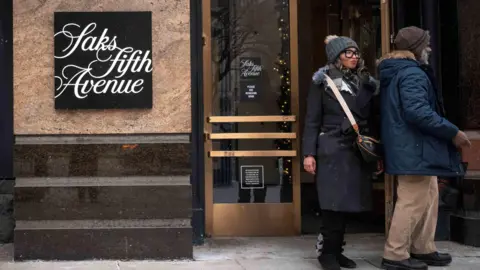
Brands that fill Saks’s coveted in-store aisles and populate its extensive online catalogues had begun complaining about delayed payments even before the Neiman Marcus acquisition – an early and ominous sign of severe cash flow constraints. The merger two years ago, far from resolving these existing financial problems, dramatically intensified them. Saks took on billions of dollars of additional debt to finance the deal, layering this new financial burden onto the significant sums it already owed its existing vendors. "Right out of the gate, they stopped paying their bills," Cohen emphasized, highlighting the immediate and destructive impact of the acquisition. "You can’t stay upright as a retailer, whether you’re a discount retailer or a luxury player, without having a reliable, consistent financial relationship with your suppliers."
‘Less likely’ to shop at Saks
For shoppers, the company’s escalating financial turmoil has manifested itself in tangible and frustrating ways: conspicuously less inventory on shelves and online, and, more recently and alarmingly, a surge in cancelled orders. These operational failures directly undermine the luxury experience Saks is supposed to embody.
Richard Browne, a 66-year-old marketing consultant residing in Winston-Salem, North Carolina, had been a loyal customer for five years, consistently purchasing men’s trousers, shirts, and sweaters from the Saks Fifth Avenue online catalogue. He was initially drawn to the retailer’s reputation for "good quality clothing at decent prices," a valuable proposition in the luxury market. However, by last summer, Browne began to notice early signs of trouble. Several items he sought were frequently marked as out of stock, a growing frustration.
Despite these initial inventory issues, Browne was not immediately dissuaded. He placed an order on January 1st for a pair of Michael Kors jeans, attractively discounted to $77, on the Saks Fifth Avenue website. To his utter surprise and dismay, he received an email the very next day, notifying him that the pants were, in fact, sold out. "We needed to cancel your order," the email from Saks Fifth Avenue, reviewed by the BBC, tersely stated. "It was just frustrating that I had spent the time to find an order, and then they said, ‘We’re sorry, tough luck’," Browne recounted, expressing his profound disappointment. He now states unequivocally that he is "less likely" to shop at Saks in the future, a sentiment echoed by many discerning luxury consumers.
Payment delays and cancelled orders
In October, Saks dramatically slashed its full-year financial outlook, explicitly citing falling sales directly attributable to its persistent inventory challenges. This public admission underscored the severity of the operational breakdown and its direct impact on the company’s bottom line.
Tensions with vendors have reached a critical point, escalating dramatically since the 2024 merger with Neiman Marcus, which was ironically billed as the definitive solution to the retailer’s long-standing cash flow problems. Last February, Marc Metrick, the company’s then-chief executive, attempted to placate frustrated suppliers by sending a letter promising that all overdue payments would be made in 12 staggered instalments. This gesture, however, did little to alleviate the deep-seated anxieties of the brands.

Some vendors, caught between a rock and a hard place, have continued to do business with Saks, driven by the fear of irrevocably fracturing a long-standing relationship with a major player in the luxury retail space. The potential loss of access to Saks’s high-net-worth customer base is a significant deterrent. Others, however, have recently chosen to sever their ties with the company, deeming the risks too high.
Hilldun, a crucial finance firm that guarantees orders for approximately 130 brands working with Saks, announced in November that it would cease approving any new Saks orders. This decision marked a profound and alarming shift for a company that had, just months earlier, publicly reiterated its confidence in the department store’s solvency. "We had no choice," stated Gary Wassner, Hilldun’s chief executive, underscoring the gravity of the situation. All orders from the brands it guarantees remain on an indefinite hold, effectively cutting off a significant portion of Saks’s supply.
One vendor, who spoke to the BBC on condition of anonymity for fear of professional backlash from Saks, revealed he is still owed at least $20,000 in late payments for shipments that went out to customers last year. His company utilizes a dropshipping model, where items are shipped directly to customers who place orders through the Saks catalogue. On top of these outstanding late payments, the vendor stated that his firm has more than $35,000 worth of unfilled orders that have been held up since October, when Saks abruptly instructed him to halt all shipments. "Even though we had two or three issues like this in the past, this time, the answer of, ‘Let’s cancel the orders’, seems to be a desperate move," he lamented. "Nothing they do makes any sense." This sentiment captures the widespread confusion and disillusionment among Saks’s crucial business partners.
The cumulative effect of these strategic missteps, financial mismanagement, and eroded trust has pushed Saks Fifth Avenue to the precipice. Its future, once seemingly unshakeable, now hangs precariously in the balance, a stark reminder of the unforgiving nature of the modern retail landscape, even for the most iconic names in luxury.




 George Anjay
 Ramos Leo

 atisusanti