Nana Banana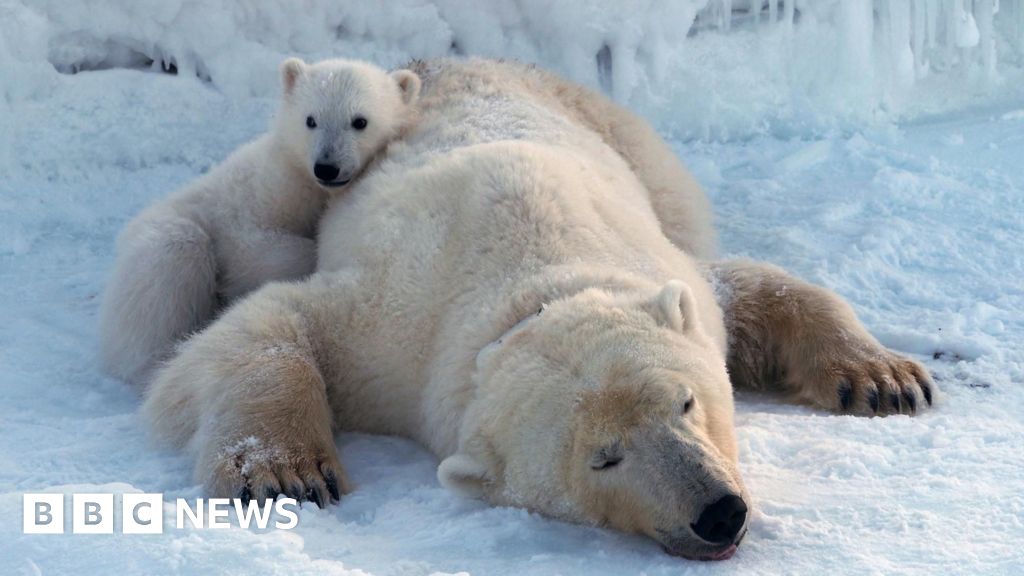
In a finding that has surprised the scientific community, polar bears inhabiting the remote Norwegian Arctic archipelago of Svalbard have become notably fatter and healthier since the early 1990s. This unexpected trend has unfolded even as the region has experienced a steady and significant decline in sea ice due to ongoing climate change. Scientists had largely anticipated the opposite outcome, fearing that diminishing ice would lead to a deterioration in the bears’ physical condition and overall health.
Polar bears (Ursus maritimus) are iconic predators uniquely adapted to life in the Arctic, and their survival is intricately linked to the presence of sea ice. Traditionally, these magnificent animals rely on sea ice as a crucial platform from which to hunt their primary prey: seals. Seals, particularly ringed and bearded seals, are rich in blubber, providing the polar bears with essential fat reserves. These reserves are vital for numerous physiological functions, including energy for survival, insulation against the extreme cold, and enabling mothers to produce nutrient-rich milk for their cubs, which is critical for their early development and survival. Without sufficient blubber, a bear’s ability to withstand the harsh Arctic environment, reproduce successfully, and sustain itself through lean periods is severely compromised.
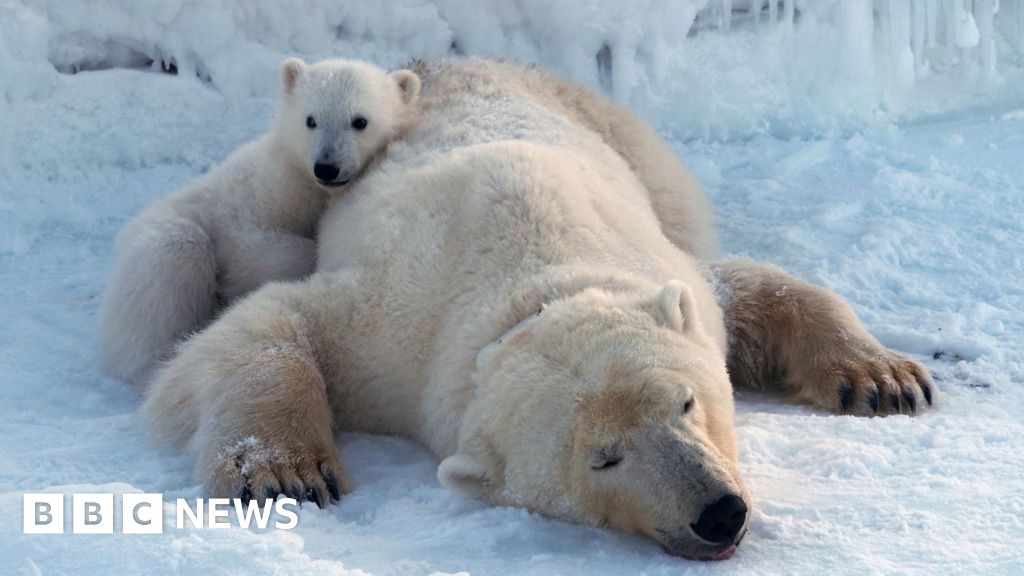
The comprehensive research, conducted by a team led by Dr. Jon Aars from the Norwegian Polar Institute, involved meticulous data collection over nearly three decades. Between 1992 and 2019, researchers weighed, measured, and assessed the body condition of 770 adult polar bears across the Svalbard archipelago. Their findings indicated a statistically significant improvement in the bears’ fat reserves and overall health during this period, a direct contradiction to prevailing hypotheses linking ice loss to declining bear health. Dr. Aars himself expressed his astonishment, stating, "The fatter a bear is the better it is. And I would have expected to see a decline in body condition when the loss of sea ice has been so profound."
This puzzling resilience in Svalbard’s polar bears appears to be a result of adaptive shifts in their diet and hunting strategies. Researchers hypothesize that the bears have diversified their food sources, increasingly turning to land-based prey. Two key species have emerged as significant contributors to their improved health: reindeer and walruses.
Walruses, immense marine mammals, were once heavily hunted to near extinction in Norway until international protections were introduced in the 1950s. This conservation success has led to a remarkable recovery in their population numbers across the region. Consequently, "there are a lot more walruses around [for them to hunt] these days," Dr. Aars explained. While walruses are formidable prey, much larger and more aggressive than seals, polar bears are opportunistic predators. They may be scavenging on walrus carcasses, preying on young or vulnerable individuals, or even ambushing adults resting on land. The sheer size and blubber content of a walrus provide a substantial energy boost, potentially compensating for reduced access to seals.
Similarly, reindeer populations in Svalbard have also seen an increase in recent decades, offering another land-based food option. While polar bears are not typically efficient hunters of fast-moving terrestrial prey, they are known to opportunistically hunt reindeer, especially calves or individuals weakened by illness or harsh conditions. This dietary flexibility suggests a remarkable adaptability in the face of environmental change.
Beyond new prey, Dr. Aars also proposed an intriguing hypothesis regarding seal hunting efficiency. He suggested that as sea ice cover diminishes and becomes more fragmented, seals might be forced to congregate in smaller, remaining patches of ice. This concentration of seals could, paradoxically, make them easier targets for polar bears. Instead of searching vast expanses of ice, bears might find "easier collective pickings" in these condensed areas, leading to more successful hunts despite the overall reduction in habitat.
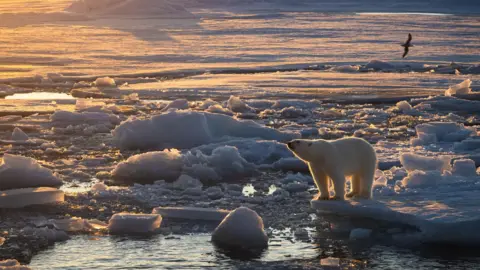
This period of improved polar bear health directly correlates with a dramatic alteration of the Arctic environment. During the same timeframe that the research was conducted (1992-2019), global temperature rise has increased the number of ice-free days per year in the Svalbard region by almost 100, at an alarming average rate of about four additional ice-free days each year. This stark environmental shift underscores the surprising nature of the bears’ current condition.
While the findings from Svalbard offer a rare glimmer of positive news amidst the broader narrative of climate change impacts on polar bears, researchers are quick to caution against over-optimism. This unexpected "boom" is unlikely to be sustainable in the long term. As sea ice continues its relentless decline, bears will inevitably have to travel greater distances and expend more energy to access dwindling hunting grounds. Such increased energetic demands will eventually deplete their precious fat reserves, negating any short-term benefits from alternative food sources.
The charity Polar Bears International (PBI) provides additional historical context. They highlight that Svalbard’s polar bear population was once among the most heavily hunted in the world, facing severe pressures until international protections were implemented in the 1970s. Experts suggest that the current findings could, in part, be attributed to the population recovering from this historical hunting pressure. This recovery, combined with the recent increase in walrus and reindeer populations, appears to have provided the bears with a temporary ecological boost, allowing them to thrive even as their traditional habitat shrinks.
Dr. John Whiteman, Chief Research Scientist at PBI, acknowledged the results as "positive in the short term." However, he emphasized that "body condition is only one piece of the puzzle." He pointed out that other recent research conducted on Svalbard’s polar bears revealed a more somber reality: a higher number of ice-free days has been directly linked to reduced survival rates in cubs, as well as in subadult and older female bears. This indicates that while adult bears might appear fatter, the broader demographic health and future viability of the population could still be under threat, particularly for the most vulnerable age groups.
It is crucial to understand that the situation in Svalbard appears to be an exception, rather than a universal trend across the Arctic. There are 20 known sub-populations of polar bears distributed across the vast Arctic region, and many are experiencing severe negative impacts from climate change.
A stark contrast to Svalbard can be observed in Canada’s Western Hudson Bay, home to one of the most southerly and best-studied polar bear populations. Here, a significant decline in the bear population has been directly and unequivocally linked to warming temperatures and the corresponding reduction in sea ice. Bears in this region face shorter hunting seasons on the ice, forcing them to endure longer fasting periods on land, leading to thinner body conditions, reduced reproductive success, and increased mortality. The struggles of the Western Hudson Bay bears serve as a stark reminder of the typical consequences of sea ice loss.
Dr. Whiteman reiterated the long-term outlook for polar bears, stating unequivocally that they need sea ice to survive. "Ice loss ultimately means bear declines," he asserted, while acknowledging that "the short-term picture can be very region-specific." He concluded with a sobering prediction for the species’ future: "In the long term," he told BBC News, "if ice loss continues unchecked, we know the bears will eventually disappear."
The Svalbard case, while intriguing, highlights the complex and sometimes unpredictable ways in which species adapt to environmental change. However, it also underscores the limits of such adaptation. Increased predation pressure on walrus and reindeer populations could eventually destabilize those ecosystems. Moreover, if the remaining seal congregations disperse or disappear entirely due to further ice loss, the bears’ current hunting efficiency will inevitably diminish. Elsewhere in the Arctic, the decline in sea ice is already bringing bears closer to human communities as they search for food, leading to increased conflicts and management challenges. While the temporary prosperity of Svalbard’s polar bears offers a momentary reprieve, it does not alter the fundamental truth: the long-term survival of polar bears as a species remains inextricably linked to the health and extent of the Arctic’s sea ice, making urgent climate action paramount for their future.



 George Anjay
 Ramos Leo
 Roy Suryo
 atisusanti
 Nakalama John