
 Nakalama John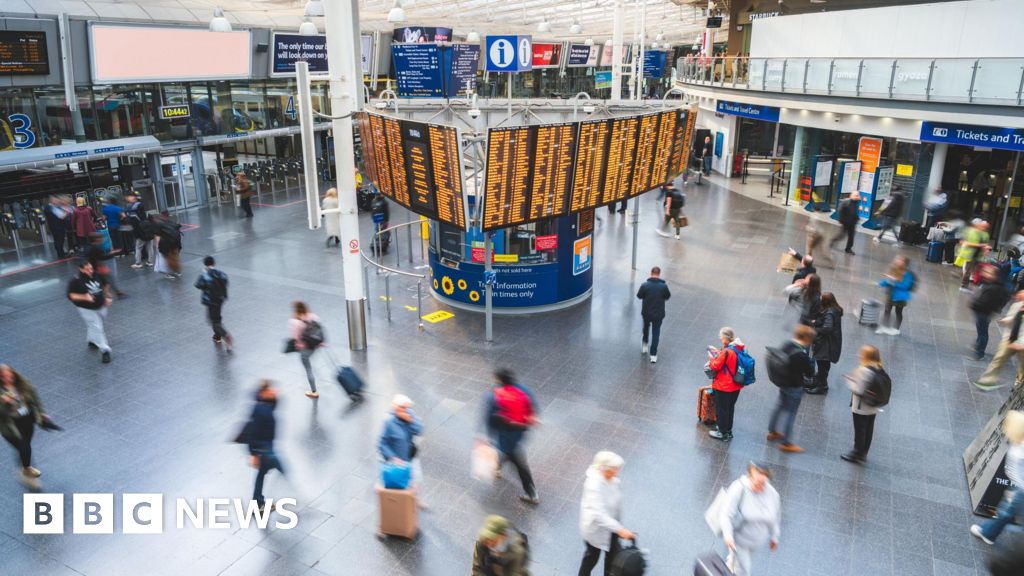
The multibillion-pound Northern Powerhouse Rail scheme is designed to revolutionise travel, promising faster journeys, more frequent and reliable train services, and substantial upgrades to both existing lines and new infrastructure. Crucially, it also includes significant improvements to key railway stations across the region. The concept of such a transformative project has languished in various stages of planning and political rhetoric for well over a decade, fostering deep-seated cynicism among residents and businesses. Despite this protracted genesis, Reeves expressed confidence that tangible improvements would begin to be felt by the early 2030s, offering a much-needed horizon for a region long promised but often disappointed.
However, the ambitious timeline is not without caveats. While some benefits are expected sooner, the more substantial components of the plan, particularly those requiring entirely new construction, will not see "spades in the ground" until after 2030. Reeves highlighted that one critical section of the proposed route – the vital link between Leeds and Manchester – is already undergoing upgrades. This strategic approach aims to deliver earlier improvements, with the Chancellor stating, "we’re not going to wait until the whole line is built for people to be able to see the benefits."
Speaking to the BBC, Reeves openly addressed the pervasive doubt, admitting she "totally gets the cynicism" from Northern passengers who have, she conceded, "been let down" repeatedly by past promises. "But we’re doing this properly, doing this right," she asserted, aiming to instill genuine confidence. "Because I want to give confidence to people that this is actually going to happen. It’s going to improve your train links, whether you live in Pudsey or Rotherham, or Newcastle or Darlington, or in the centres of Manchester and Liverpool, and Bradford and Sheffield." This emphasis on broad regional impact underscores the ambition to connect disparate urban centres into a cohesive economic powerhouse.
An initial sum of £1.1 billion has been specifically earmarked for the crucial design and preparatory phases of NPR, laying the groundwork for future construction. The project is slated for delivery in distinct, manageable phases. The first phase will concentrate on vital upgrades to existing lines connecting the key cities of Leeds, York, Bradford, and Sheffield. This foundational work aims to improve capacity and speed on established routes. The second phase will involve the construction of an entirely new route, creating a direct and efficient link between the major economic hubs of Liverpool and Manchester. Finally, the third phase will focus on further enhancing connections between Manchester and cities across Yorkshire, stitching together the fabric of the Northern rail network.
The government projects that this "transformation" of travel infrastructure in the North will yield substantial economic dividends. Beyond merely shortening commutes for millions, it is expected to encourage significant investment across the entire region, ultimately adding an estimated £40 billion to the British economy over time. This economic impact is central to the broader "levelling up" agenda, which seeks to reduce regional disparities and unlock latent potential outside of London and the South East.
The narrative of promised investment in Northern infrastructure is a long and often frustrated one. The Northern Powerhouse concept itself was first articulated by former Conservative Chancellor George Osborne in 2014, with subsequent governments, notably under Boris Johnson, adopting a "levelling up" agenda that explicitly prioritised such projects. However, many of these promised rail investments were subsequently scaled back or delayed, contributing to the current climate of public skepticism.
Richard Bowker, who previously headed the Strategic Rail Authority (SRA) – the body established to oversee investment and development of the UK’s rail network before its abolition in 2005 – cautioned that while NPR is a "great idea," it represents a "very long delivery programme." He warned that it would be "quite a long time before we see anything practical because it takes time to develop." This expert perspective highlights the inherent complexities and lengthy timescales associated with large-scale infrastructure projects, reinforcing the public’s understandable impatience.
Commuters themselves remain deeply wary. Sarah, a passenger whose train to Manchester Airport had just been cancelled, putting her flight in jeopardy, articulated a common sentiment. "There needs to be a bit of care, TLC [tender loving care] given up North," she told the BBC, lamenting the frequent cancellations and disruptions that plague Northern rail services, a stark contrast, she observed, to the perceived reliability of London’s transport networks. Her experience underscores the urgent need for not just grand projects, but also day-to-day operational improvements.
Beyond the initial £1.1 billion for planning, the government has not yet announced a firm budget or committed specific funds for NPR beyond 2029. Instead, a cap of £45 billion has been set for central government funding, with the expectation that this could be supplemented by contributions from local authorities and private sector investment. This phased funding approach, while fiscally prudent, also introduces an element of uncertainty for long-term planning. The government plans to make NPR the centrepiece of a wider Northern Growth Strategy, which is expected to be published in the spring, aiming to integrate transport improvements with broader economic development goals.
The first phase of NPR will not only upgrade lines but also see significant improvements to existing railway stations in Leeds, Sheffield, and York. Crucially, the plans include pressing ahead with a much-anticipated new station at Bradford. Supporters argue this new hub would be transformational, enabling young job seekers from the city to access a vastly wider array of opportunities across the region, effectively expanding Bradford’s labour market. A new station is also expected at Rotherham Gateway, further enhancing connectivity. Additionally, the Department for Transport (DfT) has confirmed it will actively pursue the business case to re-open the Leamside line in the North East, a long-dormant but strategically important route.
Transport Secretary Heidi Alexander echoed Reeves’ sentiment, stating, "For too long, the North has been held back by underinvestment and years of dither and delay." The DfT explicitly acknowledged that crucial lessons have been learned from the troubled attempts over the last decade to build the HS2 network. HS2, originally conceived as a Y-shaped high-speed line from London, splitting at Birmingham towards Manchester and Leeds, has become severely over budget, significantly behind schedule, and dramatically scaled back from its initial concept. It will now terminate at Birmingham, with its cost expected to exceed £80 billion. Reeves explicitly stated, "We are learning lessons from HS2, which is a byword for a disastrous project which is massively over budget and where scope has had to be curtailed because of cost overruns."
The government’s strategy for NPR aims to avoid a repeat of HS2’s spiralling costs by committing to a detailed three-year planning and design period. This meticulous approach allows for a thorough assessment of costs and benefits before major construction begins, and also provides the flexibility to delay allocating substantial further funding while the public finances remain under pressure. The government also indicated its intention to build a new rail link between Birmingham and Manchester following NPR’s completion, though it remains unclear whether this would be a high-speed line, addressing some of the connectivity gaps left by HS2’s curtailment.
Industry leaders largely welcomed the announcement, albeit with caution. Rob Morris, joint chief executive of Siemens Mobility in the UK & Ireland, told the BBC that the announcement "looks very real" and would undoubtedly boost productivity in the North. However, he also voiced a common concern, stating his wariness, having witnessed a history of "stop start" funding for rail projects under previous governments. This highlights the critical need for sustained political will and consistent financial commitment to see such a long-term project through to completion.
Politically, the announcement drew fire from the Conservatives, who accused the government of "watering down" Northern Powerhouse Rail. Shadow rail minister Jerome Mayhew contended that ministers had "put back any plans to actually deliver it and rewritten timetables on the fly." He argued that "Northern Powerhouse Rail could have been transformational, empowering regional growth and regeneration. Under Labour it risks becoming a permanent mirage that is endlessly redesigned, downgraded and never delivered." This criticism underscores the ongoing political battle over the scale and ambition of Northern infrastructure projects.
Conversely, Henri Murison, chief executive of the Northern Powerhouse Partnership, an organisation dedicated to supporting the coordinated economic development of the North of England, offered a more optimistic assessment. He praised the plan for providing a "clear route to higher productivity growth." Murison emphasised the transformative social and economic benefits, stating, "Northern Powerhouse Rail will enable a single labour market more like that of London and the South East so a young person in Bradford could aspire to work in Sheffield or Manchester, or a business there attract talent from further afield than they can today." This vision of an interconnected, dynamic Northern economy remains the ultimate prize, one that proponents believe is now, finally, within reach.



 George Anjay
 Ramos Leo

 atisusanti