
 Nana Banana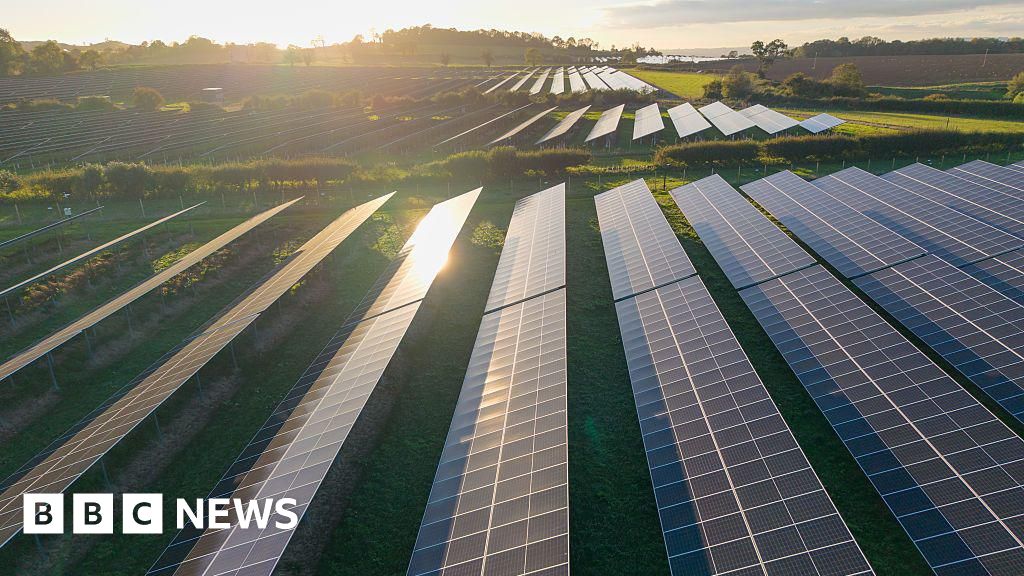
Great Britain’s journey towards a sustainable energy future reached a significant milestone in 2025, with renewable energy sources—primarily wind and solar—generating an unprecedented amount of electricity. This record output, crucial for the nation’s climate change commitments, was revealed through a comprehensive analysis by the BBC, drawing on provisional figures from the National Energy System Operator (Neso). While the surge in clean power offers a beacon of progress, a slight, unexpected rise in electricity generation from fossil gas underscored the persistent challenges in achieving the government’s ambitious "clean power" target by 2030.
The year 2025 witnessed a remarkable acceleration in the deployment and efficiency of renewable technologies. According to the Neso data, wind emerged as the single largest contributor to Great Britain’s renewable electricity mix, solidifying its role as the backbone of the green energy transition. However, it was solar power that captured significant attention, experiencing a nearly one-third increase in generation compared to 2024 levels. This impressive growth was partly propelled by 2025 being recorded as the UK’s sunniest year, coupled with a substantial expansion of solar infrastructure across the country, from large-scale farms to countless rooftop installations.
Pranav Menon, a research senior associate at the Aurora Energy Research think tank, acknowledged the positive trends, stating, "It has been quite a strong year in terms of deployment of renewables." Yet, he cautioned that the current pace, while encouraging, might not be sufficient to meet the nation’s aggressive climate goals. "[But] what we’re not seeing is kind of the exponential scale-up that you’d need to get to clean power 2030, because those targets are very, very ambitious," Menon added.
The government’s "clean power" target aims to drastically reduce reliance on polluting gas for electricity generation by 2030, striving for nearly zero emissions from this sector. This objective is not only about environmental stewardship but also economic relief, with the government arguing that clean power can help bring down energy bills by up to £300 by the decade’s end. It’s important to note that Neso data and the "clean power" target specifically pertain to Great Britain, excluding Northern Ireland, which operates its own distinct electricity transmission system.
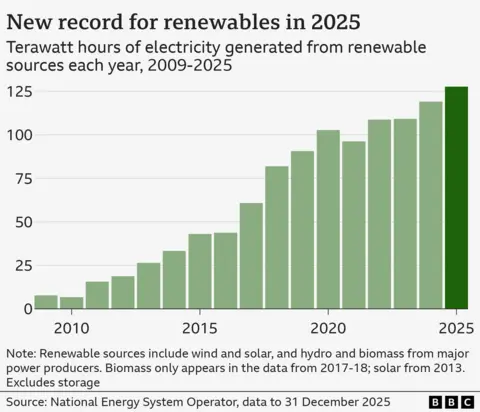
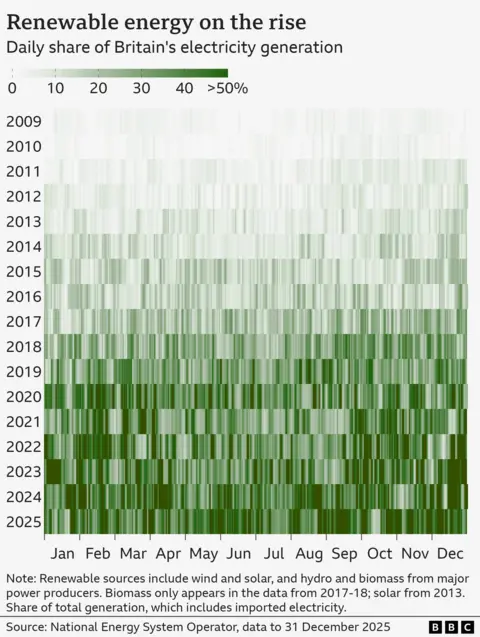
Over the past decade, the global growth of renewables has been a highlight in the collective efforts to combat climate change, and Great Britain has mirrored this trend. The government is keen to accelerate this pace further to meet its clean power goals and drastically cut planet-warming carbon emissions. In 2025, the combined output from wind, solar, hydro, and biomass generated more than 127 terawatt hours (TWh) of electricity in Great Britain. This figure, based on the BBC’s analysis of provisional Neso data, comfortably surpassed the previous high of 119 TWh recorded in 2024, demonstrating a consistent upward trajectory in renewable energy adoption.
Wind power continued its robust performance, generating over 85 TWh, which accounted for nearly 30% of Great Britain’s total electricity last year. This marked a slight increase from 2024, reaffirming the strategic investments in the nation’s extensive onshore and offshore wind farm network. Great Britain boasts some of the world’s largest offshore wind farms, and continued development in this sector has cemented wind’s position as a cornerstone of the renewable energy transition.
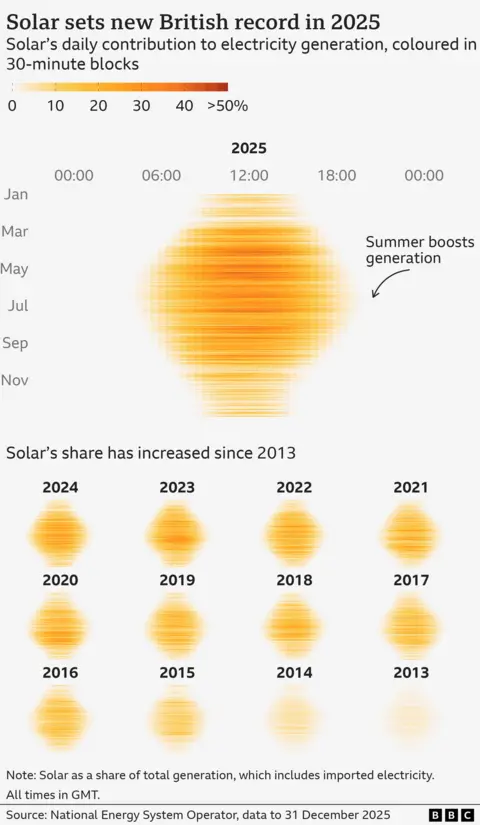
However, the most striking development of the year was undoubtedly the surge in solar power. Throughout 2025, solar panels contributed more than 18 TWh, accounting for over 6% of British electricity. While still a smaller share compared to wind, this represented an impressive growth of over 4 TWh from 2024 levels, indicating a significant acceleration in solar deployment and efficiency. The impact was particularly noticeable during peak periods in July, where solar energy supplied more than 40% of electricity for several half-hour intervals. This is a stark contrast to 2013, when solar’s contribution never exceeded approximately 5% during any given period.
This remarkable expansion of solar power was driven by multiple factors. New, large-scale solar farms came online, with notable projects such as the Cleve Hill facility near Faversham in Kent, becoming one of the biggest in the country. Concurrently, 2025 set a new record for small-scale rooftop solar installations, with approximately 250,000 new systems reported to the Microgeneration Certification Scheme. This widespread adoption, from utility-scale projects to individual households, was significantly boosted by favourable weather conditions, as the UK experienced its sunniest year on record. The extended periods of sunshine through spring and summer provided ideal circumstances for British solar panels to maximise their output.
Professor Michael Grubb, an expert in energy and climate change at University College London, commented on solar’s unexpected prominence. "Solar’s probably a bigger part of the system than we’d expected, given the cost has come down so much," he observed, highlighting the increasing economic viability of solar technology. When conditions were optimal, renewables demonstrated their immense potential; on roughly a third of days in 2025, over half of Great Britain’s electricity demand was met by renewable sources, according to the BBC’s analysis of Neso data.
Despite these significant strides in renewable energy, Great Britain’s electricity grid still relied heavily on fossil gas for substantial periods. The Neso figures revealed that gas-fired power stations generated over 77 TWh, accounting for approximately 27% of total electricity. This was an increase from 72 TWh in 2024, presenting a complex picture for the energy transition. Several factors likely contributed to this rise: Great Britain imported slightly less electricity from European interconnectors, potentially due to maintenance, increased demand within Europe, or economic factors. Additionally, there was lower nuclear generation, possibly due to scheduled outages or the ongoing decommissioning of older plants. The closure of the last coal power station in 2024, while a positive step for decarbonisation, meant that any shortfalls in baseload power or periods of low renewable output often had to be compensated by gas. Furthermore, an increase in overall electricity demand across the country could have played a role, driven by factors such as economic growth or the gradual electrification of transport and heating.
The consequence of this increased reliance on gas was a slight uptick in the carbon intensity of Great Britain’s electricity mix. In 2025, each kilowatt-hour (kWh) of electricity generated, on average, 126 grams of planet-warming carbon dioxide. This was marginally higher than the 124g/kWh recorded in 2024. However, it is crucial to view this in the broader context: the 2025 figure represents a dramatic reduction from the 505g/kWh observed in 2012, underscoring the substantial decarbonisation progress made over the past decade.
It is worth noting that Neso’s figures primarily cover generation connected to the main transmission network. They do not fully account for smaller-scale gas, biomass, and hydro operators that feed electricity into the system at a local level. However, these decentralised sources typically contribute a relatively minor fraction to Great Britain’s total generation. Separate analysis by the climate website Carbon Brief, which includes these smaller sources and extends its scope to Northern Ireland, showed very similar overall trends to the Neso data for Great Britain, including both the new renewables record and the slight increase in gas generation, thus corroborating the BBC’s findings.
Off track for clean power?
The government’s "clean power" target defines success as 95% of all electricity generated in Britain coming from renewables and nuclear energy by 2030. In 2024, government figures indicated that clean sources produced almost three-quarters of the total electricity generation for the year. These government statistics can differ from Neso data, as they include imports and certain gas generation not covered by the clean power definition. Official government figures for 2025 are not expected until later in the year, but the continued presence and slight increase of gas in the electricity mix highlight the significant challenges that remain.
As Pranav Menon highlighted, there are still "significant numbers of periods in the year where the sun’s not shining, the wind’s not blowing, demand is high […] and that’s where the system is sort of forced to rely on gas-fired power to turn up and meet demand." This intermittency of renewable sources remains a core hurdle. However, Menon also pointed to viable solutions, including the rapid expansion of energy storage technologies like large-scale batteries, which can store surplus renewable electricity for use during periods of lower generation. Furthermore, other low-carbon sources, such as new nuclear power plants and emerging hydrogen technologies, are seen as crucial for providing dependable, baseload power.
Another significant challenge in meeting the clean power target is the pressing need to upgrade Great Britain’s electricity grid infrastructure. This is essential not only to connect new renewable energy projects but also to efficiently transmit their electricity from often remote generation sites to demand centres across the country. In its current state, the grid sometimes struggles to cope with the full potential of renewable generation, leading to instances where wind farms are paid to reduce their output—a practice known as curtailment—to prevent grid overload. While grid upgrades are underway and are expected to alleviate these issues, they represent substantial investments that can add to costs in the short term. Professor Grubb acknowledged that these upgrade costs could offset some of the immediate savings from increasingly cheaper renewables. Nevertheless, he expressed optimism that energy bills would begin to decline in the coming years, primarily due to the cost-effectiveness of new renewables and an anticipated stabilisation or fall in gas prices from their recent high levels.
The record-breaking year for renewables inevitably sparked political debate. Energy Secretary Ed Miliband lauded the progress, stating, "After years of delay and underinvestment, this government is keeping its promise to take back control of Britain’s energy with clean homegrown power." He asserted that this commitment would "protect households against volatile fossil fuel markets." Conversely, Shadow Energy Secretary Claire Coutinho urged the government to reconsider its clean power target, arguing that its pursuit was contributing to rising energy bills. "Britain is generating more renewable power than ever before, but people should know about the extra costs that come along with it," she commented, emphasising the financial implications for consumers.
Despite the political rhetoric and the inherent complexities of transitioning a national energy system, 2025 stands as a testament to Great Britain’s ongoing commitment to a cleaner, more sustainable energy future. The record output from wind and solar underscores the tangible progress being made, even as the journey towards the 2030 clean power target continues to navigate significant technical, economic, and political challenges.




 Nakalama John
 Ramos Leo
 atisusanti

 George Anjay