 George Anjay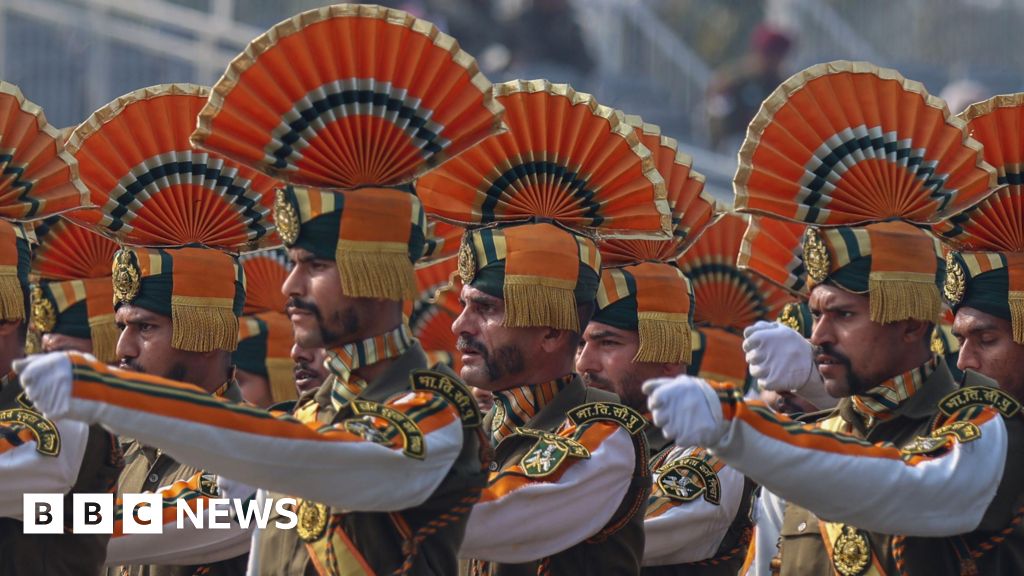
What India’s Republic Day red carpet means for its foreign policy
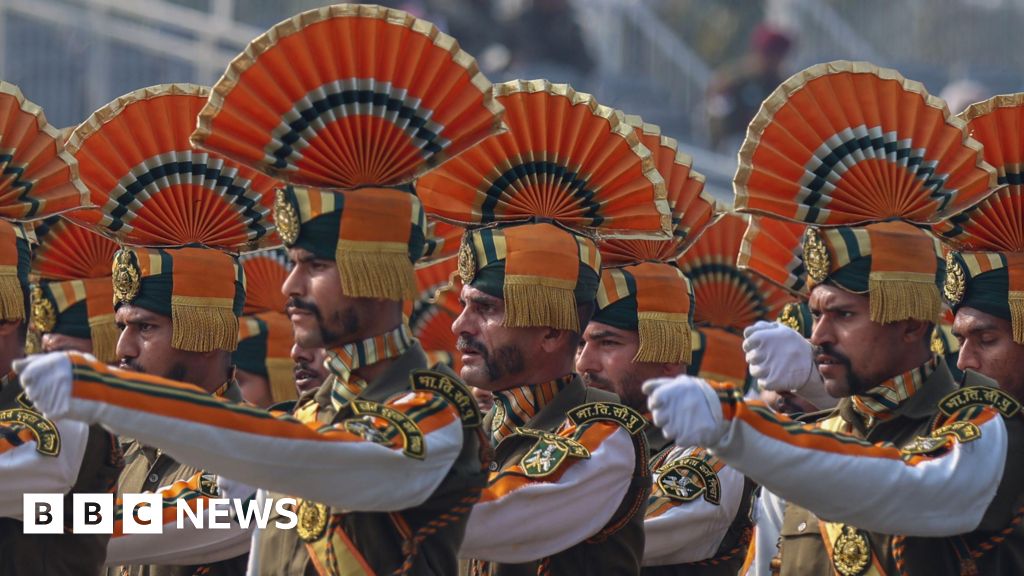
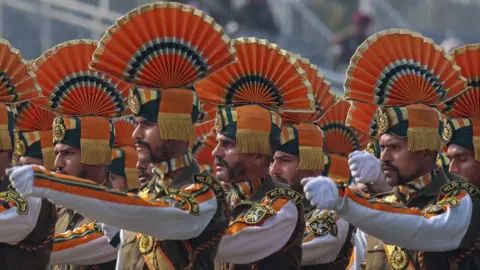
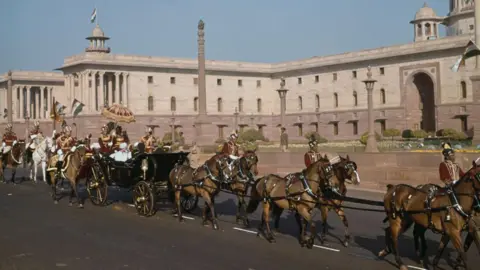
India will mark its 77th Republic Day on 26 January, a momentous occasion commemorating the day the nation formally adopted its constitution and transitioned into a sovereign republic, severing its colonial ties. The heart of the nation’s capital, New Delhi, transforms into an expansive stage for the annual grand parade. This spectacular event, held along the Kartavya Path (formerly Rajpath, or King’s Avenue), witnesses thousands of troops marching in precise formations, formidable military tanks parading with authority, and fighter jets soaring across the sky, all observed by an enthusiastic crowd. Elaborate tableaux, representing the rich cultural tapestry and developmental strides of various Indian states and union territories, add vibrant colour and narrative to the procession, while millions more tune in from across the country and the globe to witness this display of national pride.
Presiding over this grand spectacle is the President of India, the nation’s constitutional head. Seated beside the President, in a position of high honour, is the designated Chief Guest. This placement, often closer to the presidential dais than even senior government officials, underscores the significance of the guest’s presence. Over the decades, the selection of this Chief Guest has transcended mere ceremonial protocol, evolving into a potent symbol and a carefully calibrated signal of India’s foreign policy objectives and the bilateral relationships New Delhi seeks to emphasize at any given time. Experts widely agree that the choice of Chief Guest serves as a tangible indicator of India’s diplomatic priorities and its evolving engagement with the international community.
The tradition of inviting a Chief Guest to the Republic Day parade commenced in 1950, with the inaugural ceremony graced by the presence of then Indonesian President Sukarno. In the nascent years of its republic, India strategically prioritized forging strong ties with other newly independent nations, a foreign policy orientation clearly reflected in its early choices for the esteemed guest. This early focus on solidarity with the developing world set a precedent for the symbolic weight the position would come to carry.
Since its inception, the Republic Day parade has hosted a diverse array of global leaders, a testament to the dynamic shifts in India’s international standing and its strategic imperatives. The guest list has spanned leaders from neighbouring countries, including Bhutan and Sri Lanka, to heads of state and government from major global powers such as the United States and the United Kingdom. Notably, the United Kingdom has been represented as the Chief Guest on five occasions, a reflection of the long, intricate, and historically significant relationship between the two nations, notably including the presence of Queen Elizabeth II and Prince Philip. Similarly, leaders from France and Russia (formerly the Soviet Union) have been invited nearly five times since 1950, underscoring India’s enduring strategic partnerships with these influential nations.
With such a broad and varied spectrum of past distinguished guests, a pertinent question arises: how does India meticulously decide who will receive this prestigious invitation in any given year? The selection process, by its very nature, largely operates beyond the public glare. Former diplomats and insights gleaned from media reports suggest that the initial phase typically involves the Ministry of External Affairs (MEA), which diligently prepares a curated shortlist of potential invitees. This list is then deliberated upon, and the ultimate decision rests with the Prime Minister’s Office (PMO). Following this final approval, official diplomatic channels are engaged to communicate with the chosen countries, a nuanced and often protracted process that can span several months to finalize.
A former official from the Ministry of External Affairs, who preferred to remain anonymous, elaborated on the multifaceted considerations involved. "Strategic objectives, regional balance, and whether a country has been invited before are all taken into account," the official stated, highlighting the complex matrix of factors influencing the decision. This perspective is echoed by Navtej Sarna, a former Indian Ambassador to the United States, who emphasized the depth of thought that permeates the decision-making process. "It’s a balance between important partners, neighbours, and major powers," he explained, adding that the crucial factor of the state leader’s availability during the specific period of the Republic Day celebrations also plays a significant role in the final determination.
Foreign policy analyst Harsh V Pant further elucidated how the evolving composition of the chief guest list mirrors India’s expanding global engagement. "If you think of the EU delegation this year, with its leadership coming, it’s very clear that we are doubling down on our engagement with the EU," Pant observed. He suggested that the presence of the European Commission President and the European Council President likely signals an intent to solidify ties, potentially leading to the announcement of a trade deal, thereby demonstrating alignment between India and the European bloc on prevailing geopolitical currents. This strategic invitation comes at a time when India is actively engaged in trade negotiations with the United States, a process that has experienced strains due to tariff impositions and geopolitical considerations related to India’s energy procurements.
Pant further articulated that the choice of the Republic Day Chief Guest provides a clear window into India’s priorities at a given juncture, indicating which geographical regions the nation intends to focus on, or if there is a particular milestone it wishes to commemorate. He pointed out that India continues to foster robust engagement with the Global South, a commitment reflected in past invitations. As a prime example, in 2018, the leaders of the Association of Southeast Asian Nations (Asean) were collectively invited as Chief Guests. This marked the first instance of a regional grouping receiving such an honour, coinciding with the commemoration of 25 years of India’s comprehensive engagement with the bloc, Pant recalled.
Conversely, the notable absences from the guest list have also served as telling indicators of strained diplomatic relationships. Leaders from Pakistan, for instance, graced the occasion as Chief Guests on two separate occasions prior to the outbreak of hostilities between the two neighbours in 1965. Since then, Islamabad has not been extended an invitation, a clear sign of the enduring strain in bilateral ties. Similarly, China’s sole appearance as a Chief Guest was in 1958, with Marshal Ye Jianying attending, a fact that stands in stark contrast to the ensuing border conflict between the two Asian giants just four years later.
However, the significance of India’s Republic Day extends far beyond the diplomatic exchanges and the carefully curated guest lists. Analysts point out that India’s Republic Day parade distinguishes itself from similar military displays in other nations for several compelling reasons. The consistent tradition of inviting a Chief Guest almost every year is a unique characteristic. Moreover, while many countries utilize such parades to commemorate military victories – such as Russia’s Victory Day marking the defeat of Nazi Germany, France’s Bastille Day celebrating the storming of the Bastille, or China’s military parades honouring their victory over Japan in World War II – India’s celebration is fundamentally rooted in the adoption of its constitution.
"For many other countries, these celebrations are related to victories in war. We don’t celebrate that. We celebrate becoming a constitutional democracy – the coming into effect of the constitution," Pant emphasized, highlighting the distinct philosophical underpinnings of India’s national day. Furthermore, unlike the predominantly military-focused parades in many Western capitals, India’s Republic Day seamlessly integrates displays of its formidable military prowess with vibrant cultural performances and diverse regional tableaux. This fusion projects not only national strength but also the country’s rich and multifaceted cultural heritage.
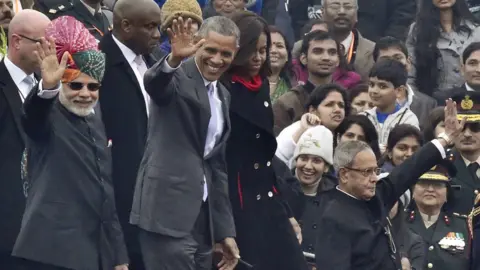
Beyond the strategic considerations and symbolic gestures, the parade often leaves a profound and personal impression on visiting leaders. The former Ministry of External Affairs official shared a poignant anecdote about the Obamas, recalling how they were particularly captivated by the sight of the camel-mounted contingents, a vivid memory that remained with them long after the formal ceremonies had concluded. This personal resonance, coupled with the grand display of national might and cultural richness, underscores the enduring impact and multifaceted significance of India’s Republic Day parade on the global stage.

 Ramos Leo
 Nakalama John