Ramos Leo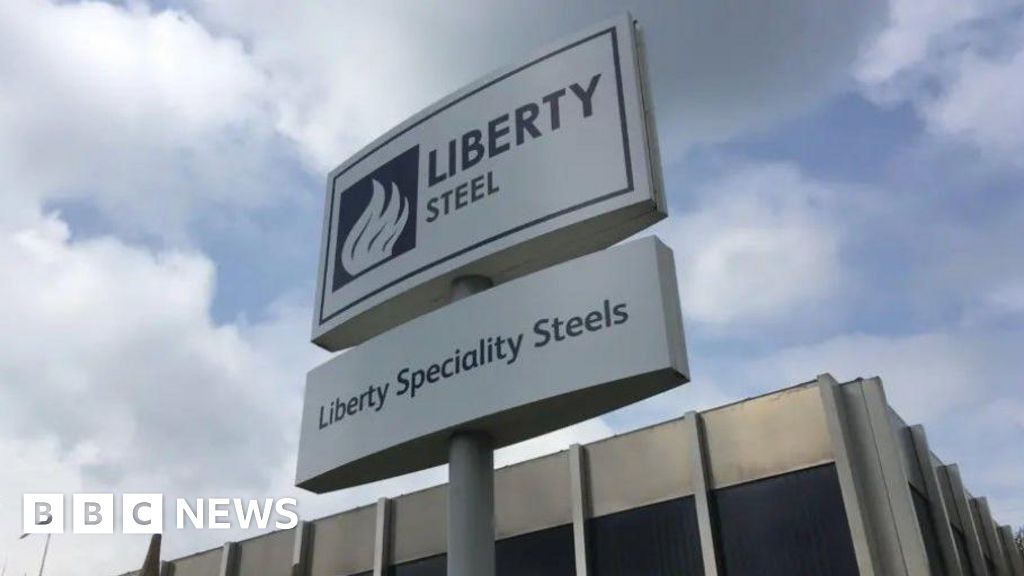
Council leader Chris Read elaborated on the council’s position, stating that the decision to write off the substantial portion of the debt was made on the explicit recommendation of external legal advisers. While a significant write-off, he underscored that this measure could be reversed should there emerge a viable possibility of recovering the money from the liquidation process. The authority has, in parallel, affirmed its intention to submit a comprehensive claim to the appointed administrators for the full outstanding balance, indicating a determined effort to recoup public funds despite the immediate accounting adjustment.
The compulsory winding-up order in August 2025 was a culmination of protracted financial difficulties faced by Liberty Steel, part of Sanjeev Gupta’s GFG Alliance. The group had been under immense pressure following the collapse of its main lender, Greensill Capital, in early 2021. For years leading up to the order, uncertainty loomed over the Rotherham and Sheffield sites, with repeated calls for government intervention and concerns about the company’s long-term viability. The High Court’s decision to grant the winding-up petition, filed by HM Revenue & Customs over unpaid taxes, marked a critical turning point, leading to the appointment of the Official Receiver and special managers to oversee the liquidation process. This action essentially transferred control of the company’s assets and operations, including its Rotherham steelworks, into the hands of the state with the immediate goal of preserving jobs and finding a buyer.
The initial debt of over £4.2 million represents a substantial sum for any local authority, particularly one serving an industrial heartland like Rotherham. Business rates are a crucial source of income for councils, funding a wide array of local services from education and social care to road maintenance and public safety. The immediate write-off of £3 million, even if provisional, will undoubtedly necessitate careful financial management and could potentially impact the council’s ability to fund various initiatives or maintain existing service levels, depending on its reserves and overall budget health.
Chris Read acknowledged the inherent uncertainty in the recovery process. "At this stage it is too early to know whether we will receive a dividend from this claim or whether the full balance will ultimately need to be written off," he commented. This reflects the complex and often lengthy nature of corporate insolvencies, where creditors typically line up to claim their dues from a finite pool of assets. The success of such claims heavily depends on the value of the company’s remaining assets and the priority given to different classes of creditors under insolvency law.
A critical distinction was also drawn regarding ongoing liabilities. Read clarified that, from the date the winding-up order was issued, and crucially, for as long as the property remains occupied, the liability for business rates transfers from the defunct company to the liquidator. This means that while the historic debt is subject to the complex insolvency process, new business rates incurred post-liquidation are expected to be paid more directly. In line with this, additional business rates demand notices totalling £1.75 million for the period from August 21, 2025, to March 31, 2026, were issued on September 16, according to the Local Democracy Reporting Service.
"These are expected to be paid in full, though there remains uncertainty over how the liquidators will operate and for how long," Read added, highlighting that even for current liabilities, the operational dynamics of the liquidation process introduce an element of unpredictability. The continued operation of the steelworks, even under government control, ensures the accrual of these rates, which are vital for maintaining local services.
The financial implications of Liberty Steel’s debt extend beyond Rotherham Council itself. Read further explained the distribution mechanism for business rates income and losses. Under the current system, income from business rates is split between the council (49%), South Yorkshire Fire and Rescue Authority (1%), and central government (50%). Consequently, any losses incurred, such as those from unpaid rates or write-offs, are also shared on the same proportional basis. This means that central government and the regional fire authority will also bear a portion of the financial impact resulting from Liberty Steel’s insolvency, underscoring the broader public sector ramifications.
The Insolvency Service, which acts as the Official Receiver in cases of compulsory liquidation, provided an update on the efforts to secure a future for the steelworks. A spokesperson confirmed: "We can confirm that the Official Receiver continues to progress bids for the sale of Speciality Steel UK." This refers to the Rotherham operations, which include the Aldwarke electric arc furnace and the Brinsworth bar mill, critical assets in the UK’s steel manufacturing capability. The spokesperson added that "The sales process is ongoing, with the aim to complete a sale at the earliest opportunity."
The urgency to complete a sale stems from several factors: the need to preserve jobs, maintain industrial capabilities, and minimize ongoing costs associated with managing the business in liquidation. A swift and successful sale to a new, financially stable owner would offer the best outcome for the workforce, the local economy, and the creditors, including Rotherham Council. However, finding a buyer for a large-scale industrial asset like a steelworks, especially in a challenging global market, is a complex undertaking. Potential buyers must assess the asset’s condition, market demand for its products, energy costs, environmental liabilities, and the overall economic outlook for the steel sector.
Liberty Steel and the special managers from consultancy firm Teneo, who were appointed to assist the Official Receiver with the liquidation process, were approached for comment regarding the council’s write-off and the ongoing sales process. Their responses were not immediately available, which is common during complex insolvency proceedings where public statements are often carefully managed. The role of Teneo involves managing the day-to-day operations, assessing the value of assets, and engaging with potential bidders, all while navigating the intricate legal framework of corporate insolvency.
The situation at Liberty Steel Rotherham is a microcosm of the broader challenges facing the UK’s steel industry. High energy costs, global competition, and the need for significant investment in decarbonization have made the sector particularly vulnerable. The outcome of the sales process for Speciality Steel UK will have profound implications not only for the employees and their families but also for the wider supply chain in South Yorkshire and the UK’s strategic industrial capacity. While Rotherham Council has had to make a pragmatic decision to write off a portion of the debt, the hope remains that a successful resolution to the liquidation will secure the future of steelmaking in the region and allow for the eventual recovery of public funds. The community, the workforce, and the local authorities alike will be closely watching as the Official Receiver continues its efforts to secure a new chapter for this vital industrial asset.


 George Anjay
 Nakalama John
 atisusanti