
 George Anjay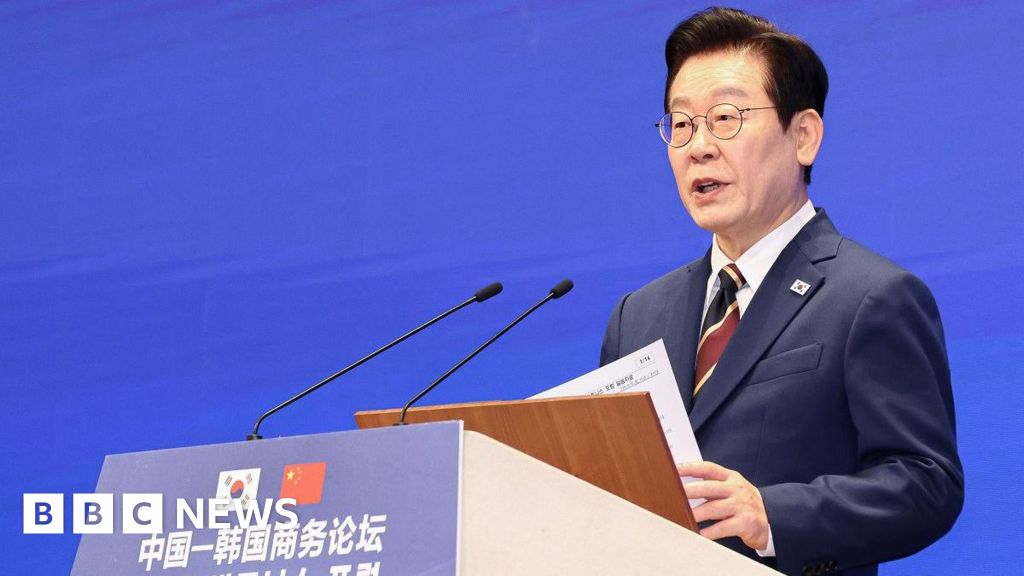
South Korea’s President Lee Jae Myung is undertaking a significant diplomatic mission to Beijing, meeting with Chinese leader Xi Jinping in a bid to reset strained relations with South Korea’s paramount trading partner. This high-stakes encounter, the second summit between the two leaders since November, addresses a complex web of regional security concerns, economic interdependence, and cultural exchanges that have been overshadowed by escalating geopolitical tensions.
The core of President Lee’s agenda revolves around seeking assurances from Beijing that South Korea’s substantial economic ties with China will not be weaponized in the face of increasing political friction in the region. China, as South Korea’s largest trading partner, wields considerable economic influence, and Lee’s visit aims to secure a more stable and predictable economic relationship. Experts suggest that Lee is looking to de-escalate the economic coercion that has historically been a tool in Beijing’s diplomatic arsenal.
Adding a layer of urgency to the discussions is the ongoing diplomatic spat between China and Japan over Taiwan. Beijing’s assertive stance on the self-governed island, which it considers a breakaway province, has heightened regional anxieties. South Korea, as a key player in Northeast Asia and a staunch ally of the United States, finds itself in a delicate balancing act. The US unequivocally supports Taiwan and provides it with defensive armaments, a position that directly challenges Beijing’s territorial claims.
The recent escalation in rhetoric between China and Japan, particularly following remarks by Japanese Prime Minister Sanae Takaichi suggesting a potential military response to a Chinese attack on Taiwan, has amplified Seoul’s strategic dilemma. President Lee’s visit to Beijing at this juncture is therefore a bold and significant move, underscoring the importance of direct dialogue to navigate these treacherous diplomatic waters.
Upon his arrival in Beijing on Sunday, President Lee was slated to be honored with a welcoming ceremony at the prestigious Great Hall of the People, as reported by state-run CCTV. The itinerary also includes meetings with China’s Premier Li Qiang and the chairman of the National People’s Congress Standing Committee, Zhao Leji, before President Lee’s planned visit to Shanghai.
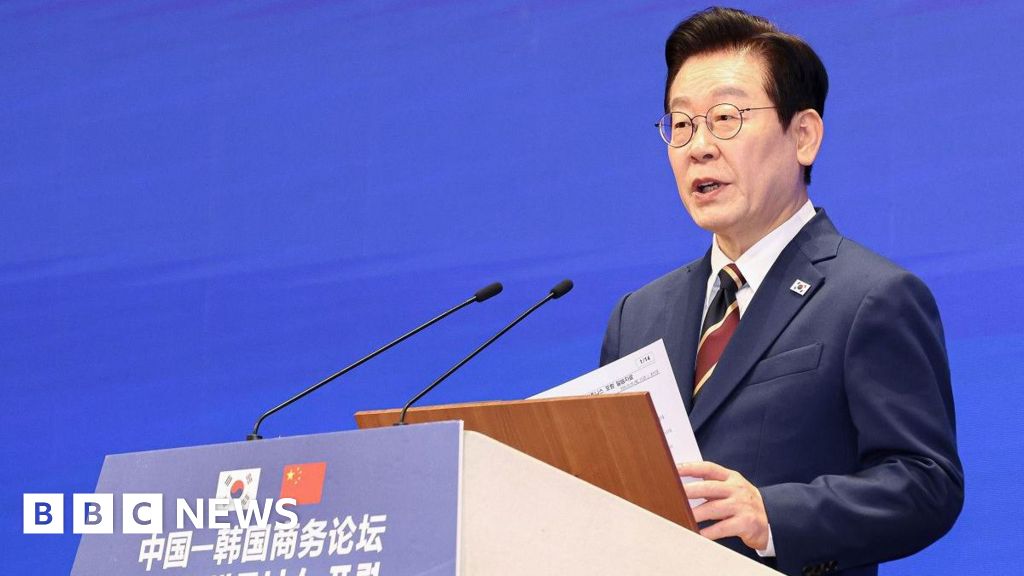
In remarks delivered to Korean residents in Beijing on Sunday, President Lee articulated his vision for the visit, stating that it would "serve as a new starting point to fill in the gaps in Korea-China relations, restore them to normal and upgrade them to a new level." This statement signifies a clear intent to move beyond the recent period of diplomatic frostiness.
The relationship between South Korea and China has experienced a downturn in recent years. The tenure of Lee’s predecessor, former President Yoon Suk Yeol, was characterized by a more critical stance towards Beijing, leading to a cooling of bilateral ties. This visit marks the first by a South Korean leader since 2019, highlighting the considerable gap that needs to be bridged.
Conversely, Xi Jinping’s eagerness to engage with President Lee suggests a recognition of China’s own need for regional allies and a desire to temper the growing anti-China sentiment in the region. Park Seung-chan, a professor of China studies at Yongin University, commented to the BBC that while China might employ subtle diplomacy, its underlying objective is clear: to secure South Korea’s alignment and potentially a denunciation of Japan’s stance on Taiwan.
Professor Park further noted that Beijing is leveraging the shared historical narrative of both nations’ struggles against Japanese imperialism in the 20th century. This historical resonance is expected to play a role in the discussions, with President Lee slated to participate in a memorial service in Shanghai for Korean independence activists who fought against Japanese colonial rule.
While South Korea is "still showing all its deference towards China," as Professor Park observed, it simultaneously aims to "strengthen its relationships with both Japan and China." This reflects Seoul’s long-standing strategy of maintaining a delicate diplomatic equilibrium between its two major regional powers. President Lee is reportedly planning a visit to Japan later this month to meet with Prime Minister Takaichi, underscoring this multi-pronged approach. Furthermore, South Korea’s national security advisor, Wi Sung-lac, reaffirmed on Friday that Seoul "respects the One China policy," a crucial acknowledgment of Beijing’s diplomatic position regarding Taiwan.
Security on the Korean Peninsula is another critical item on the agenda. President Lee has actively pursued diplomatic engagement with North Korea, albeit with limited success. Securing China’s cooperation in pressuring North Korean leader Kim Jong Un to abandon his nuclear weapons program is paramount. China remains North Korea’s primary economic and diplomatic benefactor, making Beijing’s influence indispensable.
"China is a very important cooperative partner in moving toward peace and unification on the Korean Peninsula," President Lee emphasized on Sunday. His remarks come amidst renewed provocations from Pyongyang, with Seoul’s military reporting the launch of ballistic missiles off its east coast on the same day. North Korea’s state news agency subsequently claimed the test-firing of hypersonic missiles to assess deterrence capabilities, a veiled reference to recent geopolitical developments. The extent to which President Lee can sway China’s policy towards North Korea remains uncertain, especially given Xi Jinping’s September pledge to strengthen Beijing’s "traditional friendship" with Pyongyang.
The inherent complexities of the South Korea-China relationship are further amplified by their differing geopolitical alignments. The presence of US troops in South Korea, a longstanding deterrent against North Korean aggression, and the recent agreement between Seoul and Washington to collaborate on building nuclear-powered submarines, have drawn sharp warnings from China, viewing these developments as a direct threat to its regional security interests.
Beyond the geopolitical sphere, cultural ties present another area of contention. China’s unofficial restrictions on South Korean music and dramas, in place for nearly a decade, continue to impact the flow of Korean cultural content. K-pop and K-dramas, despite their global popularity, face significant hurdles in accessing Chinese media platforms. While Beijing has never formally acknowledged a ban, it is widely believed to be a retaliatory measure against South Korea’s 2016 decision to deploy the US Terminal High Altitude Area Defense (THAAD) anti-missile system, which China perceives as a threat to its military capabilities. The lifting of these cultural restrictions is reportedly a key objective for President Lee, given the immense market potential for Korean entertainment in China.
Finally, President Lee is also expected to address China’s ongoing construction of maritime structures in the waters separating the two nations. Beijing claims these structures are for fish farming, but Seoul harbors significant security concerns regarding their potential military implications. This issue underscores the persistent underlying tensions that President Lee aims to navigate and, ideally, resolve through renewed dialogue and cooperation.


 Ramos Leo
 atisusanti
 Nakalama John

 Roy Suryo