
 Ramos Leo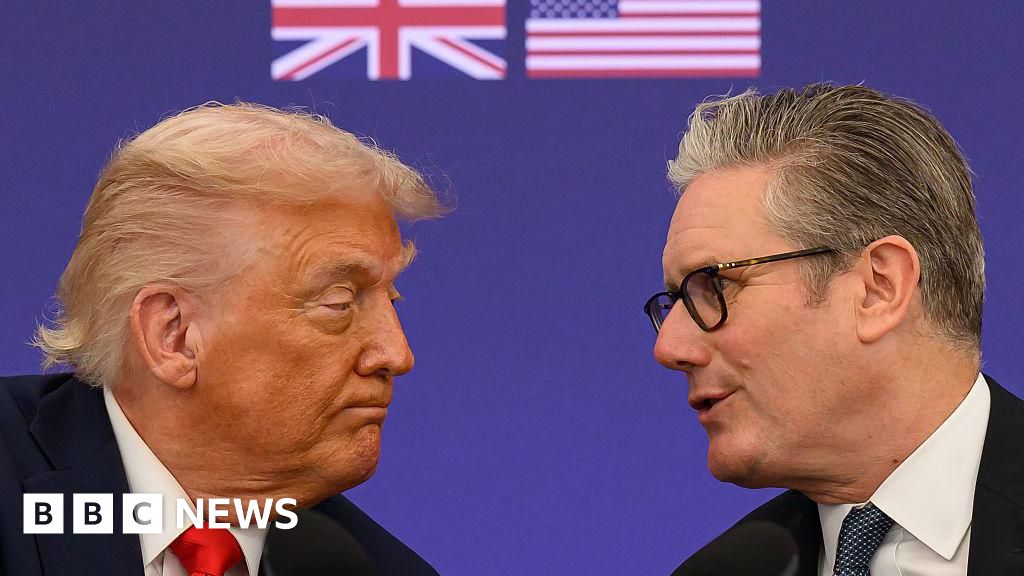
Sir Keir, who has until now carefully cultivated and maintained a pragmatic, if sometimes delicate, relationship with Trump, declared that the UK would be pursuing the matter directly and robustly with the White House. This public rebuke marks a significant pivot in the "special relationship," highlighting the depth of concern over Trump’s aggressive foreign policy stance. The Trump administration has been relentlessly escalating its demands for the US to assert control over Greenland, citing pressing national security imperatives. This rhetoric has not only caused profound alarm among European allies but has also deeply unsettled the 57,000 residents of the strategically vital island.
The proposed tariffs, described by critics as a form of economic blackmail, are not limited to the UK. Trump explicitly stated that the new levies would also apply to products originating from Denmark, Norway, Sweden, France, Germany, the Netherlands, and Finland. This broad application underscores a concerted effort to isolate and pressure nations that have resisted or openly opposed his designs on Greenland. The UK, notably, had previously distinguished itself by being the first nation to successfully negotiate a reversal or reduction of some earlier tariffs imposed by the US, a testament to Sir Keir’s diplomatic efforts. Furthermore, the Labour leader has played a pivotal role as a key intermediary between Washington and Europe, particularly in efforts to de-escalate and end the protracted war in Ukraine.
However, the escalating rhetoric surrounding Greenland has forced the UK to align more closely with its European partners. Britain recently joined other European nations in vociferously defending Denmark’s sovereign ownership of Greenland. This week, in a clear demonstration of collective security concerns, the UK was among several countries to deploy troops to Greenland’s capital, Nuuk, as part of what was officially described as a "reconnaissance mission." This deployment, while ostensibly for intelligence gathering and observation, sent an unmistakable signal of NATO’s collective interest in the Arctic region and its territorial integrity.
Faced with the complex challenge of balancing the critical transatlantic alliance with staunch loyalty to European allies, Sir Keir reiterated his unwavering position: Greenland remains an integral part of Denmark, and its future status is a matter solely for the two entities to decide. "We have also made clear that Arctic security matters for the whole of Nato and allies should all do more together to address the threat from Russia across different parts of the Arctic," he emphasized on Saturday. His statement further elaborated, "Applying tariffs on allies for pursuing the collective security of Nato allies is completely wrong. We will of course be pursuing this directly with the US administration." By emphasizing NATO’s collective security and the need for greater allied cooperation in the Arctic, Sir Keir is subtly yet firmly sending a message to Trump. He is signaling the UK’s commitment to sharing the burden of regional security – akin to how European nations have increasingly taken on more financial responsibility for Ukraine’s defense – but within the framework of alliance unity, not under duress. These comments, however, represent a rare and significant public rebuke of the US president, setting an important and potentially challenging precedent for the future of the US-UK "special relationship."
Trump’s fresh tariff threat has ignited a firestorm of criticism from across the entire spectrum of UK political opinion, demonstrating a rare cross-party consensus against the American leader’s aggressive tactics. Conservative leader Kemi Badenoch minced no words, calling the proposal a "terrible idea" that would inevitably become "yet another burden for businesses" across the country. She firmly asserted, "The sovereignty of Greenland should only be decided by the people of Greenland," adding, in a surprising moment of bipartisan agreement, "On this, I agree with Keir Starmer." This alignment from a prominent Conservative figure underscores the broad disapproval of Trump’s approach.
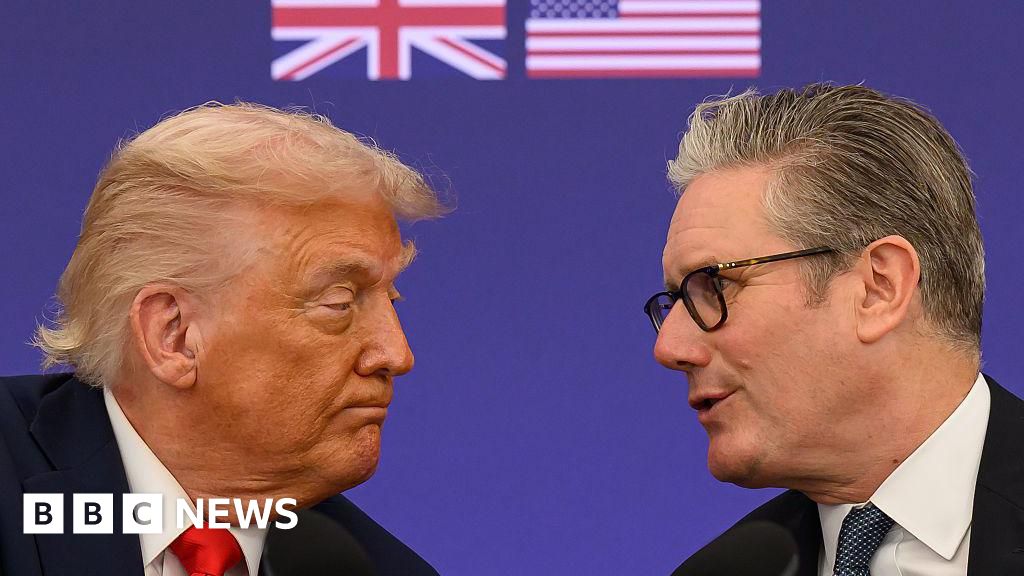
Meanwhile, Liberal Democrat leader Sir Ed Davey seized the opportunity to critique the government’s approach, declaring that "Starmer’s US policy lies in tatters" with Trump "now punishing the UK and Nato allies just for doing the right thing." His comments reflect concerns that the UK’s diplomatic efforts had failed to prevent such a direct confrontation. Even Nigel Farage, the leader of Reform UK and historically a staunch ally and vocal supporter of Donald Trump, distanced himself from the proposal. "We don’t always agree with the US government and in this case we certainly don’t," Farage stated, acknowledging that "these tariffs will hurt us," highlighting the tangible economic implications. The Green Party’s parliamentary leader, Ellie Chowns, delivered perhaps the most scathing assessment, calling the decision "unhinged." She criticized Trump’s approach to international relations, stating he "treats the international stage like a schoolyard playground, attempting to bully" countries into compliance, painting a picture of erratic and destabilizing leadership.
Trump’s intensified pursuit of Greenland stems from long-held strategic interests. He first publicly expressed his interest in acquiring the territory shortly after the commencement of his second term in the White House. His rationale centers on what he perceives as critical national security needs for the US. Greenland’s immense landmass and its pivotal location between North America and the Arctic Ocean make it an unparalleled strategic asset. It is exceptionally well-positioned for the deployment of early warning systems against potential missile attacks and for comprehensive monitoring of maritime vessels navigating the increasingly accessible Arctic waters. The US already maintains a significant military footprint on the island, with over 100 personnel stationed at its missile-monitoring facility at Thule Air Base, located on Greenland’s north-western tip. Crucially, existing agreements with Denmark grant the US broad authority to deploy as many troops as it deems necessary to Greenland, a factor Trump likely views as an insufficient guarantee of control.
Beyond its military utility, Greenland’s economic potential has surged in recent years. The accelerating pace of climate change, which is causing its vast ice sheet to recede, is progressively making the island’s rich natural resources more accessible. These resources include significant deposits of rare earth minerals, uranium, and iron – materials that are vital for modern technology and defense industries. Trump has not explicitly ruled out the use of military force in his pursuit, but his recent Truth Social post, which announced the tariffs, primarily focused on achieving a deal for the "complete and total purchase" of the island. He also reiterated his assertion that rival powers, specifically Russia and China, harbored ambitions to gain influence or control over Greenland, framing his actions as a preemptive measure.
In a characteristic display of provocative rhetoric, Trump scornfully dismissed Denmark’s capacity to defend its territory. "There is not a thing that Denmark can do about it," he wrote. "They currently have two dogsleds as protection, one added recently." He concluded by arguing that Denmark’s supporters had fostered "a level of risk in play that is not tenable or sustainable," and that "Therefore, it is imperative that, in order to protect Global Peace and Security, strong measures be taken so that this potentially perilous situation end quickly." Denmark, however, has consistently and unequivocally stated that Greenland is not for sale. Danish officials have repeatedly warned that any attack on its territory would constitute an attack on a NATO member, thereby triggering the alliance’s collective defense clause and potentially spelling the end of NATO as a cohesive military pact. Greenland, which has its own aspirations for greater autonomy and eventual independence, has also made its preference clear, stating it would rather remain Danish than become American.
Understanding the economic mechanics of tariffs is crucial to grasping the implications of Trump’s threat. Tariffs are essentially taxes levied on foreign products, paid by the companies importing those goods to the government imposing the tariff, not by the exporting countries themselves. However, these levies inevitably harm the economies of exporting nations, as importing companies may choose to reduce their purchases due to the added cost. In many cases, these higher costs are passed directly onto the consumer, leading to increased prices for imported goods. William Bain, the head of trade policy at the British Chamber of Commerce, warned that the fresh US tariffs would constitute "more bad news" for UK exporters, who are already grappling with the challenges posed by existing trade barriers. "We know trade is one way to boost the economy and the success of transatlantic trade depends on reducing, not raising, tariffs," Bain added, urging the UK government to "negotiate calmly" to avert the implementation of these new and damaging levies. The potential economic fallout for the UK and other European nations is substantial, threatening to impact sectors ranging from manufacturing and agriculture to luxury goods and technology.
Beyond the immediate economic and diplomatic ramifications, this dispute underscores the growing geopolitical importance of the Arctic. The melting of the polar ice cap is opening new shipping routes and exposing vast untapped natural resources, transforming the region into a new arena for strategic competition. Russia has significantly increased its military presence and infrastructure in the Arctic, while China has articulated its ambitions for a "Polar Silk Road," further complicating the security landscape. Trump’s unilateral actions, particularly his willingness to use economic coercion against allies, risk fracturing NATO unity at a time when a united front is paramount to counter these evolving threats. The precedent set by this dispute could also embolden other nations to resort to similar tactics in future international relations and trade disagreements, potentially ushering in an era of greater protectionism and instability. The challenge to the US-UK "special relationship" is profound, and the path forward remains fraught with uncertainty, demanding astute diplomacy and unwavering resolve from all parties involved.


 Nakalama John
 George Anjay

 atisusanti