
 Ramos Leo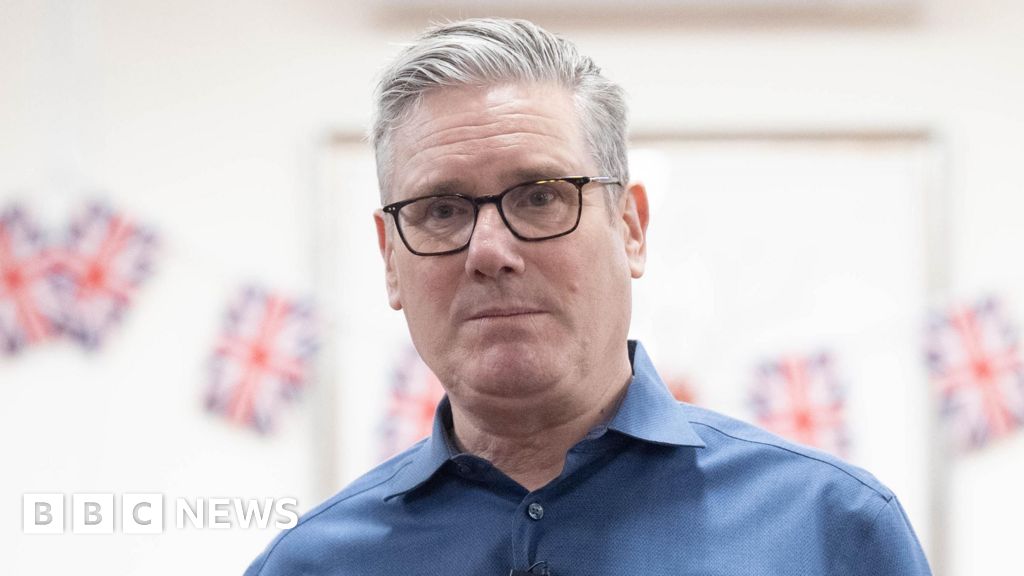
Sir Keir Starmer, the Prime Minister, has expressed significant relief and welcomed US President Donald Trump’s reversal on tariff threats against European nations opposing his proposed annexation of Greenland. This diplomatic breakthrough marks a crucial de-escalation in a standoff that had threatened transatlantic trade conflict and caused considerable apprehension across Western capitals.
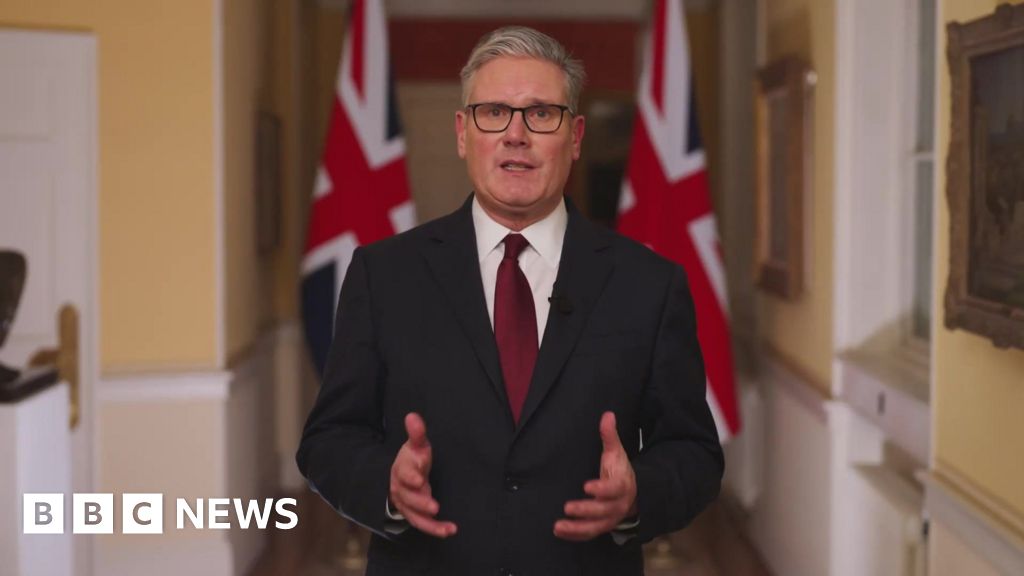
"Now we can start hard yards and finding a way forward on security in the Arctic," the Prime Minister stated. This signals a strategic shift from crisis management to constructive engagement, underscoring the UK government’s long-term commitment to regional stability and addressing complex geopolitical challenges in the high North.
The controversy began when President Trump dramatically escalated calls for the United States to take control of Greenland, an autonomous Danish territory of immense strategic value and resource potential. Citing pressing national security grounds, Trump threatened a punitive 10% import tax on eight European countries, including the UK, that had voiced objections to the audacious proposal. This prospect caused widespread concern, threatening to destabilize established trade relationships and ignite a broader economic conflict at a time of global uncertainty.
However, the US President has now conspicuously abandoned aggressive trade war rhetoric after a critical meeting with NATO Secretary General Mark Rutte. The encounter took place on the sidelines of the prestigious World Economic Forum in Davos, Switzerland, where Trump indicated a preliminary understanding had been reached regarding a potential deal centered on enhancing Arctic security. The mere announcement of an agreement has served to diffuse immediate tensions and open avenues for renewed dialogue.
Speaking during a visit to Hertfordshire on Thursday, Sir Keir Starmer articulated his satisfaction with the development. "It is a good thing that on Wednesday the threat of tariffs against the United Kingdom was lifted," he affirmed, acknowledging the tangible relief for British industries and consumers. He then emphasized the broader, strategic implications: "Now we can start hard yards and finding a way forward on security in the Arctic, which may seem a long way away, pretty remote, but actually it does matter to all of us in terms of the safety and security of our country." This highlights the growing awareness in Westminster that the Arctic, once considered peripheral, is rapidly becoming a focal point for international competition, directly impacting national interests.
Starmer further stressed his government’s principled approach throughout the crisis. "We’ve got through the last few days with a mix of British pragmatism, common sense, but also that British sense of sticking to our values and our principles," he declared, portraying the UK as a steadfast and principled international actor. "But now, as I say, the hard yards of actually finding a better way for security for our country, for Europe and across the globe," he concluded, signaling renewed commitment to proactive diplomacy and long-term strategic planning.
The precise contours of the "potential deal" on Arctic security, hinted at in Davos, remain largely undefined. President Trump had initially suggested the framework might involve leveraging Greenland’s substantial mineral rights. Greenland possesses vast, largely untapped reserves of rare earth minerals, including those crucial for modern technologies like mobile phones, electric vehicles, and advanced defense systems. Control over these resources is a significant geopolitical asset, especially as global demand for green technology escalates and nations seek to diversify supply chains away from current dominant players.
However, Foreign Secretary Yvette Cooper, in an appearance on BBC Radio 4’s Today programme, downplayed the immediate relevance of mineral rights, stating she was "not aware of any discussions at all" specifically concerning Greenland’s mineral wealth. Instead, Cooper framed the agreement around a concept she termed an "Arctic sentry," designed to foster enhanced cooperation among NATO countries. This initiative, she explained, would enable member states to work collectively in addressing a "shared threat" in the high North, involving "different Arctic countries coming together, supported by other Nato countries." This suggests a collaborative framework encompassing joint military exercises, intelligence sharing, infrastructure development, and coordinated responses to emerging security challenges, particularly from an increasingly assertive Russia.
Cooper attributed the Trump administration’s significant climbdown to what she described as the UK’s "determined diplomacy" and "a very co-ordinated approach across allies." This suggests sophisticated behind-the-scenes efforts by the Foreign Office and international partners to present a united front and persuade the US President to reconsider his confrontational stance, highlighting the risks of a trade war and the benefits of a collaborative approach to Arctic security.
This diplomatic success, however, occurred against a backdrop of considerable friction, notably a series of incendiary social media posts by President Trump aimed directly at the UK government. In one particularly striking instance, Trump branded the agreement to cede sovereignty of the Chagos Islands to Mauritius as an "act of great stupidity." This was a dramatic reversal from his previous position, having earlier welcomed the very same deal as a "monumental achievement." The Chagos Islands, a British Indian Ocean Territory, are strategically vital due to the presence of Diego Garcia, a key UK-US military base. The deal, aimed at resolving a long-standing dispute while ensuring continued access to the base through a leaseback arrangement, was based on legal advice that otherwise the UK risked losing the asset entirely. Trump’s sudden condemnation was widely interpreted as a deliberate attempt to exert pressure on Prime Minister Starmer over his principled opposition to the Greenland annexation plan.
During Prime Minister’s Questions on Wednesday, Sir Keir Starmer faced scrutiny for his measured response to Trump’s provocations, rather than adopting a more aggressive rhetorical stance. Liberal Democrat leader Sir Ed Davey insisted the UK must unequivocally stand up to "bullies," implying that Starmer’s approach was too conciliatory. In response, Sir Keir delivered his most unequivocal statement of opposition to the US President yet, robustly informing MPs that he would "not yield" in his stance over Greenland and vowing to uphold British principles. He directly linked Trump’s change of heart on the Chagos Islands deal to a deliberate strategy "with the express purpose of putting pressure on me and Britain" over the government’s position on Greenland, laying bare the transactional nature of the US President’s diplomatic tactics.
Conservative leader Kemi Badenoch, while backing the Prime Minister’s overall stance on Greenland, seized the opportunity to criticize the Chagos Islands deal, asserting that Starmer was "giving away territory we own and paying £35bn for the privilege." She contended that such a substantial sum should instead be diverted to bolstering the armed forces.
Foreign Secretary Yvette Cooper swiftly refuted Badenoch’s claims regarding the financial implications of the Chagos deal. She clarified that the figure cited was erroneous and that the actual cost equated to a mere "0.2% of the defence budget." Cooper further accused opposition leaders of "swallowing some of the propaganda" disseminated by Trump and, in doing so, inadvertently "undermining the national interest." She reiterated her conviction that Trump had strategically weaponized the Chagos deal to exert pressure on the UK over Greenland, condemning the Conservatives for "jumping on that bandwagon," thereby implying a degree of political opportunism during a sensitive diplomatic period.
The broader geopolitical context of the Arctic region is critical to understanding its significance. Climate change is opening new shipping lanes and revealing access to vast untapped natural resources, intensifying great power competition among the US, Russia, and China. Russia has significantly increased its military presence, and China pursues economic and scientific interests, declaring itself a "near-Arctic state." NATO, therefore, must adapt its strategies to address these evolving challenges and ensure its northern flank’s security. The "Arctic sentry" concept proposed by the UK could be vital for enhanced surveillance, deterrence, and rapid response capabilities.
The resolution of the immediate tariff threat allows for a renewed focus on these complex long-term issues. While the "special relationship" between the US and UK remains a cornerstone of both nations’ foreign policy, the recent episode underscores the delicate balance required to maintain alliance solidarity while robustly defending national sovereignty and principled positions. Sir Keir Starmer’s government has navigated a treacherous diplomatic tightrope, demonstrating a capacity for both pragmatic negotiation and firm adherence to national interests. The path ahead for Arctic security remains intricate, fraught with geopolitical rivalries and environmental uncertainties, but the dropping of Trump’s threats represents a welcome abatement of direct transatlantic friction, allowing space for the "hard yards" of international cooperation to begin.

 Nakalama John
 George Anjay

 atisusanti