atisusanti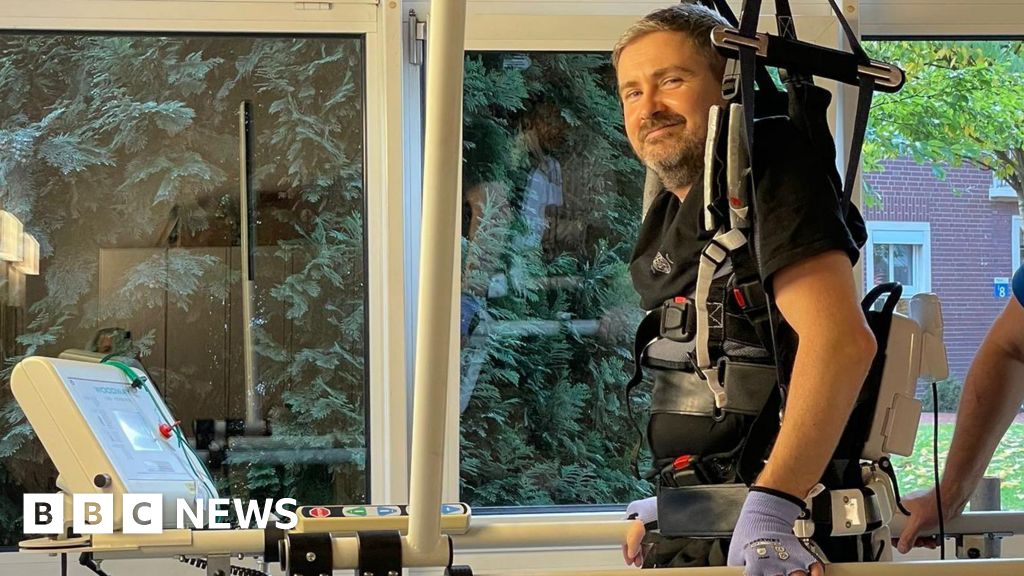
After a New Year’s Eve swim in 2023, Dan Richards’ life changed forever. The thrill of a cold water dip at Langland Bay, Swansea, turned into a nightmare when a freak accident left the 37-year-old paralysed. A rogue wave flipped him, causing him to hit the sand with devastating force and injure his neck. "I knew instantly that I was paralysed," Dan recounted, the memory still vivid. "I couldn’t move anything." Doctors delivered a grim prognosis: he would likely be bed-bound for the rest of his life. Yet, two years on, Dan is defying those odds, navigating the world in a wheelchair but with newfound mobility in his arms and fingers, and even taking steps with the aid of cutting-edge Artificial Intelligence (AI) technology, both in Wales and Germany.
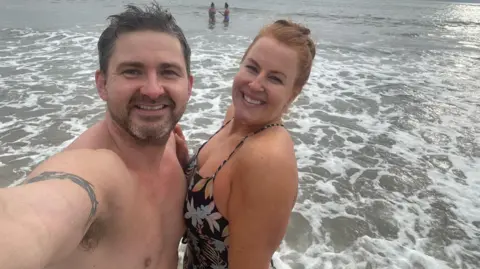
The fateful New Year’s Eve swim was a cherished tradition for Dan and his partner, Anna, 40. They were celebrating the dawn of 2023 with their customary bracing dip when the unthinkable happened. "I remember all of it, unfortunately. Being pulled out. And then everything changing," Dan said, his voice tinged with the gravity of that moment. "I got hit by a wave, it flipped me over and folded me backwards, and snapped my neck. I knew it was bad."
Anna’s account paints a harrowing picture of the immediate aftermath. She recalled hearing Dan’s cry for help just as she was preparing to enter the water. "I just remember looking over and just seeing Dan’s head coming up and then going back under," she said, her voice trembling. "We dragged him out. But he was just dead weight and the sea was coming in really fast." The wait for emergency services was agonizing, punctuated by Anna’s desperate pleas to accompany Dan in the helicopter airlift to hospital. "It was horrendous."

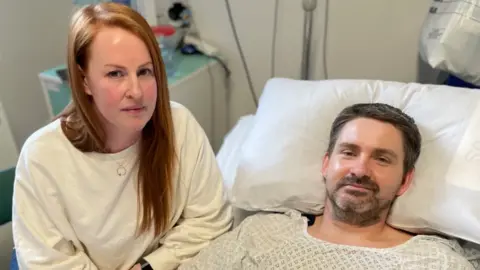
Transported to a hospital in Bristol, the couple from Swansea were confronted with life-altering news. Dan was informed that he was paralysed from the neck down, with a "highly likely" prognosis of remaining bed-bound. For Anna, who had only been dating Dan for a few months prior to the accident, the ordeal was compounded by the crushing responsibility of delivering the devastating news to his family. "It was New Year’s Eve, I was put in a room on my own but you could hear people laughing and joking, and I had to tell Dan’s parents," she recalled, the memory still raw. "How do you phone someone’s mum and say that their son is paralysed?"
Anna describes the months following the accident as a relentless series of challenges. "It’s our reality. Until you’re in this situation… you don’t realise just how much you have lost." However, even in the darkest days, small victories offered glimmers of hope. The slightest movement in Dan’s toes, observed during his hospital stay, became a powerful symbol of resilience and a catalyst for change.
"Luckily I’m quite stubborn," Dan stated, a determined glint in his eye. "I just wanted to see the physios as soon as possible. I wanted to work. I didn’t accept what they were saying." His unwavering resolve has been instrumental in his remarkable recovery. "I’m proud of the progress I’ve made. It’s a long time since laying in bed in Bristol, that’s for sure." He elaborated on the gradual return of sensation and movement: "The feeling in my toes then translated into full feeling through my legs and feet, some movement in my right leg [and] core strength – which I was told was gone – started to come back. Movement in my arms, my fingers, being able to hold things." This burgeoning recovery fuels his optimism: "I’m still hopeful, I’m still positive. With modern technologies, I’m not giving up."
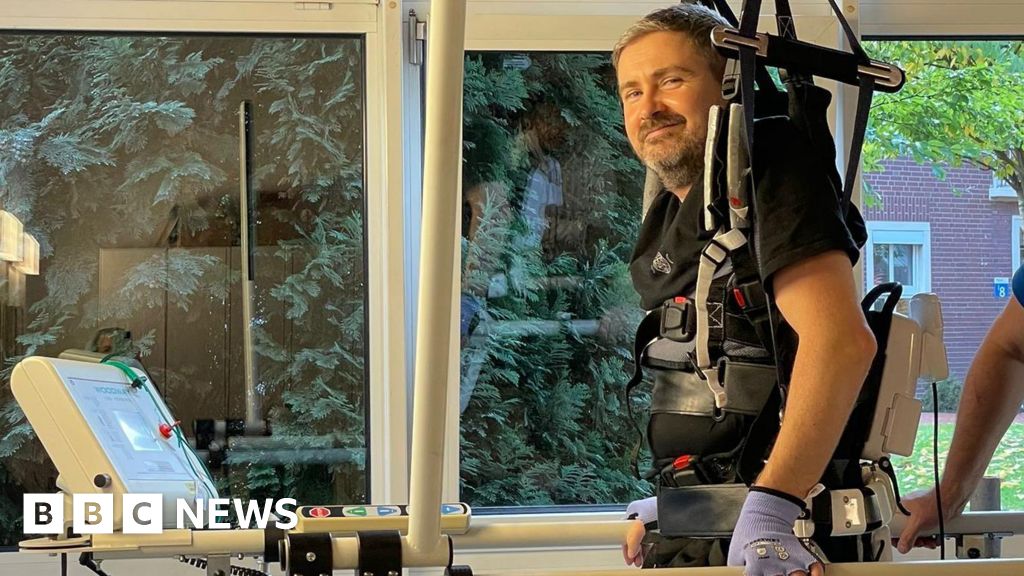
Dan’s journey to regaining mobility has been significantly aided by private physiotherapy at a specialist clinic in south Wales. This clinic utilizes a pioneering combined treatment approach, enabling him to walk with the assistance of advanced machinery. Jakko Brouwers, a neurophysiotherapist at the Morello clinic in Newport, described Dan as "an immensely motivated guy" upon his arrival after discharge from hospital.
"The technology is two-fold," Brouwers explained, detailing the innovative system. "The first part we tried with Dan is a robot. The robot will mimic normal human gait as much as possible." He continued, "The other part of the system that we developed is a stimulation suit that has got sensors. The trousers are also fitted with electrodes and we can stimulate muscle activity at the right time." This sophisticated system, powered by what Brouwers termed "a little bit of algorithm – and dare I say AI," works to "start developing a walking pattern." He expressed his enthusiasm, "It’s super exciting. It’s not often that you see that in Wales."
The experience of walking with the robotic assistance was profoundly impactful for Dan. He described it as "surreal" yet "the best feeling." This success served as a powerful motivator, propelling him to "push harder." The accessibility of such advanced technology in Wales further spurred him and Anna to explore further avenues.
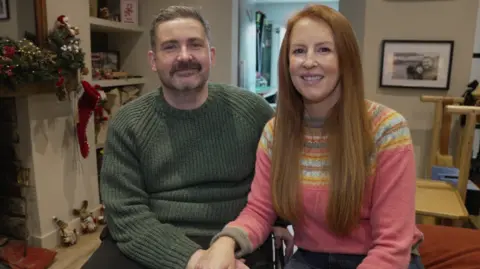
However, the pursuit of private physiotherapy and cutting-edge treatments comes with a significant financial burden. The unwavering support of family and friends has been crucial, with numerous fundraising efforts, from raffles to ultramarathons and charity nights, enabling Dan and Anna to embark on a trial abroad in October.
In Germany, Dan undertook a groundbreaking dual-treatment approach. He received a stem cell treatment directly into his spinal cord, concurrently utilizing a Hybrid Assistive Limb (HAL) suit. This advanced suit operates by interpreting brain waves. "It’s one of the first times it’s ever been done," Dan stated, highlighting the experimental nature of the therapy. "Sensors translate signals into movement, which then get my legs working, get me walking." The principle behind the HAL suit is neuroplasticity; the more the system is used, the stronger the neural signals become, and the faster the progression towards independent walking without the aid of the suit.
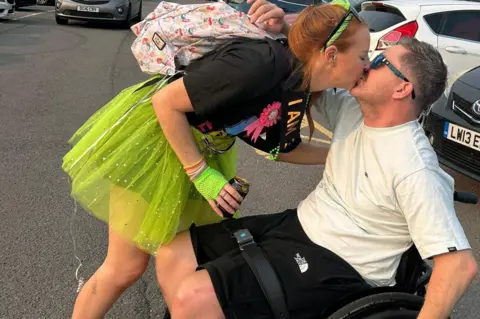
With six weeks of treatment remaining in Germany in the new year, Dan faces the additional hurdle of securing an EU Medical Visa, a challenge he is determined to overcome. While the future remains uncertain, Dan’s resolve is unwavering. "Technology is advancing so fast, things aren’t where they were 10 years ago," he asserted. "New research is incredible. There is no limit. I don’t want there to be a limit." His ultimate goal is clear: "The more progress I can make now, the better our future will be." The journey from a devastating New Year’s Eve accident to walking with AI-powered assistance is a testament to human resilience, the power of loved ones, and the transformative potential of emerging technologies.

 Nana Banana
 Nakalama John
 George Anjay