atisusanti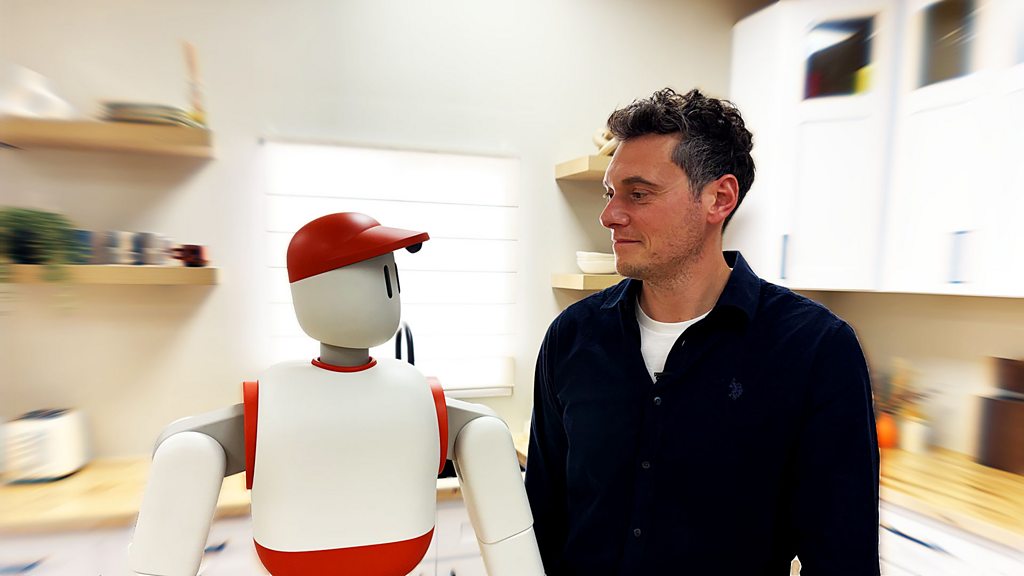
The quest for domestic robotic assistance, particularly for mundane chores like laundry, has long been a staple of science fiction and a persistent aspiration in technological development. In a recent special edition of BBC’s "Tech Life," the tantalizing prospect of humanoid robots entering our homes to tackle these tasks is explored, examining the current state of AI and robotics and projecting its potential future integration into our daily lives. The episode, hosted by Chris Vallance and BBC’s cyber correspondent Joe Tidy, delves into the recent surge of humanoid robot unveilings, many designed with human-like aesthetics, igniting excitement within Silicon Valley about a significant leap forward in artificial intelligence.
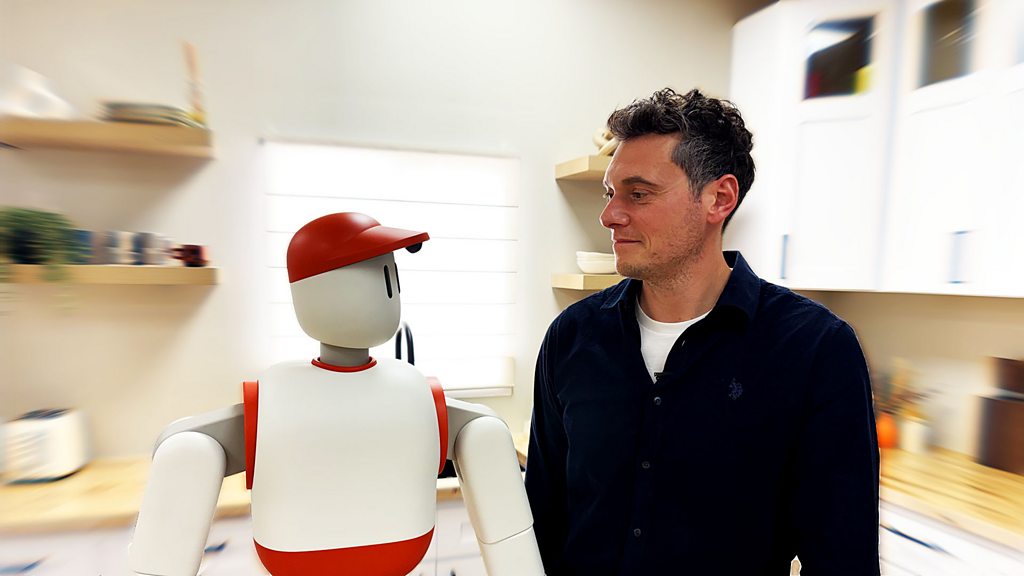
Despite the sophisticated appearance and ambitious claims surrounding these new robotic entities, the episode highlights a stark reality: many humanoid robots still grapple with fundamental physical tasks. Simple actions like carefully picking up a delicate glass or precisely watering a plant remain significant challenges. This underscores the vast chasm between the idealized vision of a fully automated domestic assistant and the current capabilities of even the most advanced robotic systems. Joe Tidy’s direct encounters with these robots in a domestic kitchen setting, as depicted in the episode’s accompanying imagery, provide a tangible, albeit perhaps slightly unsettling, glimpse into this technological frontier. The visual of Tidy observing a white humanoid robot, complete with a red baseball cap, directly engaging with him in a familiar household environment, serves as a powerful metaphor for the potential future where such machines are not just experimental novelties but active participants in our living spaces.
The "Tech Life" episode, released on January 13, 2026, and available for over a year, poses a critical question that resonates with many: "Will we really let them into our homes in the next few years?" This question probes not only the technological readiness of these robots but also the societal acceptance and ethical considerations that will inevitably accompany their widespread adoption. The development of humanoid robots capable of performing household chores involves overcoming a multitude of complex engineering hurdles. These include achieving dexterous manipulation for handling varied objects, navigating cluttered domestic environments with grace and safety, and understanding and responding to the nuances of human interaction.
The pursuit of domestic robots capable of tasks like laundry is not a new phenomenon. For decades, researchers and engineers have been striving to create machines that can alleviate the burden of repetitive and time-consuming chores. Early attempts often focused on specialized robots designed for single tasks, such as vacuuming or lawn mowing. However, the vision of a general-purpose domestic robot, one that can adapt to a wide range of tasks and environments, has remained a more elusive goal. Humanoid robots, with their familiar form factor, are often seen as the most intuitive pathway to achieving this vision, as they are designed to operate in environments built for humans and to interact with objects designed for human use.
The recent flurry of new humanoid robot designs, as referenced in the "Tech Life" episode, suggests a renewed acceleration in this field. Companies in Silicon Valley, a hub of technological innovation, are investing heavily in AI research and development, with the hope of capitalizing on the burgeoning market for advanced robotics. The underlying belief is that breakthroughs in machine learning, computer vision, and advanced sensor technology are paving the way for robots that are not only physically capable but also possess a degree of cognitive ability to learn, adapt, and problem-solve. This includes the ability to understand instructions, interpret the state of their environment, and make decisions autonomously.
However, the episode implicitly acknowledges the significant challenges that still lie ahead. The ability to differentiate between various types of fabrics, to load a washing machine correctly without damaging clothes, to fold items neatly, and to manage the entire laundry cycle from collection to putting away are complex processes. These tasks require a sophisticated interplay of sensing, grasping, and manipulation, often involving fine motor skills and an understanding of material properties. For instance, a robot attempting to fold a delicate silk scarf would need to employ a very different approach than one folding a sturdy bath towel.
Furthermore, the integration of robots into the home raises profound questions about privacy, security, and the very nature of human-robot relationships. If robots are to become intimate parts of our domestic lives, performing tasks that were once exclusively human, what are the implications for our privacy? Will these robots collect data about our habits and routines? How will we ensure the security of these systems against hacking or misuse? The "Tech Life" episode, by directly addressing the potential for these robots to enter our homes, prompts listeners to consider these broader societal implications alongside the technological advancements.
The producers of the "Tech Life" episode, Tom Quinn and Imran Rahman-Jones, alongside presenter Joe Tidy, have crafted a narrative that balances technological optimism with a healthy dose of realism. Their engagement with these cutting-edge robots, and their subsequent questioning of their immediate utility and acceptance, provides a valuable service to the public. The episode serves as a crucial reminder that the journey from a functional prototype to a ubiquitous domestic appliance is often long and fraught with unforeseen obstacles.
The "Programme Website of When will a robot do my laundry?" link offers an avenue for further exploration, presumably providing access to additional content, transcripts, or related articles that delve deeper into the specifics of the robots featured and the broader discourse surrounding domestic robotics. The "More episodes" link suggests that this particular installment is part of a larger series, "Tech Life," which likely covers a spectrum of emerging technologies and their impact on our world.
Ultimately, the question of "When will a robot do my laundry?" remains open, but the "Tech Life" episode offers a compelling snapshot of where we stand today. It suggests that while the vision of a robot seamlessly managing our household chores is becoming increasingly tangible, the reality of achieving this widespread integration in the immediate future is still dependent on significant technological leaps and societal readiness. The journey towards truly automated domesticity is ongoing, and the exploration presented in this BBC Sounds episode provides a vital insight into its current trajectory and the important questions we must ask as we move forward. The image accompanying the episode, a stark representation of a human correspondent face-to-face with a humanoid robot in a domestic setting, encapsulates the intriguing, and perhaps slightly unnerving, future that is slowly but surely unfolding.




 George Anjay
 Ramos Leo
 Nakalama John