
 atisusanti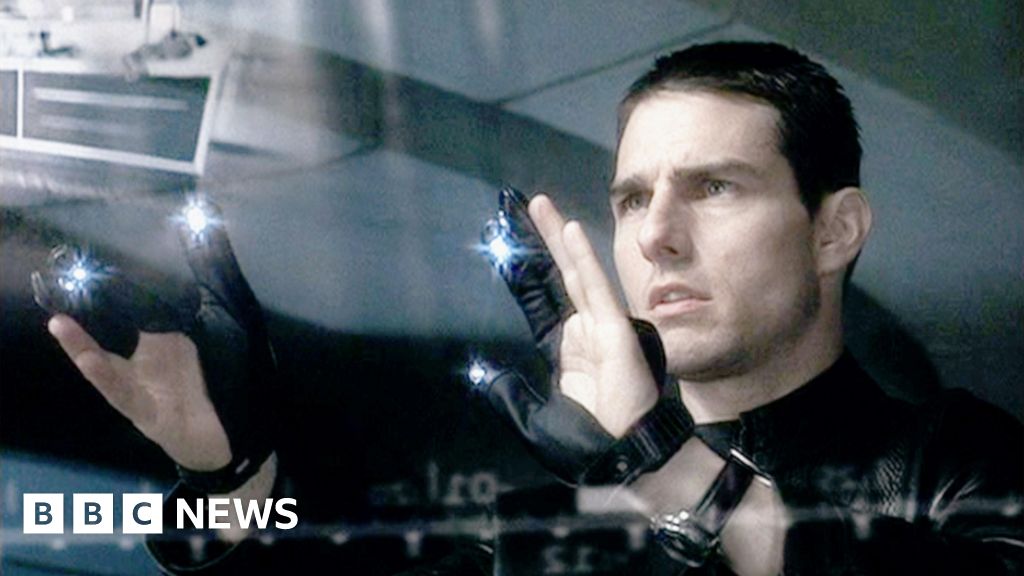
Merging Humans and Machines: The Dawn of Cybernetic Integration
Science fiction has long tantalized us with visions of humans enhanced by technology, leading fitter, happier, and more productive lives. The 2002 video game "Deus Ex," set in 2052, depicted protagonists augmenting their abilities with microscopic robots called "nanites," granting them superhuman powers like enhanced speed and night vision. While these microscopic marvels manipulate matter at atomic levels, the underlying principle of nanotechnology – engineering at the scale of millionths of a millimeter – is already deeply embedded in our present. The very device you’re using to read this article relies on billions of nanoscale transistors within its central chip, accelerating data processing.
Professor Steven Bramwell from the London Centre for Nanotechnology predicts that by 2050, the boundaries between machines, electronics, and biology will be "significantly blurred." This convergence could usher in nanotechnology implants for health monitoring and communication, though perhaps less overtly dramatic than in "Deus Ex." Furthermore, nanomedicine is poised to revolutionize drug delivery, precisely targeting affected areas within the body.
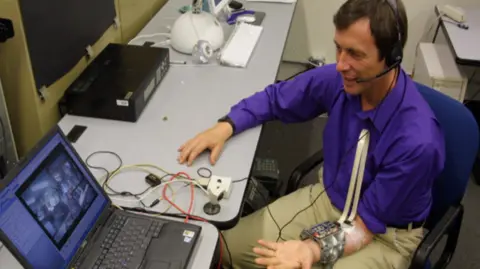
Cybernetics professor Kevin Warwick, renowned for his pioneering work and self-proclaimed "Captain Cyborg" title after implanting a microchip in his nervous system in 1998, believes cybernetics will drive transformative treatments for diseases. He foresees the widespread use of "deep brain electronic stimulation" as a therapeutic approach for conditions like schizophrenia, potentially reducing reliance on medication. Warwick also anticipates advancements in cybernetic enhancements, enabling a future where "your brain and body can be in different places," suggesting remote control and telepresence capabilities.
The concept of testing new enhancements or lifestyle changes without risk could be realized through "digital twins," as envisioned by Professor Roger Highfield, director of the Science Museum Group. He imagines individuals possessing "thousands of simplified twins," virtual representations updated with real-time data, allowing us to preview the effects of various interventions on our unique biology before implementing them in our physical lives.
The Next Generation of Artificial Intelligence: Quantum Leaps and Personalized Learning
The race to push the boundaries of artificial intelligence is intensified by advancements in quantum computing, a field where tech giants like Google and IBM are investing billions. Quantum computers promise to perform complex calculations at speeds previously unimaginable, enabling breakthroughs in areas like drug discovery through the simulation of molecular interactions. Jensen Huang, CEO of Nvidia, predicts "very useful" quantum computing will be a reality within two decades.
AI’s pervasive influence will undoubtedly continue to grow. Futurist and author Tracey Follows, a contributor to a government White Paper on UK education in 2050, anticipates a future where learning occurs across "virtual and physical realities." AI teachers will adapt in real-time, guiding students through "immersive simulations" rather than traditional textbooks. Education will become highly personalized, with individual DNA and biometric data analyzed to tailor learning experiences to each child’s unique cognitive profile.

Traffic-Free Roads and Lunar Bases: Reshaping Mobility and Space Exploration
Writer Bill Douglass, a winner of a global futurist writing contest on "The World in 2050," stands by his prediction of pilotless planes becoming commonplace by mid-century. More imminently, he foresees significant advancements in driverless cars, potentially rendering traffic congestion "largely a thing of the past." Douglass explains that autonomous vehicles, communicating and reacting in unison, can travel safely at much higher speeds, leading to a dramatic reduction in traffic accident fatalities.
Beyond Earth, the space race is set to accelerate. Journalist Sue Nelson, co-host of the Space Boffins podcast, predicts a liveable base on the Moon within 25 years and a significant shift of certain industries into orbit. Pharmaceutical companies, for instance, may leverage microgravity environments on spacecraft to grow larger and higher-quality crystals for next-generation medicines, a process often yielding superior results compared to terrestrial cultivation.
Sci-Fi Meets Science: Navigating the Ethical Frontiers
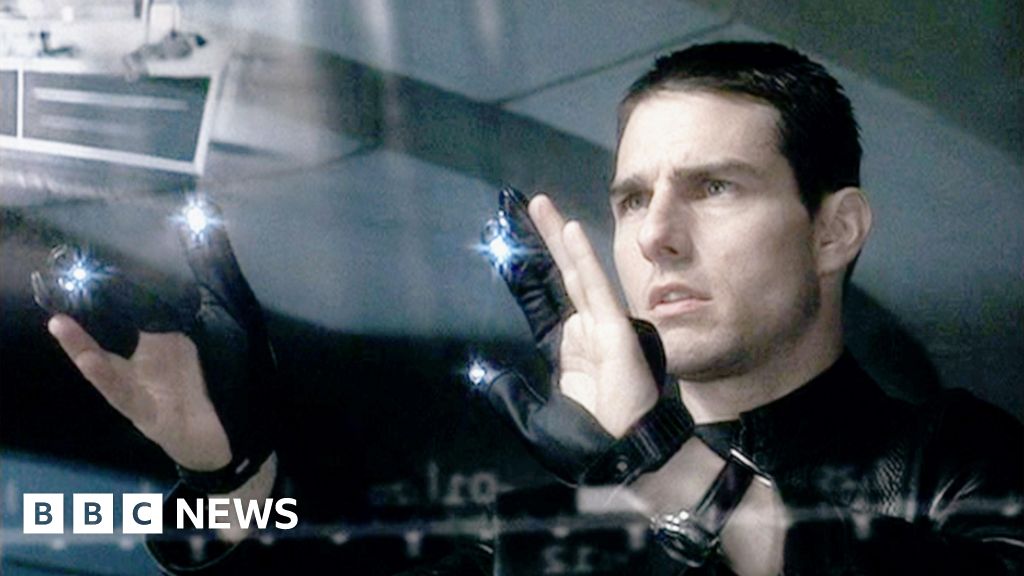
The 2002 film "Minority Report," set in 2054 and inspired by the works of science fiction author Philip K. Dick, offered a glimpse into potential future technologies. Director Steven Spielberg convened a summit of experts, including virtual reality pioneer Jaron Lanier, to envision the innovations of the mid-21st century, many of which were incorporated into the film. While "Minority Report" depicted advanced gesture-controlled interfaces and even jetpacks, it also painted a dystopian picture of society.
This cautionary tone is echoed by some contemporary experts who express concerns about the potential trajectory of artificial intelligence, with some even suggesting it could pose an existential threat to humanity. However, as Philip K. Dick himself wrote in his 1968 essay "Self Portrait," "I, for one, bet on science as helping us. Science has given us more lives than it has taken. We must remember that." This sentiment serves as a crucial reminder as we navigate the exciting and often unpredictable technological advancements that will define the world of 2050.




 Ramos Leo
 Nakalama John
 George Anjay

 Roy Suryo