Nana Banana
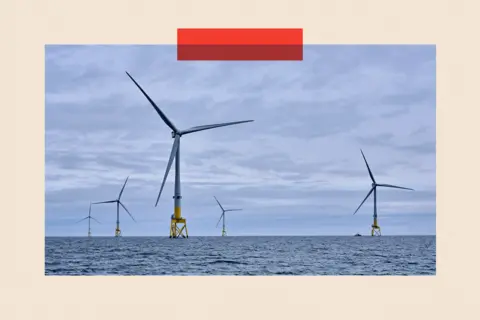
Consider the early hours of 3 June, a date that starkly illustrates this inefficiency. At 1am, near gale-force winds were sweeping across Scotland. For the immense Moray East and West offshore wind farms, located 13 miles off the north-east coast, these conditions should have been ideal for maximum output. These colossal turbines, some reaching 257m high, are designed to power well over a million homes. Yet, despite the perfect weather for generation, they were not operating at full capacity.

The fundamental issue lies with Britain’s electricity grid, originally constructed decades ago to transmit power from large coal and gas-fired plants situated close to major population centres in England. This legacy infrastructure struggles to cope with the influx of renewable energy generated in remote, resource-rich areas like the Scottish Highlands and offshore. The existing transmission lines often lack the capacity to carry all the electricity produced from these new, distant sources to where it’s needed in the south. When the grid’s capacity is exceeded, the National Electricity System Operator (NESO) — the body responsible for balancing supply and demand — must intervene to prevent overloads and ensure stability.
This intervention comes at a steep price. Energy companies, such as Ocean Winds, the developer behind the Moray Firth wind farms, receive what are effectively compensation payments when their output is curtailed due to grid congestion. On that very morning of 3 June, Ocean Winds was paid £72,000 for a single half-hour period to not generate power from its wind farms. This was just one instance among several restrictions that day. Simultaneously, far to the south, the Grain gas-fired power station on the Thames Estuary, 44 miles east of London, was paid £43,000 to increase its electricity output to meet demand that the curtailed wind power could have otherwise satisfied.

Such balancing acts are not isolated incidents; they occur almost daily. A staggering example is the Seagreen wind farm, Scotland’s largest. According to analysis by Octopus Energy, Seagreen was paid a colossal £65 million last year to restrict its output 71% of the time. This constant need to pay generators to switch off in one area and switch on in another has already cost the country over £500 million in the current year alone. NESO warns that these grid balancing costs could spiral to almost £8 billion annually by 2030, a figure that is inevitably passed on to consumers through higher energy bills. This escalating cost directly undermines the government’s promise that transitioning to net-zero energy would ultimately lead to cheaper electricity for households.
Faced with this growing financial burden and political pressure, the government is now exploring a radical overhaul: moving from a single, national electricity market to a system of multiple, smaller regional markets, often referred to as "zonal" pricing. The hope is that this fundamental shift could make the system more efficient and deliver lower bills. However, the proposal has ignited an intensely divisive debate within the energy industry, with one senior executive describing it as "the most vicious policy fight" he has ever witnessed, claiming he has "lost friends" over the issue.

The controversy has also become a potent weapon for political opponents. Parties like Reform UK are seizing on the perceived failures of net-zero policy to argue that it is an expensive and poorly managed endeavour. Richard Tice, Reform UK’s deputy leader, has boldly declared, "The next election will be fought on two issues, immigration and net stupid zero. And we are going to win." While polls consistently show the cost of living as a paramount concern for voters, rising energy prices are frequently cited as a key driver of household financial strain.
The Prime Minister himself is reportedly reviewing the details of this "postcode pricing" plan, raising questions about whether the government is truly prepared to implement the most significant shake-up of the UK electricity market since its privatisation 35 years ago. The stakes are incredibly high, not just for the energy industry but for every household and business in the country.
Energy Secretary Ed Miliband finds himself in a precarious position. His aggressive clean energy policies, aimed at achieving 95% low-carbon electricity by 2030, were partly sold on the promise of slashing average electricity bills by £300. Yet, the anticipated cost savings from renewables are not materialising for consumers. Despite renewables now generating over half of the country’s electricity, the grid’s limitations mean that even on days with high wind or solar output, gas generation is almost always required to stabilise and top up the system. And because gas remains a more expensive energy source, it frequently sets the wholesale price for electricity across the national market, keeping consumer bills stubbornly high.
Proponents of zonal pricing argue that as long as electricity prices are determined at a national level, gas will retain its disproportionate influence on costs. With regional pricing, this dynamic would change. Consider Scotland, a nation rich in wind resources but with a relatively small population of 5.5 million. Under a zonal system, the argument goes, Scottish wind farms wouldn’t need to be paid to turn down output because of insufficient transmission capacity to England. Instead, on a windy day like 3 June, they would be compelled to sell their surplus power to local consumers. This, in theory, would dramatically drive down prices, potentially even offering Scottish customers free electricity on some days.
Similar benefits would extend to other regions abundant in renewable power, such as Yorkshire, the North East, and parts of Wales. As investment in solar power grows, areas like Lincolnshire and other parts of eastern England could also see significant price reductions. Such an influx of cheap, clean power could revitalise local economies by attracting energy-intensive industries like data centres, chemical manufacturing, and other manufacturing sectors, fostering regional economic growth.
While electricity prices in London and much of the south of England might occasionally be higher than in the renewable-rich north, supporters contend that the hundreds of millions of pounds saved through increased efficiency could be used to implement mechanisms ensuring no consumer pays more than they currently do. Furthermore, these localised price signals would incentivise investors to build new wind and solar plants closer to centres of demand, particularly in the south. This would reduce the overall need for long-distance transmission, lessening the demand for new pylons and cables across the country, which would not only save money but also mitigate the visual impact on rural landscapes.

Greg Jackson, CEO of Octopus Energy, a major UK supplier, is a vocal advocate for the change. He asserts that "Zonal pricing would make the energy system as a whole dramatically more efficient, slashing this waste and cutting bills for every family and business in the country." Research commissioned by Octopus Energy estimates that zonal pricing could generate savings of over £55 billion by 2050, potentially reducing the average annual household bill by £50 to £100. Octopus points to Sweden’s successful transition to regional pricing in just 18 months as evidence of its feasibility. NESO, Citizens Advice, and the head of the energy regulator Ofgem are also among the supporters, and a House of Lords committee recently recommended the adoption of such a system.
However, the proposed shift faces considerable opposition from many businesses involved in developing and operating renewable energy plants. Tom Glover, UK chair of the German power giant RWE, expresses deep concern: "We’re making billions of pounds of investments in renewable power in the UK every year. I can’t go to my board and say let’s take a bet on billions of pounds of investment." He argues that altering the energy pricing structure could introduce significant revenue uncertainty and undermine existing contracts, thereby jeopardising the government’s ambitious green energy targets.

The primary cost of wind and solar plants lies in their construction, meaning the price of the energy they produce is highly sensitive to construction costs and, critically, the interest rates at which developers borrow capital. With the government expecting power companies to invest £40 billion annually over the next five years in UK renewable projects, even minor fluctuations in interest rates can have profound consequences for project viability and the ultimate cost of power. Stephen Woodhouse, an economist with AFRY, a consultancy that has studied regional pricing for power companies, warns that "Those additional costs could quickly overwhelm any of the benefits of regional pricing." This concern is amplified by current high interest rates and rising material costs for steel and other components, which have already led to the cancellation of major projects, such as a huge wind farm off the Yorkshire coast last month, deemed no longer economically viable.
Critics also highlight that National Grid, which owns the pylons, substations, and cables, is already undertaking a massive £60 billion investment programme over the next five years to upgrade the system for clean power. This new infrastructure, they argue, will significantly increase capacity, thereby reducing the need for regional pricing in the future and diminishing its potential savings. Furthermore, opponents warn that implementing regional pricing could take years, that energy-intensive businesses like British Steel cannot simply relocate, and that the system would inherently be unfair, with some consumers paying more than others based on their postcode.

Greg Jackson of Octopus Energy, however, dismisses these counter-arguments as self-serving, claiming that "Unsurprisingly, it’s the companies that enjoy attractive returns from this absurd system who are lobbying hard to maintain the status quo." In turn, rival power companies accuse Octopus of having its own vested interest, noting its position as the UK’s largest energy supplier with seven million customers and its ownership of a sophisticated billing system licensed to other suppliers, suggesting it stands to gain from changes to pricing mechanisms.
The clock is ticking for a decision. The government’s ability to meet its clean power targets hinges on the continued construction of new wind farms and solar plants. Developers need clarity and certainty regarding the future of the electricity market to commit to these large-scale investments. A decision from the government is anticipated in the next couple of weeks, placing the ball squarely in Mr. Miliband’s court.
Clarification: This article was updated on 29 October 2025 to include the word ‘frequently’ in the sentence: And because gas tends to be more expensive, it frequently sets the wholesale price.




 George Anjay

 Ramos Leo
 Nakalama John