Nana Banana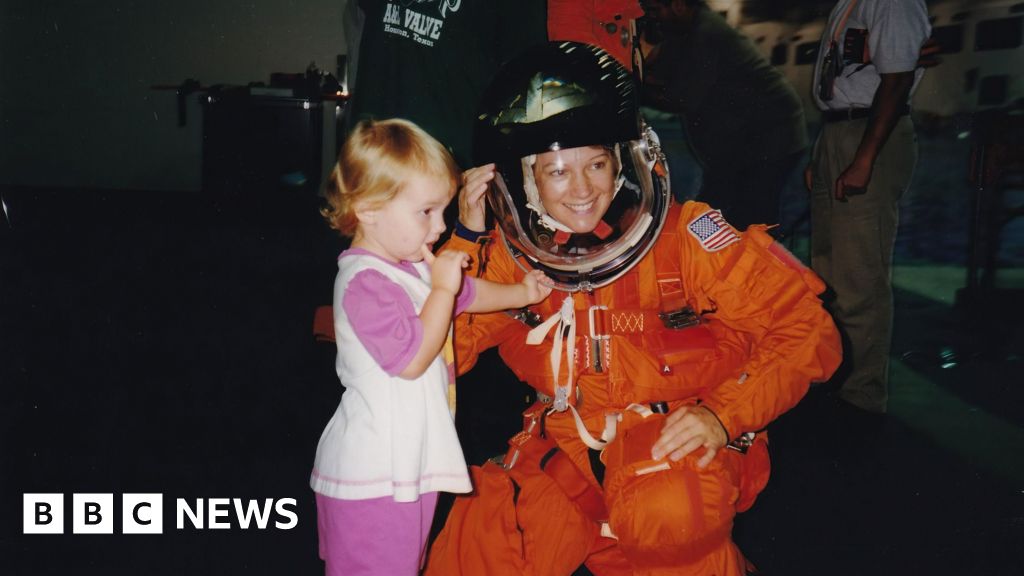
Eileen Collins, an astronaut whose name should resonate in the annals of space exploration, not only shattered the proverbial glass ceiling but continued to ascend beyond it. Her remarkable career saw her become the first woman to both pilot and command a NASA Space Shuttle, yet despite these monumental achievements, her story remains less widely known than it deserves. A new feature-length documentary, "Spacewoman," aims to rectify this, chronicling her trailblazing journey and bringing her extraordinary legacy to a broader audience.
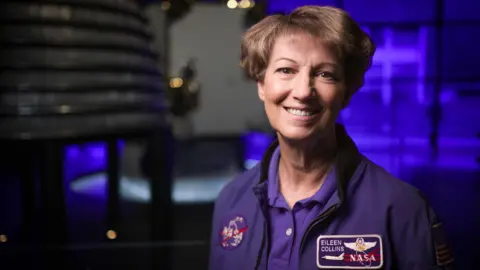
Meeting Collins at London’s iconic Science Museum, one is immediately struck by her understated demeanor. She is softly spoken, warm, and remarkably grounded, yet beneath this approachable exterior lies an undeniable core of focus and determination – a clear inner steel that propelled her through the most challenging frontiers. Her passion for space ignited at a tender age, a dream forged in the shadow of the early space race. "I was reading a magazine article on the Gemini astronauts. I was probably nine years old, and I thought that’s the coolest thing. That’s what I want to do," she recalls, a hint of the youthful wonder still in her eyes. It was an audacious ambition for a young girl in the late 1960s; at that time, the concept of women in space, let alone commanding a spacecraft, was largely confined to science fiction. "Of course, there were no women astronauts back then. But I just thought, I’ll be a lady astronaut."
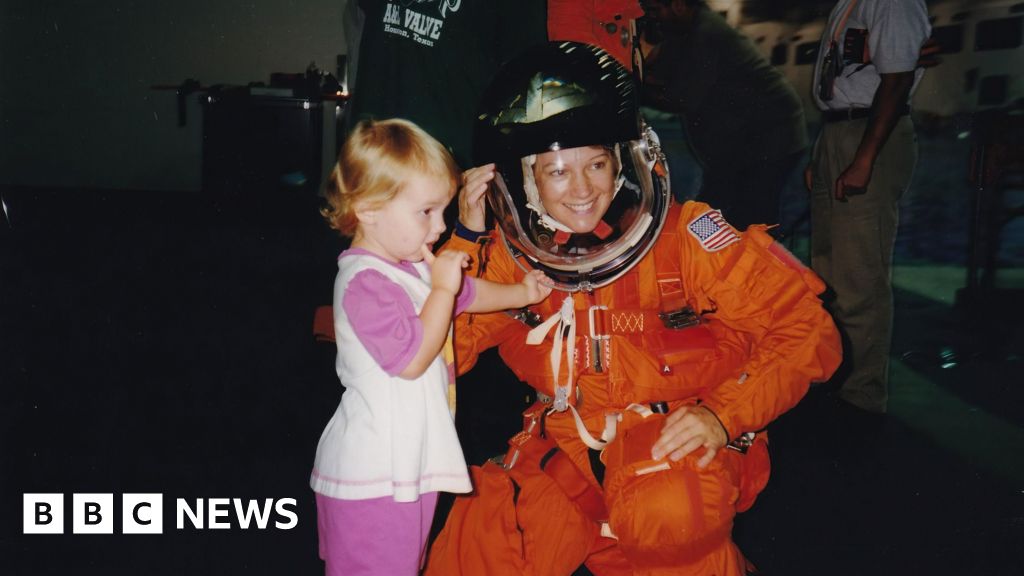
This unwavering childhood dream, born in Elmira, New York, set her on an extraordinary path. Unlike the early Mercury astronauts who were exclusively military test pilots, the door for women in space was slowly beginning to crack open by the late 1970s. However, to command a spacecraft, the most direct route remained through military aviation and test pilot schools. Collins understood this implicitly. She pursued an education in mathematics and economics before joining the U.S. Air Force, where she distinguished herself as an instructor pilot and then as a test pilot. This rigorous training in a predominantly male environment honed her skills, discipline, and resilience, making her one of the very few women qualified for the nascent Space Shuttle program. Her excellence made her stand out, leading to her selection for the astronaut corps in 1990, alongside a class that included other future luminaries.
The Space Shuttle program, operational for three decades from 1981 to 2011, represented the cutting edge of human spaceflight – reusable "space planes" designed to ferry astronauts, satellites, and components to orbit. It was into this ambitious and often perilous endeavor that Collins stepped. Her first mission, STS-63 aboard the Space Shuttle Discovery in February 1995, marked a pivotal moment not just for her, but for women everywhere. As the first woman to pilot a Space Shuttle, the eyes of the world, and particularly those of aspiring women, were fixed firmly upon her. The pressure was immense, but Collins embraced it with profound responsibility. "As the first woman to pilot the Space Shuttle, I worked very hard at that because I didn’t want people to say, ‘Oh look, the woman has made a mistake.’ Because it wasn’t just about me, it was about the women to follow me," she explains. "And I wanted there to be a reputation for women pilots that was: ‘Hey, they’re really good’." Her performance was flawless, demonstrating exceptional skill during the rendezvous with the Russian Mir space station and solidifying her reputation as an elite aviator.
Her undeniable talent and leadership qualities quickly earned her a promotion. In July 1999, on mission STS-93 aboard the Space Shuttle Columbia, Eileen Collins made history once again, becoming the first woman to command a U.S. spacecraft. This mission successfully deployed the Chandra X-ray Observatory, a powerful telescope that continues to revolutionize our understanding of the universe. The significance of this achievement extended far beyond the technical aspects of spaceflight; it was a powerful symbol of progress and an inspiration to countless individuals.
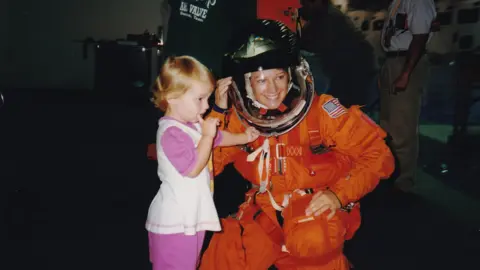
During this period, Collins was also a mother to two young children. The fact that she was a working wife and mother juggling such an intensely demanding and high-stakes career was frequently a point of fascination, and sometimes astonishment, for journalists at press conferences. Societal expectations often struggled to reconcile the image of a pioneering astronaut with traditional roles. Yet, Collins navigated these inquiries with grace and humor, offering a perspective that resonated deeply with working parents everywhere. She often remarked that being a mum and a commander were "the two best jobs in the world." With a knowing laugh, she adds, "But I’m going to tell you it is harder to be a parent than to be a space shuttle commander. The best training I ever had for being a commander was being a parent – because you have to learn how to say no to people." This insightful observation underscores the transferable skills of leadership, problem-solving, and decisive action that are cultivated in both roles, highlighting the often-underestimated demands of parenting.
The Space Shuttle program, for all its breathtaking highs, was also tragically marked by unimaginable lows. In 1986, the Space Shuttle Challenger disintegrated just 73 seconds after launch, killing all seven crew members. Seventeen years later, in February 2003, the Space Shuttle Columbia broke up during re-entry over Texas, again claiming the lives of its entire seven-person crew. This second disaster, caused by a piece of insulating foam from the external fuel tank breaking loose during launch and damaging the heat shield on the shuttle’s wing, was a devastating blow to NASA and the nation. The images of the shuttle breaking apart as the world watched in horror are etched into collective memory.
Collins shakes her head, the memory of the disaster and the loss of her friends still palpable. These were not just colleagues; they were members of a close-knit community, a family. The Columbia tragedy plunged NASA into a period of deep introspection and comprehensive review. As a senior astronaut, and already a commander, Collins found herself facing an immense challenge: she was tasked with leading the subsequent "Return to Flight" mission. The emotional toll, coupled with the immense pressure to ensure the safety of her crew and restore public confidence, was extraordinary. Did she ever consider quitting at that point? "People throughout the shuttle programme were counting on the commander to stick with it," she says quietly, her voice tinged with the weight of that responsibility. "I think quitting the mission would have been the opposite of brave… and I wanted to be a brave leader. I wanted to be a confident leader. I wanted to instill that confidence in other people." Her resolve to lead the critical STS-114 mission aboard Space Shuttle Discovery in July 2005 was a testament to her profound commitment to space exploration and her crew.
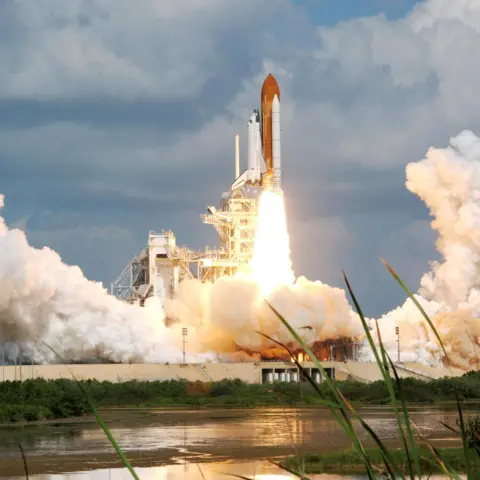
The stakes for STS-114 were astronomically high. The world watched with bated breath as Discovery thundered skyward. In a chilling echo of the Columbia disaster, a chunk of foam broke away from the external tank during launch. While less severe than the Columbia incident, it confirmed that the foam shedding issue had not been fully resolved, sending shockwaves through mission control. This time, however, a plan was in place to check for damage. It necessitated one of the riskiest and most unprecedented maneuvers in space history.
As commander, Collins had to pilot the 100-ton Space Shuttle through a slow, controlled 360-degree flip while flying just beneath the International Space Station. This delicate pirouette allowed her colleagues on the orbiting laboratory to photograph the shuttle’s underside with high-resolution cameras, meticulously checking if the critical heat shield had been compromised. "There were engineers and managers saying it couldn’t be done, all these reasons why it was too dangerous," she recounts, recalling the intense debates. "I listened to the discussion, they knew I was the commander, and I said: ‘It sounds like we can do it’." Her calm, decisive leadership cut through the apprehension. With her hands steady at the controls, her voice cool and composed as she communicated with mission control, Collins flawlessly executed the graceful somersault. The images captured revealed a minor, non-critical damage spot, and a subsequent spacewalk was carried out to make repairs. It was a masterclass in piloting and command under unimaginable pressure, ensuring that Collins and her crew would make it safely home, thus successfully completing the pivotal "Return to Flight" mission and paving the way for the remainder of the Space Shuttle program.
STS-114 marked Eileen Collins’s fourth and final spaceflight. She had always planned to conclude her astronaut career after her fourth mission, a decision driven by a desire to allow others the opportunity to experience space and to dedicate more time to her family. She has since watched countless astronauts follow in her footsteps, many of whom were undoubtedly inspired by her pioneering achievements. For the next generation dreaming of the stars, her advice is characteristically practical and grounded: "Do your homework, listen to your teacher, pay attention in class and read books, and that will give you something to focus on." It’s a simple, yet profound philosophy that underpinned her own rigorous journey to the cosmos.
Those who delve into the story of Eileen Collins will discover a legacy that transcends mere "firsts." She was not just a woman who broke barriers; she was a formidable pilot, an exceptional commander, and a leader whose resilience and courage shone brightest in the face of adversity. She expresses no regrets about concluding her astronaut career, having made her decision and never looking back. Yet, a wistful look still crosses her face when asked if she would be tempted by an unexpected seat on a spacecraft. "Yes, I would love to go on a mission someday. When I’m an old lady, maybe I’ll get a chance to go back in space." Her enduring desire to return to the final frontier speaks volumes about the indomitable spirit of a true trailblazer.
"Spacewoman" is in selected cinemas now.


 George Anjay
 Ramos Leo
 Nakalama John