
 Nana Banana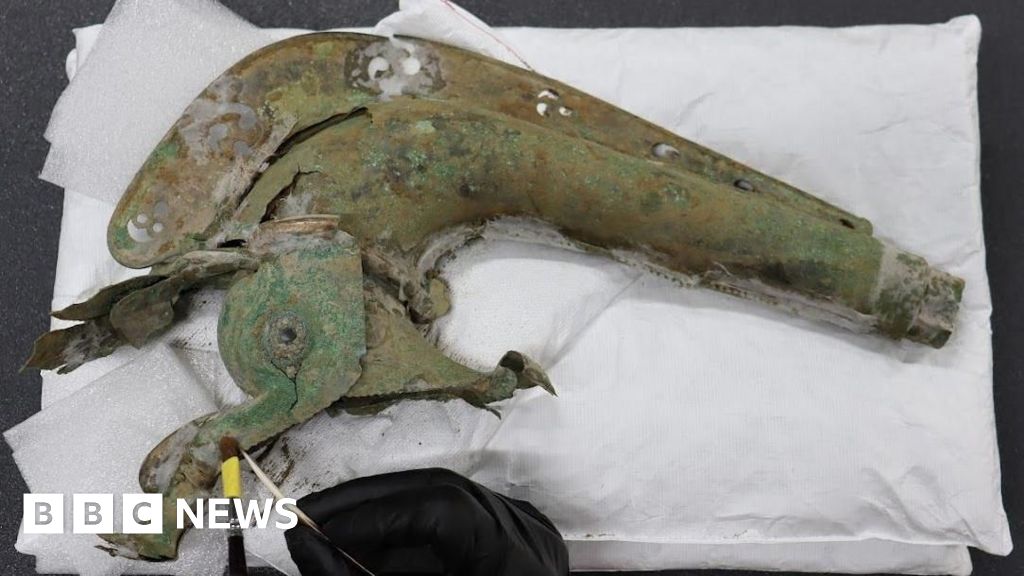
At the very heart of this unprecedented find was the most complete battle trumpet, known as a carnyx, ever unearthed in Europe. Alongside it lay an equally astonishing artifact: the first-ever boar’s head flag standard to be discovered in Britain. The dual nature of this discovery, combining an instrument of war with a symbol of tribal identity, has captivated experts worldwide. Gary Trimble, Senior Project Officer, conveyed the profound significance of the find on BBC Two’s Digging for Britain, stating that carnyces "are extraordinarily rare… a boar standard, that’s even rarer." The combination, he noted, elevates this hoard into a category of its own.
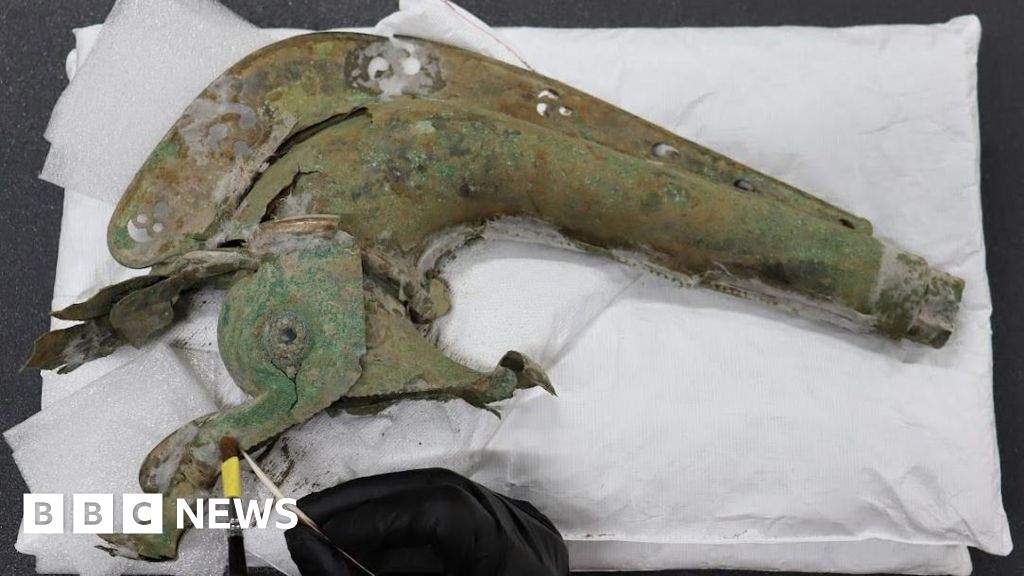
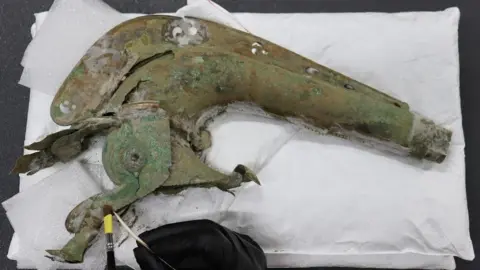
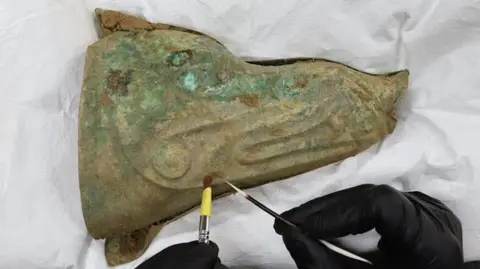
The carnyx itself is a breathtaking piece of ancient craftsmanship. Fashioned from extremely thin sheets of bronze, it features a long, S-shaped tube culminating in a bell shaped like the head of a predatory animal, often a boar or a serpent. The Thetford carnyx boasts a distinctive animal head, complete with a gaping mouth and a decorative crest along its neck. Conservator Jonathan Carr, who has painstakingly worked on the delicate artifact, highlighted its "wonderful little eye, which is a remarkable survivor," adding that "you can’t help but be impressed and charmed by it." This particular carnyx is not only one of only three found in Britain but is also uniquely complete, retaining its pipe, mouthpiece, and bell – components rarely preserved together due to the fragility of the ancient metal.
These magnificent war trumpets were integral to Celtic tribes across Europe, serving multiple critical functions on the battlefield. Their booming, resonant sound was designed to strike terror into the hearts of enemies, a psychological weapon that would have been deeply unsettling. Simultaneously, the carnyx would inspire and rally the Celtic warriors, its distinctive call cutting through the chaos of battle to direct troop movements and maintain morale. In East Anglia, the Iceni tribe, famously led by Queen Boudica in her ill-fated uprising against the Roman Empire in AD60-61, would undoubtedly have employed such instruments. The Romans themselves were fascinated and intimidated by carnyces, frequently depicting them as potent war trophies in their art, a testament to their fearsome reputation.
Dr. Fraser Hunter, Iron Age and Roman curator at National Museums Scotland, underscored the global importance of the carnyx. "I’ve looked at carnyces from around Europe," he commented, "and the full research and conservation of these incredibly fragile remains will reshape our view of sound and music in the Iron Age." The auditory landscape of ancient battles, the rituals surrounding warfare, and the cultural significance of these instruments are all poised for deeper understanding thanks to this singular find.
Equally compelling is the boar’s head standard, an artifact of even greater scarcity. Crafted from sheet bronze, this standard would have been proudly held aloft in battle, much like a modern flag, serving as a crucial rallying point for troops amidst the swirling melee. The symbolism of the boar was profound in Celtic culture. As Dr. Hunter explained, "They were very fierce animals to face in the hunt, so the symbolism of the boar is a lot about the strength of it – a very appropriate adversary in battle." The boar represented courage, ferocity, and martial prowess, embodying the very spirit a tribe wished to project and inspire in its warriors. Its presence alongside a carnyx strongly suggests a military or ceremonial context, perhaps belonging to an elite warrior or even a tribal leader.
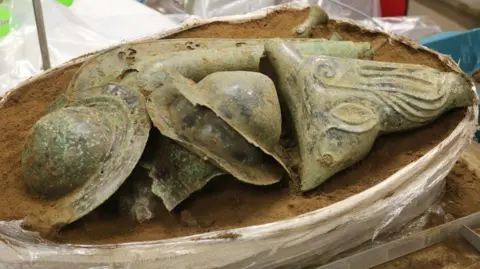
Beyond these two headline-making items, the hoard, which archaeologists date to approximately 50BC to AD50, also contained five shield bosses – the central protective dome of a shield – and an enigmatic iron object whose original purpose is still being investigated. The collective burial of these items hints at a deliberate act, possibly a ritualistic offering, a cache hidden in haste during conflict, or a burial of significant war regalia.
The excavation began with an almost prescient feeling. Dig leader Peter Crawley recounted his intuition about the site before the dig commenced: "It felt like one of those special sites that you do get every so often." His gut feeling proved remarkably accurate. Gary Trimble further emphasized the uniqueness of the Norfolk find, acknowledging the region’s rich archaeological heritage: "We have our fair share of hoards in Norfolk, but this is so, so different – it is really, really special."
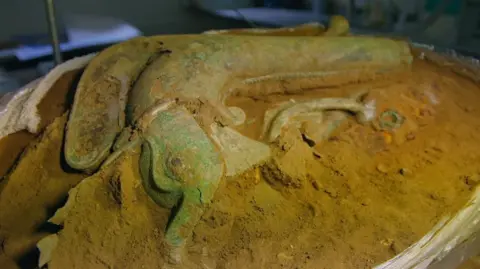
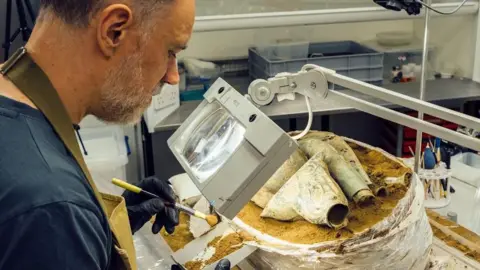
The meticulous process of excavation and conservation reflects the immense value of these finds. Upon discovery, the entire hoard was carefully lifted out of the earth as a single block of soil. This delicate procedure ensured that the brittle, ancient artifacts, especially the thin metal sheets of the carnyx and standard, remained undisturbed in their original context. Once at the lab, the soil block underwent advanced scanning techniques, such as CT scans, to precisely map the position of each item within the earth matrix before any physical conservation began.
Jonathan Carr’s work in the conservation lab is a testament to extraordinary skill and patience. He described the carnyx and standard as being made "from extremely thin sheets of metal which have become extremely brittle after 2,000 years in the ground." Removing these fragile finds from their surrounding soil required immense care, with Carr acutely aware of the risks involved in every brushstroke and delicate maneuver. This painstaking process is essential to stabilize the artifacts, prevent further degradation, and reveal their intricate details, ensuring their survival for future generations.
The legal and institutional framework surrounding such a discovery is equally rigorous. The find was promptly reported to the coroner, initiating a formal inquest to determine if it meets the criteria for "treasure" under British law. This designation would mean the items are owned by the Crown, and a museum would have the opportunity to acquire them for public display and study, with a reward paid to the finders and landowners. Its long-term future, including where it will ultimately be housed and displayed, is yet to be decided, pending the inquest’s outcome.
Collaboration is key to unlocking the full potential of such a significant discovery. Historic England is working closely with Pre-Construct Archaeology, Norfolk Museums Service, and the National Museum of Scotland to coordinate the comprehensive research and conservation efforts. This multidisciplinary approach ensures that every aspect of the hoard, from its material composition to its cultural context, is thoroughly investigated by leading experts.
Dr. Tim Pestell, a senior curator of archaeology for Norfolk Museums Service, highlighted the profound historical implications: "This find is a powerful reminder of Norfolk’s Iron Age past which, through the story of Boudica and the Iceni people, still retains its capacity to fascinate the British public." He further emphasized that "The Norfolk Carnyx Hoard will provide archaeologists with an unparalleled opportunity to investigate a number of rare objects and ultimately, to tell the story of how these came to be buried in the county 2,000 years ago." The hoard offers a direct, tangible link to the lives, beliefs, and martial traditions of the Iron Age inhabitants of East Anglia.
Claudia Kenyatta CBE and Emma Squire CBE, co-CEOs of Historic England, echoed this sentiment, calling it a "remarkable discovery." They expressed their anticipation, stating, "We look forward to uncovering and sharing the story of the Norfolk community that owned and used these items." The finds will undoubtedly illuminate aspects of Iron Age society previously only glimpsed through fragmented evidence.
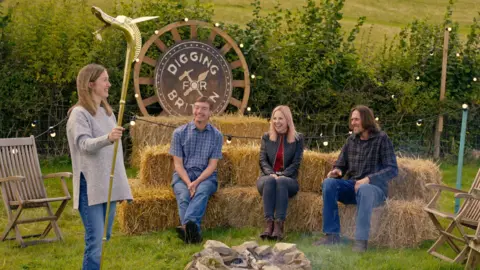
For those eager to witness the unveiling of this extraordinary discovery and learn more about the excavation process, the story of the Thetford hoard will be prominently featured on BBC Two’s Digging for Britain. The episode, presented by anatomist, author, and broadcaster Prof Alice Roberts, who has hosted the program since its inception, is scheduled to air on 14 January at 21:00 GMT and will also be available on BBC iPlayer. This public broadcast will bring the thrill of archaeological discovery and the rich tapestry of Britain’s ancient past directly into homes, ensuring that the significance of the Thetford carnyx and boar standard resonates far beyond the academic community.


 Ramos Leo
 atisusanti
 Nakalama John
 George Anjay

 Roy Suryo