Nana Banana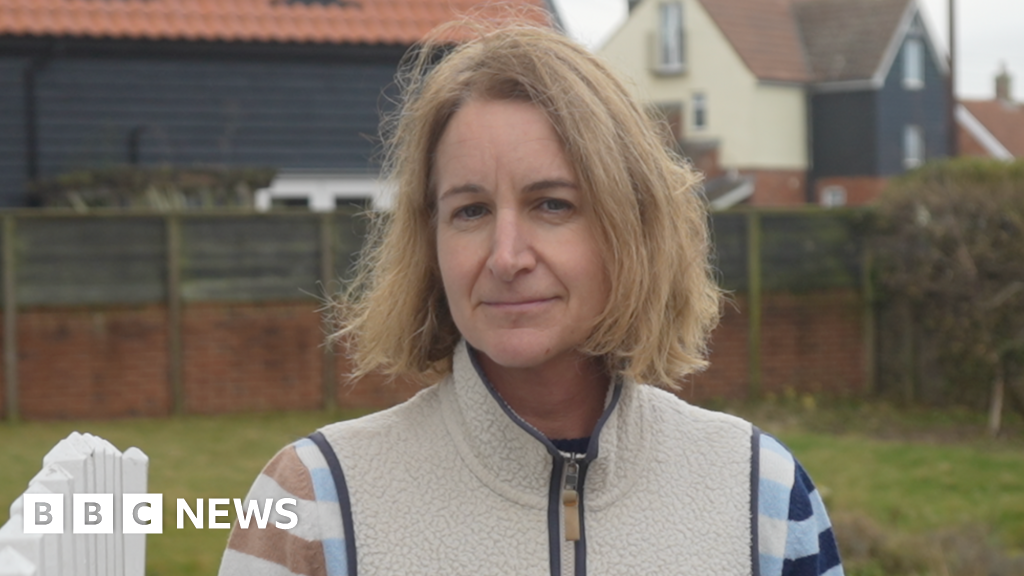
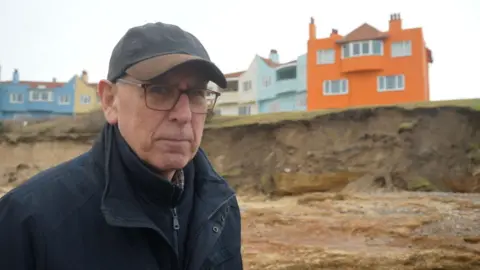
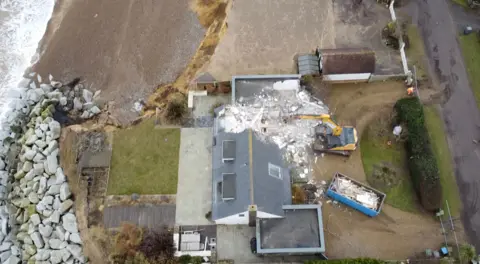
Her fears are far from abstract; they are rooted in the stark reality unfolding just metres away. Demolition teams descended upon 22 North End Avenue on Monday, a grim ritual that marks the fourth property to be dismantled in the Suffolk village this winter alone. Each thud of the excavator, each crumbling wall, serves as a visceral reminder of the sea’s unstoppable force and the fragility of human habitation along this rapidly eroding coastline. Lane, whose property is situated in Old Homes Road in the older, characterful part of Thorpeness, describes feeling "sick" as she watches the homes of her neighbours succumb to the elements. The emotional toll is immense, a constant gnawing worry compounded by a profound sense of powerlessness. "We know we can do nothing for the action of the sea," she states, her voice heavy with resignation, "but the fear here for flooding and the risks associated are really real." The sound of the waves, once a soothing backdrop to village life, has transformed into an ominous soundtrack of impending loss.
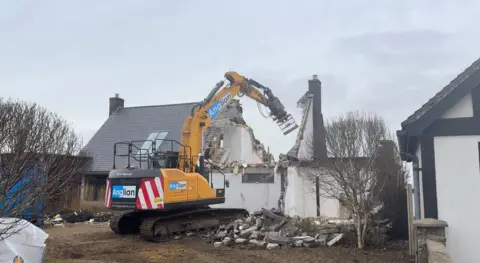
The scene at North End Avenue is a stark visual representation of the crisis. A large yellow digger, its mechanical arm tearing into the roof of a once-loved home, works under a cloudy Suffolk sky. Piles of rubble, concrete, and splintered wood accumulate on the ground, the skeletal remains of what was once a family’s sanctuary. This destruction is not an isolated incident; it is part of a wider, accelerating trend. Large sections of the coastline have been dramatically lost to erosion, a process that has been significantly accelerated this month following a series of intense winter storms and exceptionally high tides. These powerful meteorological events have battered the exposed cliffs, stripping away vast quantities of sand and earth, and bringing the encroaching sea perilously close to the remaining properties.
Teresa Lane’s personal apprehension has escalated dramatically in recent months. "Very much," she replies when asked if she worries about losing her own property. "I hadn’t until probably six months ago, but now we are waking up in the middle of the night in fear of that happening." The visible erosion, coupled with the ongoing demolitions in her immediate vicinity, has shifted the threat from a distant possibility to an imminent danger. "With the erosion in sight here and with houses being demolished around us, I think it is a real possibility if action isn’t taken rapidly." Her words echo the sentiments of many homeowners in Thorpeness, who live with the daily uncertainty of how much longer their homes will stand. The picturesque charm of Thorpeness, with its mock-Tudor houses and unique "House in the Clouds," feels increasingly vulnerable, its future hanging by a thread of rapidly diminishing coastline.
Richard Bennett, another homeowner whose property is located at the Headlands on Admirals Walk, expresses profound surprise at the speed of the recent coastal retreat. "It’s a huge surprise because we were expecting this to evolve over the next 10 years," he explained, reflecting on the community’s previous understanding of the erosion timeline. "So from our point of view, this is 10 years ahead of what we were expecting." This acceleration underscores the unpredictable nature of coastal dynamics, exacerbated by a changing climate. Bennett elaborated on the factors contributing to this rapid loss: "The storms we’re having now have brought in a big swell and the sandbanks that used to protect Thorpeness have moved around, and no-one can predict that process." Historically, offshore sandbanks acted as natural buffers, absorbing much of the sea’s energy before it reached the shore. Their shifting or disappearance leaves the coastline dangerously exposed to the full force of the waves.
Bennett’s analysis highlights a critical aspect of the current crisis: the increased severity and unpredictability of weather patterns. "We have a weather and climate challenge that is unpredictable and it’s become more severe," he stated. While the specific mechanisms of coastal erosion are well-understood, the timing and intensity of events are becoming increasingly difficult to forecast, leaving communities like Thorpeness little time to react. He maintains that "nobody can be blamed for that personally," emphasizing the systemic nature of the climate crisis rather than assigning individual fault. The erosion at Thorpeness is a stark microcosm of a global challenge, where the impacts of climate change are manifesting with alarming speed and devastating consequences for coastal communities worldwide.
The list of lost properties in Thorpeness continues to grow, serving as a grim roll call of the sea’s advance. The Warren, The Chantry, and Cheneys, all located on North End Avenue, have been demolished this winter alone, joining The Red House, which was taken down in 2022. Each demolition is not just the loss of a building, but the obliteration of memories, investments, and dreams. These properties represent a significant financial and emotional loss for their owners, many of whom are holiday homeowners, but some are permanent residents who have called Thorpeness home for generations. The drone images of the coastline vividly illustrate the scale of the destruction: a large, steep cliff now separates properties from the beach, dramatically altered from its former gentle slope. The once accessible beach is now largely cut off, deemed unsafe for public access due to the unstable cliffs and ongoing erosion.
East Suffolk Council, as the lead authority tasked with managing this evolving crisis, initially held a glimmer of hope. Towards the end of last year, they believed the erosion had been slowing, offering a brief respite from the relentless pressure. However, the recent onslaught of severe weather in the new year swiftly disproved this optimistic assessment, with even more of the coastline being destroyed. The council now believes that a further nine properties in the village are at immediate risk, expanding the circle of anxiety among homeowners. Their primary focus remains on safety, and a spokesperson reiterated this on Monday, urging people to stay away from the unstable cliffs and beach area. The danger is not only to properties but to individuals who might venture too close to the rapidly eroding edges.
Acknowledging the lack of easy answers, the council spokesperson added: "Whilst there are no viable long-term solutions to stop the erosion at Thorpeness, we continue to work around the clock with residents, the Environment Agency and the local MP to tackle this developing situation and to consider any potential short-term solutions which may slow the erosion." This statement underscores the immense challenge faced by local authorities in areas prone to rapid erosion. Traditional hard engineering solutions, such as sea walls or rock armour, are often prohibitively expensive, environmentally damaging, and can simply shift the erosion problem further along the coast. Short-term solutions might include temporary rock revetments or beach nourishment, but these are often stop-gap measures that offer limited protection against the powerful forces of the sea. The reality is that for many areas, a policy of "managed retreat" – allowing the coastline to erode naturally and assisting residents in relocating – is often the only sustainable long-term strategy, albeit one that comes with immense personal and community cost.
Jenny Riddell-Carpenter, the Suffolk Coastal MP, visited the village over the weekend, accompanied by representatives from the Environment Agency, to engage directly with the affected residents. Her presence offered some reassurance, but she also delivered a stern warning to the wider public. Speaking to BBC Radio Suffolk’s Wayne Bavin, she noted that "lots of people" were traveling to the village, drawn by morbid curiosity to witness the dramatic eroded cliffs. "I appreciate there’s a lot of interest in this; these are families that are going through an incredibly hard time, but it’s also just not safe on the coast," she emphasized. The Labour MP urged potential sightseers to reconsider their visits: "If you can stay away from the area it would help and it would give the families the dignity and the space they need to process what is going on." Her plea highlights the need for empathy and respect for those grappling with the loss of their homes and the profound disruption to their lives.
The Environment Agency, a crucial partner in managing coastal risks, affirmed its role in providing expert advice and guidance to local authorities and affected communities. They expressed awareness of the significant emotional and practical effects that coastal erosion is having on the Thorpeness community, acknowledging the deep distress caused by the loss of homes and the uncertainty of the future. While their remit involves strategic planning and technical support, the immediate human impact of coastal change is at the forefront of their considerations. As the sea continues its relentless encroachment, the residents of Thorpeness face an uncertain future, grappling with the physical loss of their properties and the psychological burden of living on the edge of a disappearing land. The charming village, a testament to early 20th-century whimsy, now stands as a poignant symbol of the wider challenges posed by coastal erosion and a rapidly changing climate.



 George Anjay
 Ramos Leo
 Nakalama John

 atisusanti