George Anjay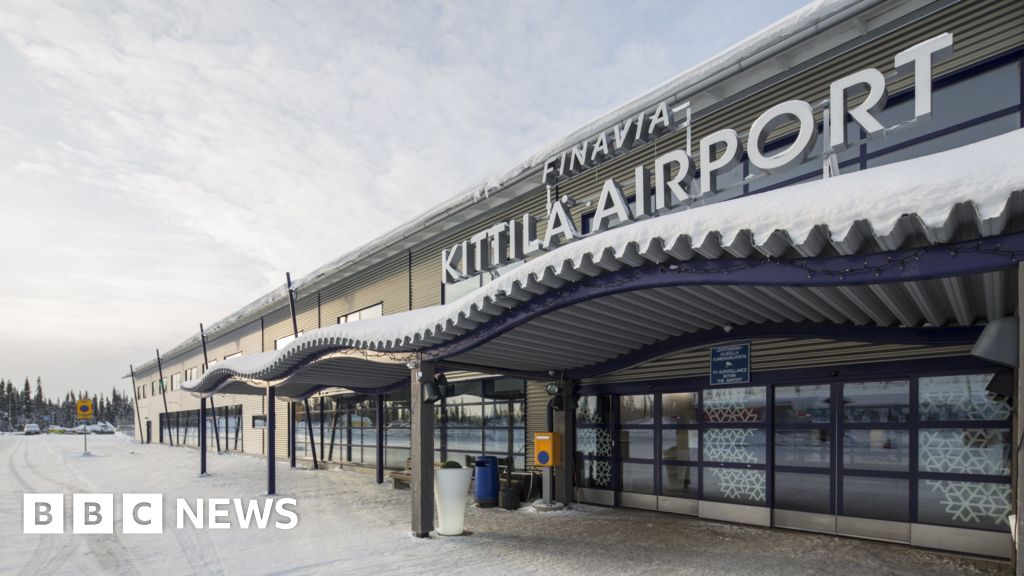
The ethereal, snow-dusted wonderland of Finnish Lapland, a region synonymous with icy charm and the magical allure of the Northern Lights, has become an unexpected prison for thousands of international tourists. A brutal and unyielding cold spell, unprecedented even for this Arctic clime, has brought air travel to a standstill at Kittilä Airport, leaving visitors from the UK, France, and the Netherlands facing prolonged delays and mounting frustration. The mercury plummeted to a bone-chilling -35 degrees Celsius on Sunday, a temperature so extreme that it rendered commercial flights impossible, effectively grounding the seasonal influx of winter travellers eager to return to their homes in London, Bristol, Manchester, Paris, and Amsterdam.
The grim prognosis for an immediate resolution is stark. Finland’s meteorological agency has forecast a further dip to -39 degrees Celsius for Monday, a temperature that has already seen the cancellation of the first scheduled departure from Kittilä. This prolonged period of extreme cold presents a complex array of operational challenges for aviation. The fundamental issue lies in the difficulty of de-icing aircraft at such frigid temperatures. Specialized de-icing fluids become less effective, and the process itself is severely hampered. Moreover, the essential ground equipment required for aircraft maintenance, refuelling, and general operations is susceptible to freezing, rendering it inoperable and posing significant safety risks.
Mr. Kari Lintu, a spokesperson for Finavia, the airport operator, elaborated on the compounding factors contributing to this crisis. He explained to the Finnish public broadcaster Yle that the high moisture content in the frigid air was exacerbating the situation. This atmospheric humidity, upon contact with the frigid surfaces, was rapidly forming a treacherous layer of slippery frost, further complicating any attempts to maintain operational readiness. The visual spectacle of Lapland’s pristine snowscape, often a draw for tourists, has thus transformed into a hazardous impediment to their departure.
While Lapland, a vast geographical expanse encompassing northern territories of Norway, Sweden, and Finland, is inherently associated with winter conditions, the current temperatures represent a significant deviation from the norm. According to official figures from Finland’s tourism board, the typical winter average temperature in Finnish Lapland hovers around -14 degrees Celsius. While occasional dips to -30 degrees Celsius are not unheard of, the sustained plunge below -35 degrees Celsius is highly unusual and has caught many by surprise. This extreme weather event is testing the resilience of both the infrastructure and the expectations of those who travel to experience its unique beauty.
Kittilä Airport primarily serves as a gateway for travellers heading to the numerous world-class ski resorts dotted across the region and, of course, for those on a pilgrimage to witness the celestial dance of the Aurora Borealis. Further south, Rovaniemi Airport holds the prestigious designation as the "official" gateway to Santa Claus Village, the folkloric home of the beloved Christmas icon, drawing families and festive travellers from across the globe. Even this iconic airport has not been entirely immune to the disruptive force of the cold. A single flight departure from Rovaniemi was cancelled on Sunday, a precursor to the more widespread cancellations experienced at Kittilä.
The impact of the extreme cold was not confined to Friday and Saturday, with reports indicating that flights in and out of Kittilä were also affected on those preceding days. This suggests a sustained and escalating meteorological challenge that has gradually tightened its grip on air travel in the region. The cumulative effect of these cancellations has led to a significant build-up of stranded passengers, each with their own anxieties about onward travel plans and the disruption to their holiday itineraries.
Beyond the aviation sector, the treacherous road conditions have added another layer of peril to the unfolding situation. Fintraffic, the Finnish transport agency, has issued stern warnings about the pervasive icy conditions across the region. The sub-zero temperatures have transformed even familiar roadways into hazardous skating rinks, posing a significant risk to any vehicular traffic. The severity of these road conditions was tragically underscored on Sunday morning when a bus carrying Ukrainian passengers veered off the road and landed in a ditch, as reported by Yle, citing local police. Fortunately, no serious injuries were reported in this incident, a testament to the often-fortuitous nature of such accidents, but it serves as a stark reminder of the pervasive dangers posed by the extreme weather.
This unusual and severe cold snap in Lapland is occurring against the backdrop of a broader meteorological phenomenon impacting northern Europe. A significant storm system sweeping across the continent has brought with it a barrage of wintry conditions, causing widespread travel disruption across the United Kingdom, France, and Germany. The ripple effects of this storm have been felt far and wide, highlighting the interconnectedness of weather patterns and their ability to impact global travel. In England, a tragic incident saw a man lose his life when a tree fell onto his caravan, a grim consequence of the high winds and saturated ground brought by the storm. Meanwhile, in France, approximately 100,000 homes were plunged into darkness on Saturday as power outages became widespread due to the severe weather. The situation in Lapland, therefore, is not an isolated meteorological anomaly but rather a localized manifestation of a larger, more widespread weather event that is testing the resilience of infrastructure and the preparedness of communities across the northern hemisphere. The stranded tourists in Lapland, while facing the immediate inconvenience of cancelled flights and disrupted holidays, are caught in a confluence of extreme weather that is serving as a potent reminder of nature’s power and the unpredictable forces that can shape our travel plans and, in more extreme cases, our lives. The hope now rests on a swift improvement in the weather, allowing the de-icing crews to work their magic and the grounded aircraft to once again take to the skies, ferrying the disappointed but no doubt resilient travellers back to their respective destinations.




 Ramos Leo
 Nakalama John