Nana Banana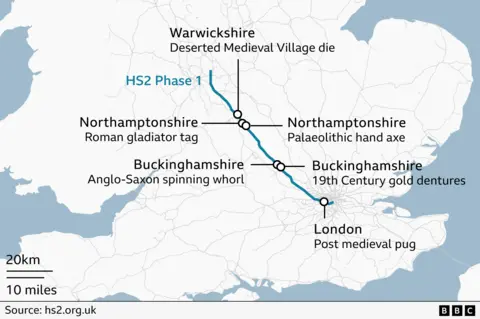
Since 2018, a dedicated force of approximately 1,000 archaeologists has been engaged in one of the largest archaeological undertakings in Europe. Their meticulous work across 60 distinct excavation sites along the 140-mile route between London and Birmingham has yielded an astonishing array and volume of items, hailed by the Centre for British Archaeology as "unprecedented." This monumental effort, a mandatory component of major infrastructure projects in the UK to protect national heritage, has now largely concluded its fieldwork phase, despite the HS2 line itself facing significant delays and not being scheduled to open until after 2033.
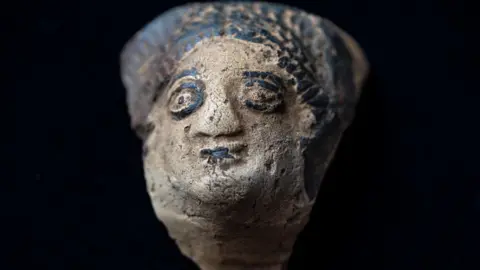
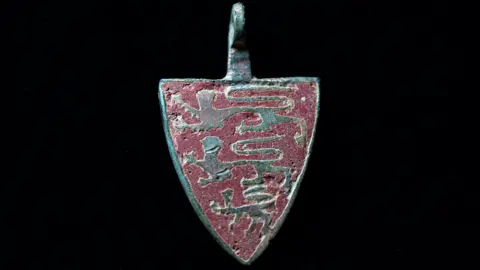
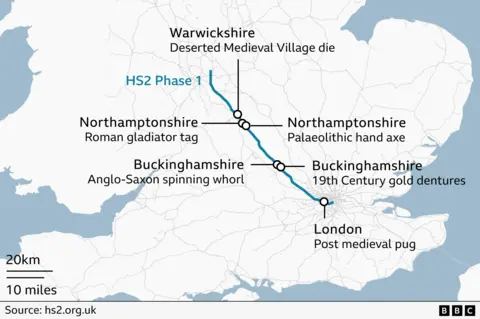
Within the vast, climate-controlled depths of the secret warehouse, thousands of boxes are meticulously stacked, containing the collective memory of Britain. Around 7,300 pallets bear witness to forgotten lives and ancient civilizations. Among the most remarkable discoveries are a possible Roman gladiator’s tag, a Palaeolithic hand axe potentially more than 40,000 years old, and a unique set of 19th-century gold dentures. These "showstoppers," as described by project archaeologists, include Roman statue heads and a stunning 13th-14th Century gold ‘three lions’ pendant, preserved in incredible condition. Even more poignantly, bubble-wrapped coffins, one dated 1799, lie on the ground, stark reminders of the individuals whose lives once intertwined with these landscapes.
Dr. Sara Machin, the finds lead for Access +, the consortium of archaeologists overseeing this immense project, highlighted the profound human connection embedded within these finds. "Every box has a surprise," she remarked, emphasizing that "these are objects, but they all relate to people. It’s all about the people who lived in these areas going back thousands of years and we can start writing the stories about their lives and what they can tell us."
Among the six objects never before seen publicly, which offer a glimpse into the depth of the collection, is the Palaeolithic hand axe. Found in the Edgcote area of Northamptonshire, experts believe this rudimentary yet sophisticated tool is over 40,000 years old, crafted by Neanderthals or an even earlier species of human. Its sharp edge suggests its primary use was for butchering animals. Dr. Machin noted its ergonomic design, observing, "There is something tactile about it when you hold it. Even now it fits snuggly in my hand," a testament to its ancient maker’s skill and the universal utility of tools. Unlike later axes, these were held directly in the palm, without a wooden handle, connecting us directly to the earliest inhabitants of the British Isles.
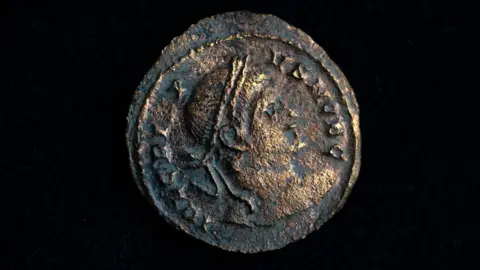
Another intriguing find is a fragment of a carved bone, identified as a possible Roman gladiator tag. Discovered in Northamptonshire, this small piece bears a partial inscription that, if complete, would likely read: "DOMINE VICTOR VINCAS FELIX" – "Lord Victor, may you win and be lucky." While the presence of such an item in an area with no known Roman arena or circus is unusual, Machin speculates it could have belonged to an active gladiator, a veteran, or even a spectator’s souvenir. The tag was recovered from a large pottery vessel containing cremated human remains, marked with an ‘X’ on its lid, adding an air of mystery to the burial. Dr. John Pearce, Reader in Archaeology at Kings College University, acknowledged the gladiator link as possible but suggested "more forensic analysis of the burial" could potentially reveal a different narrative.
From the Anglo-Saxon period, a decorated spindle whorl was unearthed from farmland near Bishopstone, Buckinghamshire. Thought to be crafted from a cattle femur, this object was crucial for adding weight during the spinning of yarn. Willow Major, a post-excavation assistant, highlighted its significance: "It’s a very interesting piece of evidence of textile advancements in the Anglo-Saxon period." The whorl’s polished surface suggests extensive use, implying it was a cherished possession. Interestingly, its distinctive ring and dot motif has also been observed on much older Iron Age spinning tools, indicating a continuity of design across millennia.
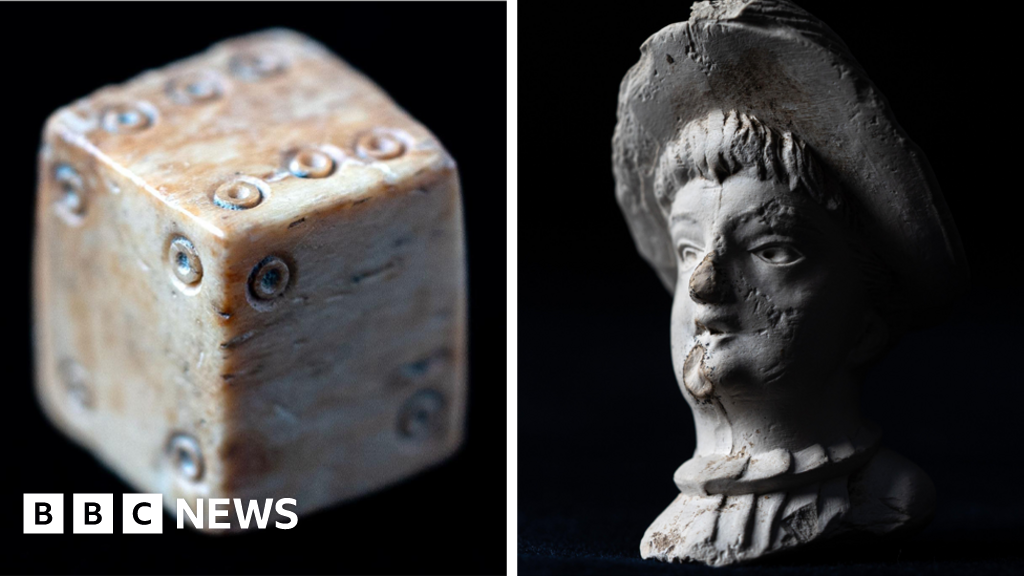
From a deserted medieval village in Lower Radbourne, Warwickshire, came a tiny, polished medieval die. Made from bone, it remarkably resembles modern dice but features a different numbering format. Its slight imperfections, with one side marginally longer than the others, serve as a tangible contrast to the precision of today’s mass-produced objects, offering a unique insight into the craftsmanship and leisure activities of medieval inhabitants.
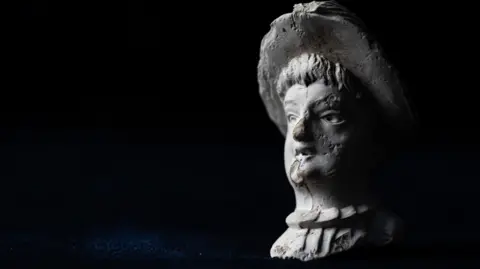
A poignant discovery from the St James’ Gardens site in Euston, London, was a complete figurine of a seated pug dog. This plain white-glazed porcelain piece, with black details, is believed to have been produced at the Derby porcelain factory between 1770 and 1800. Its most striking aspect is its finding place: interred in the grave of an unnamed female, suggesting its role as a beloved personal item or a symbol of affection carried into the afterlife.
Perhaps one of the most unexpected and bizarre items is a set of 19th-century gold dentures. Dr. Machin described unwrapping them as a true surprise. Found at St Mary’s Old Church in Stoke Mandeville, this lower set contains six teeth and bears a stamped number on the inside, hinting at its manufacture or owner. These dentures provide a fascinating, if slightly macabre, glimpse into dental care and personal wealth in Victorian England.
The sheer scale of these discoveries has been widely acknowledged. Neil Redfern from the Council for British Archaeology praised the "extraordinary" nature of the HS2 project’s archaeological yield, noting that "it is the length of the scheme and the landscapes and places that HS2 passed through that make the collection of sites and material so interesting. The research potential from this material is remarkable." Historic England also commended the team for uncovering "new and exciting sites spanning over 10,000 years of our past."
However, the archaeological windfall comes against a backdrop of ongoing controversy surrounding the HS2 project itself. Critics, such as Greg Smith, MP for Mid Buckinghamshire, argue that the soaring costs, chronic delays, and perceived damage to the natural and historic environment, including the loss of communities, make the railway an unworthy endeavor. "It should not have cost the taxpayer tens of billions of pounds to build a railway that no-one wants and brings so much destruction," Smith stated.
HS2, while acknowledging the project’s challenges, has defended its archaeological commitment. "Chief Executive Mark Wild has been clear that overall delivery of HS2 has been unacceptable and he’s committed to ending the project’s cycle of cost increases and delays," an HS2 spokesperson said. They further emphasized the meticulous approach taken: "Our specialist archaeology team and contractors have carefully excavated numerous sites and have shown care and respect throughout this work." Historian Graham Evans, who chairs the Northamptonshire Battlefields Society, offered a balanced perspective: "Whether HS2 is a good or bad thing is debatable, but I tell you what, if they built the railway and they didn’t do the archaeology that would be more tragic."
The future of these hundreds of thousands of artefacts remains a complex question. While research and initial conservation checks are ongoing, their ultimate destination and ownership are still largely undecided. Under English property law, archaeological objects found during development generally belong either to the government or the landowners. An HS2 spokesperson confirmed, "Occasionally landowners may wish to retain title to objects, in which case they will be returned to their care."
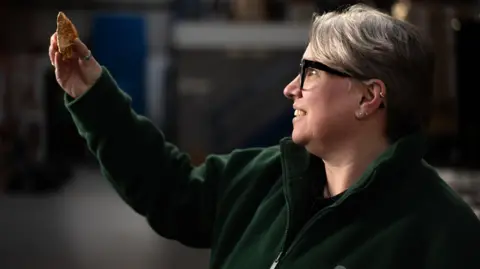
Charlotte Self, the archive manager for the project, expressed a strong desire for public access. "I would love to see the majority of these items deposited with the local museums from near where they were found," she said, highlighting the importance of communities being able to connect with their past. Promisingly, some artefacts are already slated for public viewing. Finds from the Wendover Saxon cemetery, a site that yielded 122 graves, will soon be displayed for the first time at a Discover Bucks Museum exhibition, offering a tangible link to a significant Anglo-Saxon community.
As archaeologists transition into the second phase of works, focusing on further condition assessment, cleaning, and conservation, the vast collection represents an unparalleled opportunity to deepen our understanding of Britain’s rich and complex history. These treasures, once hidden beneath the earth, now offer a unique narrative of human endeavor, settlement, and culture across millennia, providing invaluable insights into "wider landscape change now and in the past," as noted by Neil Redfern. The journey from excavation site to museum display is long, but the promise of these hidden stories finally being told is a compelling one.


 atisusanti
 Nakalama John
 George Anjay
 Ramos Leo
 Roy Suryo