
 Nakalama John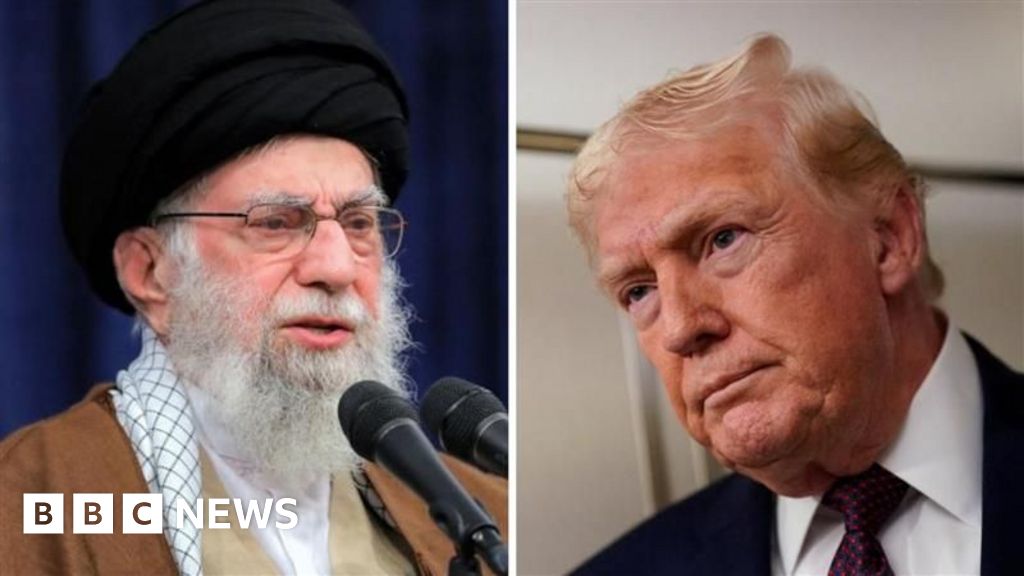
President Donald Trump has received extensive briefings on a comprehensive array of covert and military tools that could be deployed against Iran, according to two high-ranking Department of Defense officials who spoke to CBS News, the BBC’s US partner. These sensitive discussions underscore the escalating tensions between Washington and Tehran amidst widespread anti-government protests in Iran and a deepening economic crisis. Among the potential responses presented to the President, long-range missile strikes remain a prominent option for any prospective US intervention. However, Pentagon strategists have also outlined sophisticated cyber operations aimed at disrupting Iranian infrastructure and communications, alongside psychological campaign responses designed to influence public opinion and undermine the clerical regime’s legitimacy. The breadth of these options highlights the administration’s contemplation of a multi-faceted approach, ranging from overt military action to more subtle, clandestine pressure.
The gravity of these briefings comes at a critical juncture, as Iran grapples with a deepening internal crisis. Rights groups report a grim toll, with more than 600 protesters killed in just three weeks of anti-government demonstrations that have swept across the nation. These protests, initially sparked by economic grievances and the collapse of the Iranian currency, have rapidly evolved into a profound challenge to the authority and legitimacy of Supreme Leader Ayatollah Ali Khamenei and the entire ruling establishment. In response to these developments, President Trump announced on Monday the imposition of a 25% tariff on goods from countries maintaining commercial ties with Iran. This economic measure is designed to intensify pressure on Tehran, already reeling from years of stringent US sanctions. Simultaneously, Iran’s foreign minister has publicly stated Tehran’s openness to dialogue with Washington, but ominously added that the Islamic Republic remains "prepared for war," signaling a dangerous duality in its diplomatic posture.
Against this backdrop, President Trump’s national security team is slated to convene a crucial meeting at the White House on Tuesday to deliberate further on the options for Iran. While the precise agenda remains undisclosed, and it is currently unclear whether the President himself will attend, the meeting signifies the administration’s heightened focus on the unfolding situation. Earlier pronouncements from the US president indicated a willingness to consider decisive action, with Trump stating that his military was evaluating "very strong options" for intervention should the crackdown on protesters escalate further. He also claimed that Iranian leaders had contacted him "to negotiate," but cautioned that the US "may have to act before a meeting" could materialize, hinting at a rapidly closing window for diplomacy. This rhetoric underscores a perceived urgency within the White House regarding the Iranian crisis.
The underlying frustration fueling the Iranian protests stems from a severe economic downturn, characterized by the dramatic collapse of the national currency, hyperinflation, and pervasive economic mismanagement. This has pushed essential food prices up by as much as 70% in some sectors, crippling the purchasing power of ordinary citizens. The widespread discontent has transcended mere economic grievances, transforming into a fundamental crisis of legitimacy for the long-reigning Supreme Leader Ayatollah Ali Khamenei and the entire revolutionary system. Younger generations, in particular, are increasingly disillusioned with the lack of political freedoms, rampant corruption, and the perceived inability of the clerical establishment to address their daily struggles. This demographic shift and widespread disenchantment pose an existential threat to the four-decade-old Islamic Republic.
Further elaborating on the administration’s stance, White House Press Secretary Karoline Leavitt confirmed on Monday that an Iranian official had made contact with Steve Witkoff, Trump’s special envoy for Iran. Leavitt highlighted a stark contrast between Tehran’s public rhetoric and the private messages the US administration was receiving, suggesting a potential willingness for behind-the-scenes communication despite aggressive public posturing. However, she issued a stark warning, asserting that the US president is "unafraid to use military options if and when he deems necessary." This statement serves as a clear signal of Washington’s resolve and a deterrent against further violent suppression of dissent in Iran, while also keeping all strategic options on the table.
The two anonymous Department of Defense officials, whose identities are protected due to the sensitive nature of national security discussions with CBS, further detailed the likely scope of any US military response. They indicated that such an intervention would predominantly involve air power, suggesting precision strikes against key military installations, command and control centers, or infrastructure deemed vital to the regime’s repressive capabilities. Beyond kinetic options, planners are also actively considering sophisticated methods to disrupt Iranian command structures and communications networks, potentially through advanced cyber warfare or electronic countermeasures. In anticipation of potential escalation, the US State Department has issued a strong advisory, urging its citizens currently in Iran to either depart the country immediately or formulate a robust plan for departure that does not rely on US government assistance. This advisory reflects serious concerns about the safety of American nationals should tensions further escalate into conflict.
In a fiery counter-response, Supreme Leader Khamenei vehemently accused the United States of "deceit" and relying on "treacherous mercenaries" to sow discord within Iran. His comments, delivered during a speech on Monday, were made in praise of state-organized pro-government rallies held across Iran, which he presented as a testament to the nation’s unity and resilience. Khamenei declared that the "Iranian nation is a powerful one, is aware and knows its enemies and is present in every scene," attempting to project an image of strength and popular support for the regime. Iranian state media subsequently reported large crowds gathering in several cities for these pro-government demonstrations. However, independent reporting from BBC Persian revealed that these rallies were largely orchestrated, having seen text messages widely distributed inside the country inviting individuals to attend while simultaneously warning them against participating in anti-government protests. This highlights the regime’s efforts to control the narrative and suppress genuine dissent through a combination of coercion and manufactured support.
Separately, President Trump leveraged his Truth Social platform on Monday to announce his intention to impose a 25% tariff on goods from countries that continue "doing business" with Tehran. Without providing immediate elaboration on the specifics, Trump declared, "This order is final and conclusive," signaling a firm and uncompromising stance. This move targets Iran’s remaining commercial lifelines, as the nation is already under a severe US sanctions regime. The Iranian economy is currently battling a collapsing currency and inflation that has driven food prices sky-high, in some instances by as much as 70%. Given that food constitutes approximately one-third of Iran’s total imports, these additional tariffs threaten to exacerbate existing shortages and significantly increase costs for ordinary Iranians, potentially pushing an already vulnerable population further into crisis. The White House refrained from sharing further details regarding the scope or implementation of these tariffs. Major trading partners like China, Iran’s largest, followed by Iraq, the United Arab Emirates, Turkey, and India, could face secondary sanctions or pressure to curtail their commercial ties, adding another layer of complexity to global trade relations and potentially isolating Iran even further. The strategic aim of this economic maneuver is clearly to intensify pressure on Tehran, particularly as the Iranian government continues its escalating crackdown on anti-government demonstrations.
Amidst these developments, Reza Pahlavi, the son of Iran’s last Shah, who resides in exile in the United States, has publicly urged President Trump to intervene "sooner" rather than later to mitigate the mounting death toll among Iranian protesters. In an interview with CBS News, Pahlavi asserted that the current Iranian government was deliberately "trying to trick the world into thinking that (it) is ready to negotiate once again," suggesting a cynical ploy to buy time and deflect international pressure. Pahlavi, who represents a prominent voice among the Iranian diaspora advocating for regime change, lauded Trump as "a man that means what he says and says what he means" and one who "knows what’s at stake." He concluded his remarks by emphasizing the urgency of the situation, stating, "I think the president has a decision to make fairly soon," underscoring the perceived need for swift action.
The human cost of the ongoing crackdown in Iran is increasingly dire. According to the Norway-based human rights group Iran Human Rights (IHRNGO), at least 648 protesters have been killed, a figure that tragically includes nine individuals under the age of 18. Sources operating clandestinely within Iran have conveyed to the BBC that the actual death toll could be significantly higher, given the severe restrictions on information flow. The ability of the BBC and most other international news organizations to report independently from inside Iran has been severely hampered, making accurate verification of information an immense challenge. Furthermore, a widespread internet blackout, implemented since Thursday evening, has effectively severed communication channels, making it incredibly difficult to obtain and corroborate information from within the country. This deliberate suppression of information is a hallmark tactic of authoritarian regimes seeking to control narratives and conceal the true extent of state violence against its own citizens.


 George Anjay
 Ramos Leo

 atisusanti