
 Nakalama John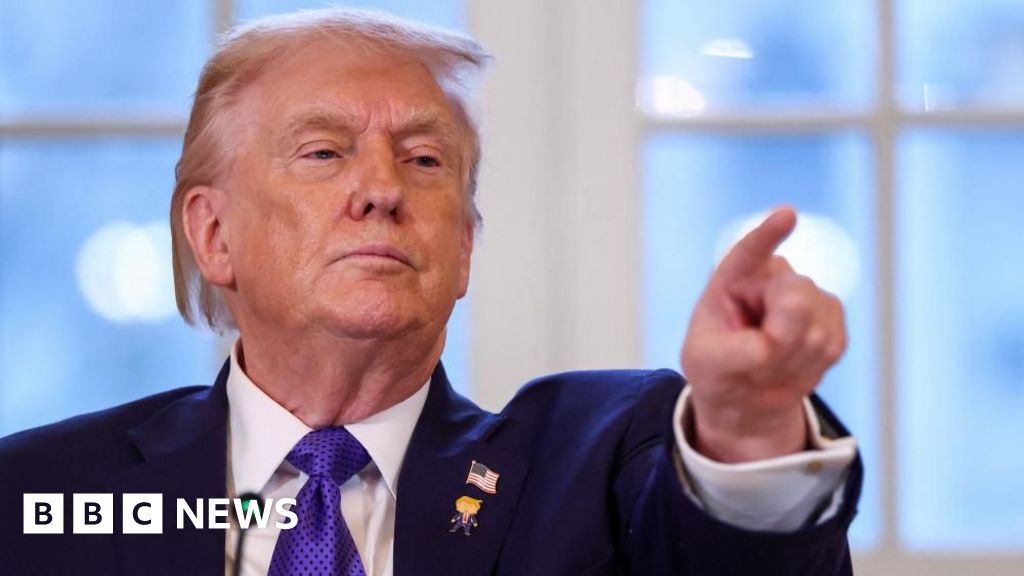
In a high-stakes White House gathering, former US President Donald Trump presented an ambitious vision for Venezuela’s vast oil reserves, calling for at least $100 billion (£75 billion) in oil industry investment. However, his proposal met with a distinctly lukewarm reception from the titans of American energy, with one prominent executive warning that the South American nation was currently "uninvestable." The meeting, held in the aftermath of a contentious 3 January raid that the US claimed ousted Venezuelan leader Nicolas Maduro – a claim disputed by many and not fully materialized on the ground – underscored the profound chasm between political ambition and the harsh realities of international business.
The chief executives of America’s largest oil firms, including ExxonMobil, Chevron, Repsol, and Eni, attended the critical Friday meeting, acknowledging the undeniable allure of Venezuela’s immense energy potential. Possessing the world’s largest proven oil reserves, the country represents a tantalizing prize for an industry constantly seeking new frontiers. Yet, despite the obvious opportunity, the executives were united in their caution, stressing that profound systemic changes would be indispensable to transform Venezuela into an attractive and secure investment destination. Immediate, substantial financial commitments, crucial for Trump’s vision, were conspicuously absent.
Trump, ever confident in his administration’s capacity to reshape geopolitical landscapes, had asserted that unleashing Venezuela’s oil after the alleged regime change would yield significant benefits for the United States, primarily in the form of "even lower energy prices." This promise, a recurring theme in his economic rhetoric, aimed to frame the intervention as a strategic move benefiting American consumers directly. However, the seasoned oil executives present were not swayed by rhetoric alone, their pragmatism rooted in decades of navigating complex global energy markets.
ExxonMobil’s chief executive, Darren Woods, delivered the most pointed rebuke to Trump’s optimistic outlook. "We have had our assets seized there twice," Woods stated emphatically, alluding to the nationalization policies under Hugo Chávez and later Maduro. "And so you can imagine to re-enter a third time would require some pretty significant changes from what we’ve historically seen and what is currently the state." His conclusion was stark and unequivocal: "Today it’s uninvestable." Woods’ statement highlighted the deep-seated concerns over legal certainty, property rights, and political stability – fundamental prerequisites for any large-scale, long-term capital investment.
Venezuela’s relationship with international oil firms has been historically turbulent, marked by a century of shifting political winds since oil was first discovered in its territory. From the early concessions to foreign majors to the nationalization waves of the mid-20th century and the more recent expropriations under socialist governments, the country has often viewed foreign oil companies with a mix of dependency and suspicion. This complex history has left a legacy of distrust and legal disputes that continues to deter investors.
Amidst this challenging environment, Chevron stands as the sole major American oil firm that has maintained a continuous, albeit restricted, operational presence in Venezuela. Its resilience is often attributed to its long-standing joint ventures and strategic concessions that have allowed it to navigate the country’s volatile political landscape. A handful of other international companies, notably Spain’s Repsol and Italy’s Eni, both represented at the White House meeting, also continue to operate, albeit under significant constraints and often facing payment difficulties.
Trump, in an assertive declaration, made it clear that his administration intended to exert absolute control over future oil dealings. "You’re dealing with us directly. You’re not dealing with Venezuela at all. We don’t want you to deal with Venezuela," he told the executives, signaling a unilateral approach to managing the country’s most valuable asset. This unprecedented stance suggested a US-led oversight of Venezuela’s oil sector, bypassing the de facto Maduro government and potentially even future elected administrations, at least in the short term.
The White House had already begun to "selectively" roll back certain US sanctions that had crippled sales of Venezuelan crude, acknowledging the need to facilitate some level of oil flow. Officials claimed to be coordinating with "interim authorities" in the country – a reference to US-backed opposition figures, though the practical control of the nation remained firmly in the hands of the Maduro regime and its loyalist Vice-President Delcy Rodríguez. Critically, US officials made it explicit that they intended to maintain stringent control over any oil sales and the resulting revenues. This strategy aimed to exert maximum leverage over the current government, effectively weaponizing Venezuela’s oil wealth to achieve US foreign policy objectives. Evidence of this approach materialized with the US seizure of several oil tankers carrying sanctioned Venezuelan crude, signaling a clear intent to manage the sales process and deposit any funds into US-controlled accounts. "We are open for business," Trump declared, but it was a business heavily dictated by Washington.
Venezuela’s once-mighty oil production has plummeted dramatically in recent decades, a casualty of chronic disinvestment, gross mismanagement, corruption, and the debilitating impact of US sanctions. From a peak of over 3 million barrels per day (bpd) in the late 1990s, the country’s output has dwindled to roughly one million bpd, accounting for less than 1% of global supply. This precipitous decline is a stark reminder of the challenges inherent in revitalizing a deeply distressed industry.
Despite the pervasive difficulties, the oil executives present expressed cautious optimism about their potential roles. Chevron, already accounting for approximately a fifth of Venezuela’s current output, indicated its readiness to bolster its production, leveraging its existing infrastructure and operational knowledge. ExxonMobil, while wary, committed to dispatching a technical team in the coming weeks to conduct a thorough on-the-ground assessment. Spain’s Repsol, with an existing output of around 45,000 bpd, saw a clear pathway to tripling its production within a few years, provided the "right conditions" were established. Smaller, independent players were even more eager. Bill Armstrong, who leads an independent oil and gas driller, enthusiastically stated, "We are ready to go to Venezuela. In real estate terms, it is prime real estate." Executives from other firms echoed this sentiment, expressing hope that Trump’s promises of fundamental change would indeed materialize, encouraging investment and allowing them to seize what they perceived as a unique moment.
However, energy analysts were quick to temper these optimistic aspirations with a dose of realism, emphasizing that any meaningful increase in production would necessitate monumental effort and capital. David Goldwyn, president of Goldwyn Global Strategies and a former US State Department special envoy for international energy affairs, observed that the executives were "being as polite as humanly possible, and being as supportive as they can, without committing actual dollars." Goldwyn stressed that major players like Exxon and Shell would "not going to invest single-digit billions of dollars, much less tens of billions of dollars," without robust physical security, ironclad legal certainty, and a competitive fiscal framework. "It’s not really welcome from an industry point of view," he concluded. "The conditions are just not right." He estimated that while smaller companies might be more willing to make quick, impactful investments to boost production over the next year, these commitments would likely hover in the $50 million range – a mere fraction of the "fantastical" $100 billion figure floated by Trump.
Further underscoring the scale of the challenge, Rystad Energy estimated that a staggering $8 billion to $9 billion in new investments would be required annually for Venezuela’s production to merely triple by 2040. Claudio Galimberti, the firm’s chief economist, acknowledged that Trump’s suggested $100 billion investment, if it were to actually materialize, could indeed have a transformative impact on production. However, he warned that investments of such magnitude would almost certainly necessitate significant subsidies and, crucially, a fully stabilized political situation. Galimberti’s prognosis for American consumers was equally sobering: they should not anticipate lower oil prices anytime soon as a result of the Venezuelan situation. "It’s going to be difficult to see big commitments before we have a fully stabilised political situation and that is anybody’s guess when that happens," he stated, highlighting the profound uncertainty that continues to plague Venezuela’s future. The ambitious vision for Venezuela’s oil, therefore, remains largely contingent on resolving deep-seated political and economic instability, a task far more complex than any White House directive could unilaterally achieve.




 George Anjay
 Ramos Leo

 atisusanti