George Anjay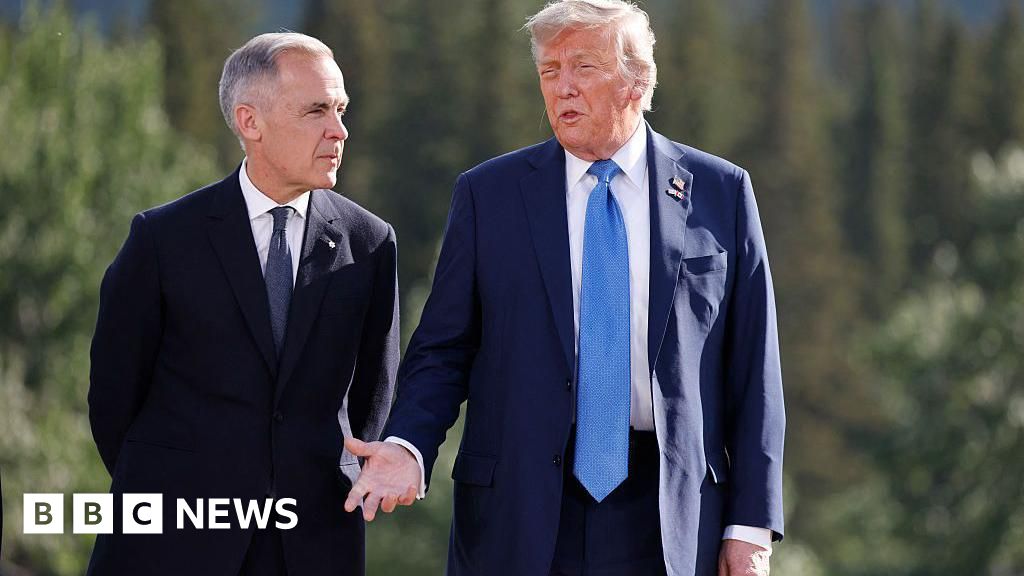
Washington D.C. – In a dramatic escalation of trade tensions, former U.S. President Donald Trump has issued a stark warning to Canada, threatening to impose crippling 100% tariffs on all Canadian goods entering the United States should Ottawa pursue any form of trade agreement with China. The pronouncement, delivered via his Truth Social platform, signals a potential seismic shift in North American economic relations and underscores Trump’s assertive, protectionist stance on international trade.
"If Canada makes a deal with China, it will immediately be hit with a 100% Tariff against all Canadian goods and products coming into the U.S.A.," Trump declared, his words resonating with the aggressive rhetoric that characterized his previous presidency. The precise nature of the "deal" Trump is referring to remains somewhat ambiguous, though it appears to be linked to recent developments in Canadian-Chinese trade relations.
Last week, Canadian Prime Minister Justin Trudeau announced what was described as a "strategic partnership" with China, a move that included agreements to reduce certain tariffs. At the time of that announcement, Trump had publicly lauded the development, stating it was "a good thing." However, this apparent endorsement has been swiftly overshadowed by a significant deterioration in U.S.-Canada relations, seemingly triggered by recent public statements made by Canadian officials.
Tensions have been simmering in recent days following comments made by Prime Minister Trudeau during a speech in Davos. Trudeau posited that the existing U.S.-led world order had been "ruptured," a sentiment that evidently struck a nerve with Trump. Furthermore, Trudeau urged other "middle powers" to coalesce and present a united front against economic coercion by larger global powers. While he notably did not name Trump or the United States directly, the implication was clear and did not go unnoticed by the former president.
Trump, never one to shy away from a public retort, responded to Trudeau’s remarks in a subsequent speech of his own, asserting with characteristic bluntness, "Canada lives because of the United States." This exchange has further inflamed the already delicate diplomatic climate between the two neighboring nations. Adding another layer to the growing friction, Trump also rescinded an invitation for Canada to participate in his newly established "Board of Peace," a move widely interpreted as a punitive measure.
In his Saturday social media post, Trump elaborated on his threat, stating, "On Saturday, Trump said in his social media post that if Carney ‘thinks he is going to make Canada a ‘Drop Off Port’ for China to send goods and products into the United States, he is sorely mistaken’." This statement suggests a concern that Canada might be used as a conduit for Chinese goods to bypass U.S. tariffs and enter the American market, a scenario Trump appears determined to prevent.
The White House and Prime Minister Trudeau’s office have been contacted for comment regarding Trump’s latest pronouncements, though no immediate official statements were released by the White House.
In response to the escalating situation, Canada’s Minister of Innovation, Science and Economic Development, Dominic LeBlanc, who also oversees Canada-U.S. trade relations, issued a clarifying statement. "There is no pursuit of a free trade deal with China," LeBlanc affirmed. He elaborated that the recent agreements focused on resolving "several important tariff issues" rather than establishing a comprehensive free trade pact. LeBlanc reiterated the Canadian government’s unwavering commitment to bolstering the Canadian economy and cultivating robust trade partnerships "throughout the world."
Canada has been actively pursuing a strategy of trade diversification, aiming to reduce its heavy reliance on the United States, its largest trading partner. This strategic shift has been partly driven by the persistent uncertainty and unpredictability surrounding trade policies, particularly those emanating from the Trump administration during his previous term, which saw frequent and sometimes abrupt imposition of tariffs.
The specifics of the agreements reached between Prime Minister Trudeau and Chinese President Xi Jinping last week offer a clearer picture of the "strategic partnership." Under this arrangement, China has committed to reducing its tariffs on Canadian canola oil from a substantial 85% down to 15% by March. Concurrently, Canada will apply a tariff rate of 6.1% on Chinese electric vehicles (EVs), a rate consistent with the most-favored-nation status, representing a significant reduction from the previous 100% tariff.
This bilateral agreement was widely hailed as a significant breakthrough, particularly after years of strained diplomatic ties and retaliatory tariff measures between the two nations. The easing of trade barriers is anticipated to pave the way for increased Chinese investment in Canada, fostering economic growth and creating new opportunities. Prime Minister Trudeau himself expressed optimism, suggesting that the progress made with China positions Canada "well for the new world order," a statement that appears to have been a key catalyst for Trump’s latest barrage of threats.
The implications of Trump’s 100% tariff threat are profound. Such a move would effectively halt most bilateral trade between the United States and Canada, two of the world’s closest economic partners. The interconnectedness of their economies, particularly in sectors like automotive manufacturing, agriculture, and energy, means that such tariffs would inflict significant damage on both nations, as well as on the broader North American supply chain.
Analysts suggest that Trump’s threat is likely a strategic maneuver aimed at demonstrating his continued influence over trade policy and to rally his base by projecting an image of unwavering commitment to American economic interests. It also serves as a potent reminder of the disruption his "America First" policies can unleash on global trade relationships.
The Canadian government, under Trudeau, has been navigating a complex geopolitical landscape, seeking to balance its economic interests with its international alliances. While the recent agreements with China represent an effort to diversify trade and foster economic growth, they have now placed Canada directly in the crosshairs of Donald Trump’s protectionist agenda. The coming weeks will be crucial in determining how this high-stakes trade standoff unfolds and whether diplomatic channels can de-escalate the situation before significant economic damage is inflicted. The response from the current U.S. administration, and indeed from global markets, will also be closely watched as this volatile trade saga continues to develop.



 Ramos Leo
 Nakalama John