 George Anjay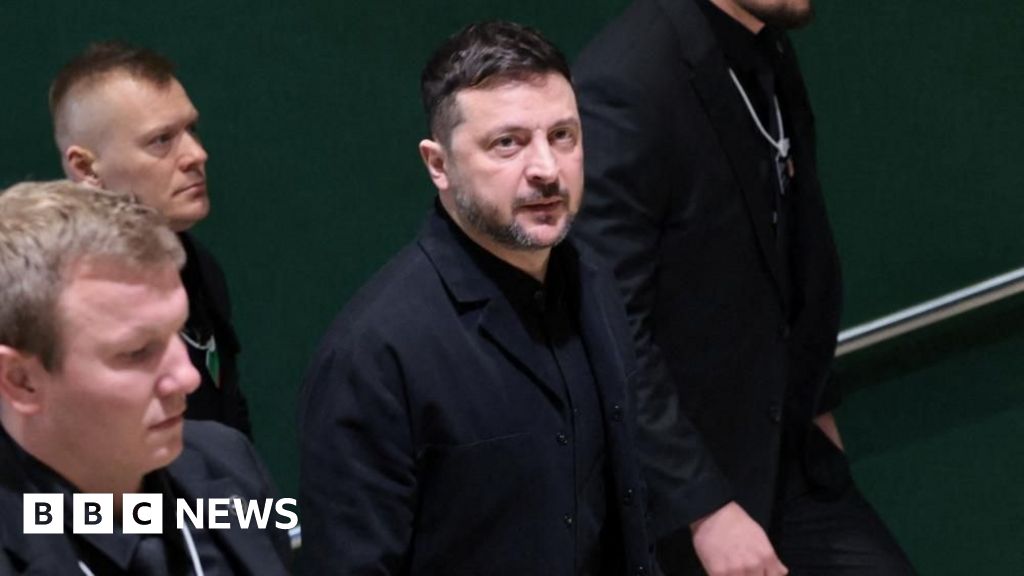
Davos, Switzerland – In a pivotal moment for the protracted conflict in Ukraine, U.S. President Donald Trump is set to engage in high-stakes discussions with Ukrainian President Volodymyr Zelensky at the World Economic Forum in Davos on Thursday. This crucial meeting follows expressions of significant optimism from U.S. envoy Steve Witkoff, who indicated that the path to a comprehensive peace deal to end the war in Ukraine has narrowed to a single, resolvable issue. Witkoff, speaking ahead of his diplomatic mission to Moscow for direct talks with Russian President Vladimir Putin, conveyed a sense of tangible progress, stating, "I think we’ve got it down to one issue and we have discussed iterations of that issue, and that means it’s solvable." While Witkoff maintained a degree of diplomatic discretion by not explicitly detailing the singular point of contention, recent high-level negotiations have consistently centered on the future geopolitical and economic status of Ukraine’s vital industrial heartland in the Donbas region. A prominent proposal on the table involves the establishment of a demilitarized zone and a free economic area within Donbas, presented as a reciprocal measure in exchange for robust security guarantees for Kyiv. Witkoff underscored the conditional nature of a breakthrough, emphasizing, "If both sides want to solve this we’re going to get it solved."
The anticipation surrounding these negotiations has been palpable. Prior to Witkoff’s departure for Moscow, accompanied by President Trump’s son-in-law and senior advisor Jared Kushner, President Trump himself articulated a sense of urgency and nearing resolution. "I think they’re getting close; a lot of people are being killed, we’ve got to get it done," he remarked, highlighting the human cost of the ongoing hostilities. This statement builds upon his earlier assessment last week, where Trump suggested that President Putin appeared "ready to make a deal," while characterizing President Zelensky as "less ready." The Ukrainian leader’s journey to Davos was a testament to the gravity of the situation, involving an overnight transit. His presence at the forum comes after a difficult decision to postpone his initial travel plans, necessitated by the devastating aftermath of recent Russian airstrikes on Kyiv’s critical power infrastructure. These strikes have plunged vast swathes of the capital into darkness and left large populations without essential heating, water, and power during what is described as the harshest winter experienced in Ukraine in nearly four years of full-scale conflict. The ongoing lack of heating in thousands of apartment blocks underscores the dire humanitarian conditions.
Within Ukraine, there has been a discernible undercurrent of concern that President Trump’s recent diplomatic entanglements, particularly his public disagreements with European NATO allies regarding the future of Greenland, may have inadvertently diverted his attention and the administration’s focus away from the pressing crisis in Ukraine. President Zelensky, following his meetings with President Trump in Miami late last month, had previously indicated that a comprehensive 20-point U.S. peace plan was nearing completion, reportedly "90% ready." However, he also acknowledged that Ukraine’s stance on the critical issue of Donbas, situated in eastern Ukraine, differed significantly from that of Russia.
Delving deeper into the specifics of the proposed resolution, President Zelensky has outlined a willingness to withdraw Ukrainian troops from the approximately 25% of the Donetsk region that remains under Kyiv’s control. This withdrawal, he proposed, could extend up to 40 kilometers (25 miles) to facilitate the creation of an economic zone. The crucial condition for this concession is a reciprocal withdrawal of Russian forces. This offer comes at a time when Russian forces have made incremental advances in the east over the past year, and President Putin has openly expressed a desire for full control over the entire Donbas region.
Beyond the territorial and demilitarization aspects of Donbas, another significant point of contention that President Zelensky highlighted last month pertains to the future control of Ukraine’s strategically vital Zaporizhzhia nuclear plant. This massive facility was seized by Russian forces in March 2022, and its operational status and security remain a paramount concern for Kyiv and the international community.
In Moscow, the Kremlin’s response to the ongoing diplomatic efforts has been measured. Kremlin spokesman Dmitry Peskov confirmed on Thursday that discussions with the American envoys would continue, encompassing "the Ukrainian issue and other related topics." However, Peskov declined to explicitly echo Witkoff’s optimism regarding the likelihood of achieving a deal, maintaining a degree of ambiguity. Furthermore, President Putin has yet to formally decide whether to accept President Trump’s invitation to join the proposed "Board of Peace" initiative focused on the conflict in Gaza, indicating a broader range of diplomatic considerations at play.
President Zelensky had harbored hopes of formally signing two key documents with President Trump at Davos, documents intended to outline future security guarantees for Ukraine and foster economic prosperity. However, he acknowledged that there was still "one mile left to finalise these documents," suggesting that the breakthrough might not materialize in the form of immediate signings during their Davos encounter. The precise nature and timing of any potential agreements remain uncertain.
Nevertheless, the engagement at the highest levels continues. Rustem Umerov, the head of Ukraine’s National Security and Defense Council, provided an update on Wednesday night, confirming that his team in Davos had engaged in productive discussions with their U.S. counterparts. These talks specifically addressed crucial issues related to economic development, the complex process of post-war recovery, and the essential security guarantees that Ukraine seeks. This ongoing dialogue, even in the absence of immediate formal agreements, signifies a persistent effort to navigate the intricate path toward peace and stability for Ukraine. The presence of both leaders at such a prominent global stage underscores the international community’s continued attention and engagement with the protracted conflict, and the singular issue that Witkoff identified could be the key to unlocking a much-desired resolution. The world watches to see if this sliver of optimism can translate into tangible steps towards ending the devastating war.


 Ramos Leo
 Nakalama John