
 Nakalama John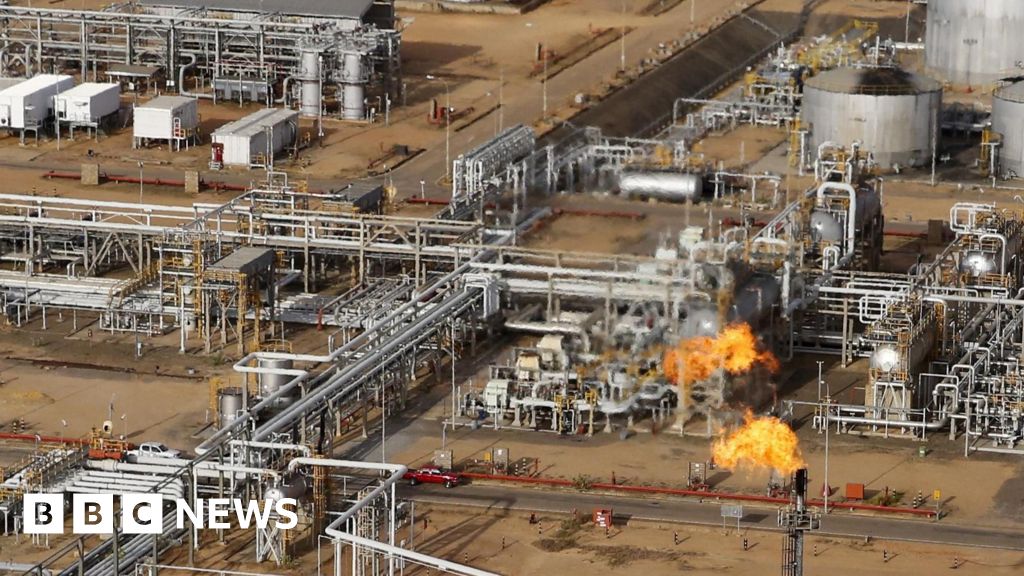
Venezuela indeed possesses an extraordinary endowment of oil, boasting an estimated 303 billion barrels of proven reserves, which firmly establishes it as having the largest such deposits globally. Yet, this geological wealth stands in stark contrast to the country’s current oil production, which has dwindled to a fraction of its historical levels. Output has plummeted dramatically since the early 2000s, a decline precipitated by the policies of former President Hugo Chávez and subsequently the Maduro administration. Their tightening state control over Petróleos de Venezuela, S.A. (PDVSA), the national oil company, led to a mass exodus of experienced technical staff and a severe deterioration of operational capabilities. While some Western oil firms, including the American giant Chevron, have maintained a presence in the country, their operations have been significantly curtailed. This contraction is a direct consequence of escalating US sanctions, which have progressively targeted Venezuela’s oil exports, aiming to choke off a vital economic lifeline for the Maduro government.
These sanctions, initially imposed by President Barack Obama’s administration in 2015 over alleged human rights violations and later expanded significantly, have effectively isolated Venezuela from crucial international investment and essential spare parts required for its oil infrastructure. Callum Macpherson, head of commodities at Investec, aptly highlights that "The real challenge they’ve got is their infrastructure." In November, Venezuela’s oil production hovered around an estimated 860,000 barrels per day, according to the latest International Energy Agency (IEA) oil market report. This figure represents less than a third of what the country produced just a decade ago and accounts for less than 1% of global oil consumption, underscoring the severity of the decline. Furthermore, Venezuela’s reserves are predominantly composed of "heavy, sour" crude oil. This type of oil is more challenging and expensive to refine than the "light, sweet" oil typically produced in the United States, but it is highly valued for producing diesel and asphalt. In the volatile period leading up to the hypothetical scenario of Maduro’s capture, the US had already demonstrated its willingness to exert pressure, notably by seizing two oil tankers off Venezuela’s coast and implementing a blockade targeting sanctioned vessels entering and leaving the country.
The operational hurdles confronting oil firms contemplating investment in Venezuela are formidable, encompassing not only technological and logistical issues but also profound legal and political complexities. Homayoun Falakshahi, a senior commodity analyst at data platform Kpler, emphasizes that the primary obstacles for companies aspiring to exploit Venezuela’s reserves are fundamentally political and legal. He explained to the BBC that any entity seeking to drill in Venezuela would first require a binding agreement with the government, a prerequisite that remains impossible until a recognized successor to Maduro is firmly in place. Even then, companies would be asked to gamble billions in investment on the long-term stability and legitimacy of any future Venezuelan government. Falakshahi stressed that "Even if the political situation is stable, it’s a process that takes months." Prospective investors, he noted, would need to meticulously negotiate and sign new contracts with a legitimate government, a step that would precede any substantial ramping up of investment in the country’s dilapidated infrastructure. Analysts consistently project that restoring Venezuela’s oil output to its former levels, which once exceeded 3 million barrels per day, would necessitate an investment of tens of billions of dollars and could realistically take up to a decade or even longer to achieve. The sheer scale of disrepair, from crumbling pipelines and dysfunctional refineries to a severe shortage of skilled personnel and a lack of modern equipment, means that a complete overhaul, rather than mere repairs, would be required. This would involve extensive geological surveys, drilling new wells, constructing new processing plants, and retraining a workforce depleted by years of economic crisis and political upheaval.
From a global market perspective, the impact of Trump’s plan on international oil prices would likely be negligible, at least in the near to medium term. Neil Shearing, group chief economist at Capital Economics, told the BBC that any such initiative would have a "limited impact on the global supply, and therefore price, of oil." He elaborated that there are "an enormous number of hurdles to overcome and the timeframe of what is going to happen is so long" that oil prices in, for example, 2026 would probably see little to no change attributable to Venezuelan production. Shearing underscored that companies would understandably refrain from making significant investments until a stable and internationally recognized government is securely established in Venezuela, and even then, these capital-intensive projects would not yield substantial returns for "many, many years." He pointed out that "The issue has always been decades of underinvestment, mismanagement and it is really expensive to extract" Venezuelan heavy crude. Furthermore, even if Venezuela could miraculously return to its peak production levels of around 3 million barrels per day, it would still not rank among the world’s top 10 producers, meaning its contribution to global supply, while significant for the country itself, would not fundamentally alter the broader market dynamics. Shearing also highlighted the robust production among OPEC+ countries, asserting that the world is currently "not suffering from a shortage of oil," thereby reducing the urgency for immediate new supply sources, particularly those fraught with such high risks and long lead times.
The response from major oil companies to such proposals has been largely cautious and understated. Chevron remains the sole American oil producer actively operating in Venezuela, having received a specific license under the Biden administration in 2022 to continue its limited operations despite existing US sanctions. The company has publicly stated its focus on the safety of its employees and its strict adherence to "all relevant laws and regulations," a clear indication of its careful approach within a highly volatile environment. Other major international oil firms have maintained a public silence regarding Trump’s potential plans, a posture that reflects both their inherent risk aversion and a pragmatic wait-and-see strategy. Internally, however, Mr. Falakshahi believes that oil executives will undoubtedly be engaged in intense discussions about the strategic implications and potential opportunities. He noted that "The appetite to go somewhere is linked to two main factors, the political situation and the resources on the ground." Despite the immensely uncertain political landscape, Falakshahi conceded that "the potential prize may be deemed too big to avoid." This "prize" refers not only to the sheer volume of reserves but also the potential for long-term, high-volume production once stability is achieved. However, the ethical and reputational implications of engaging in a potentially controversial, state-backed takeover scenario would also weigh heavily on corporate boards, requiring a clear, internationally recognized legal and political framework before any substantial commitments could be made.
In conclusion, while Venezuela’s oil reserves are undeniably vast and enticing, the path to exploiting them under the scenario envisioned by Donald Trump is fraught with an array of complex and deeply entrenched obstacles. The country’s oil infrastructure is in a state of advanced decay, necessitating an overhaul that would demand tens of billions of dollars and a decade or more of sustained effort. The political and legal landscape is profoundly unstable, presenting significant risks to any foreign investment. Furthermore, the global oil market is not currently experiencing a supply shortage, which diminishes the immediate economic imperative for such a high-risk venture. Therefore, while the potential prize of Venezuela’s oil is immense, the logistical, financial, and political challenges make any rapid or easy exploitation highly improbable. Trump’s plan, while ambitious, faces an uphill battle that would likely take many years, if not decades, to navigate, making any immediate impact on global energy markets highly unlikely and leaving the question of its ultimate success very much in doubt.


 Ramos Leo
 atisusanti
 George Anjay

 Roy Suryo