George Anjay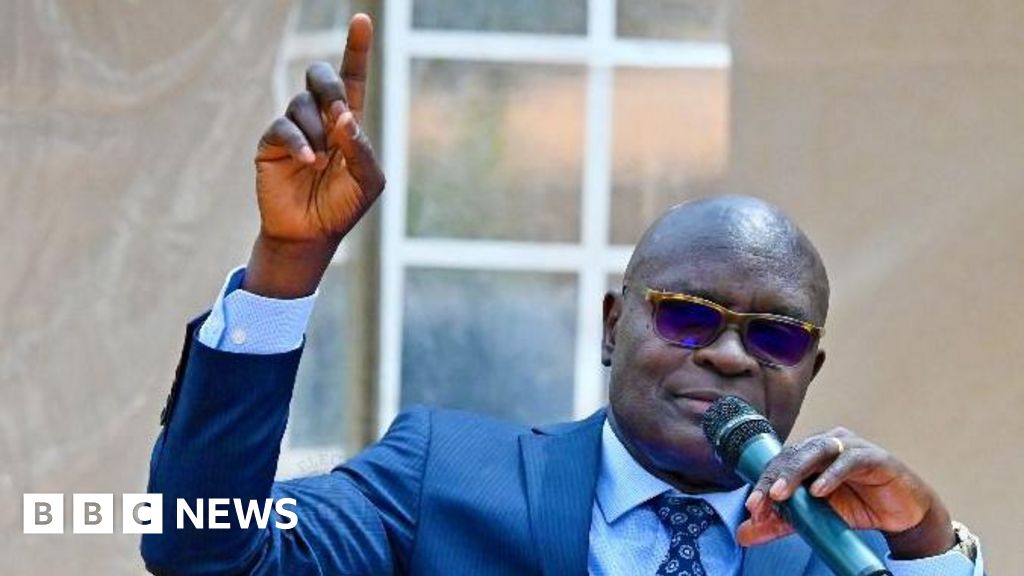
Kampala, Uganda – Simon Byabakama, the esteemed Chairperson of the Electoral Commission of Uganda, has revealed a deeply concerning revelation: he has been subjected to explicit threats aimed at influencing the outcome of the upcoming presidential election, scheduled for Thursday. These menacing warnings, reportedly emanating from senior state officials who remain unnamed, explicitly cautioned him against declaring any presidential candidate other than the incumbent as the victor. In a resolute stance against intimidation, Byabakama asserted his unwavering commitment to upholding the integrity of the electoral process, stating unequivocally that he would not be swayed by such undue pressure. His strong words came in direct response to a widely circulated video, which has ignited significant public discourse, depicting a presidential assistant making a categorical statement that the Electoral Commission would never declare opposition candidate Robert Kyagulanyi, widely known as Bobi Wine, as president, irrespective of the actual electoral results.
"Some individuals have issued veiled threats, implying dire consequences should I not declare a specific candidate as president," Byabakama stated, his voice firm. "To them, I say this: I am not in the business of donating votes. The will of the Ugandan people, as expressed at the ballot box, will be my sole guide." This statement underscores the gravity of the situation, highlighting a potential attempt to subvert the democratic process through coercion.
The election pits President Yoweri Museveni, an 81-year-old statesman who has governed Uganda for nearly four decades, against his primary challenger, Bobi Wine. Museveni is seeking an unprecedented seventh term in office, a testament to his enduring political influence. Bobi Wine, a 43-year-old pop star turned formidable politician, represents a significant challenge to Museveni’s long-held grip on power. This marks the second electoral contest between the two, following Bobi Wine’s impressive performance in the 2021 polls, where he finished as the runner-up. The race is further complicated by the participation of six other candidates, each vying for the support of approximately 21.6 million registered voters who are eligible to cast their ballots.
The pre-election period has been marred by a concerning pattern of disrupted opposition activities. Reports of the detention of activists, the forceful dispersal of rallies by law enforcement agencies, and general suppression of dissent have cast a shadow over the electoral landscape. Despite these challenges, Byabakama, speaking from the Electoral Commission headquarters in the bustling capital, Kampala, projected an image of unflappable resolve. He dismissed the threats from what he termed "idle people" with a remarkable degree of confidence.
"You can observe from my demeanor that fear is a word that does not exist in my vocabulary," the poll chief declared, his words resonating with a sense of duty. He reiterated that the electoral process would be guided solely by the collective will of the voters and the established legal framework of Uganda.
The controversial video, which surfaced last week and was disseminated by the Daily Monitor newspaper across social media platforms, features Yiga Kisakyamukama, the special presidential assistant for service delivery and monitoring. In the recording, Kisakyamukama can be heard making a stark pronouncement: "Don’t expect, don’t even think, that Simon Byabakama would announce Bobi Wine. President Museveni, who is on the chair, will remain on the chair. Never think that Museveni would leave power through voting. No, no, no – don’t waste our time." This audaciously dismissive statement has amplified concerns about potential manipulation and the fairness of the electoral contest.
However, Byabakama has firmly stated that the ultimate decision regarding the presidential election’s outcome will be dictated by Ugandan law, not by the pronouncements or threats of individuals. "The law is very clear: the candidate who garners more than 50% plus one of the total valid votes cast is declared the president of Uganda," he explained, emphasizing the democratic principle at play. "It is the voters who hold the power to determine the number of votes each candidate receives. Therefore, what the voters have expressed through their ballots is precisely what I will announce to the nation."
Byabakama assured the public that the election results would be declared within the legally mandated 48-hour period following the closure of polling stations, adhering strictly to the provisions of the country’s electoral laws.
In response to widespread concerns regarding the significant military presence observed on the streets, Byabakama clarified that the deployment of security forces is primarily intended to maintain peace and stability throughout the electoral process. He urged citizens not to perceive this presence as a source of intimidation. Furthermore, he acknowledged the opposition’s valid concerns about the location of some polling stations within military installations. Byabakama assured the public that the Electoral Commission is actively investigating these reports. "If we find these allegations to be true, we will take the necessary measures to address them promptly and decisively," he pledged.
In a move that has further heightened anxieties surrounding the election, Ugandan authorities implemented a nationwide internet and mobile service shutdown on Tuesday. The government cited the need to curb "misinformation, disinformation, electoral fraud, and related risks" as the rationale behind this drastic measure. However, the widespread network outage has been met with significant criticism, with the UN human rights office describing it as "deeply worrying" and a stark indicator of potential repression in the lead-up to the vote. This digital blackout not only hinders communication and access to information but also raises serious questions about transparency and the ability of citizens and observers to monitor the electoral process effectively. The international community is watching closely, with hopes that the electoral commission, under Byabakama’s leadership, can navigate these turbulent waters and deliver a credible and just outcome, free from undue influence and intimidation. The coming days will be critical in determining the future democratic trajectory of Uganda, and the pronouncements made by Byabakama will be scrutinized intensely for signs of fairness and adherence to the rule of law. The threats he has received are not just personal; they represent a broader challenge to the democratic aspirations of a nation eager for a peaceful and legitimate transfer of power.


 Ramos Leo
 Nakalama John

 atisusanti