Ramos Leo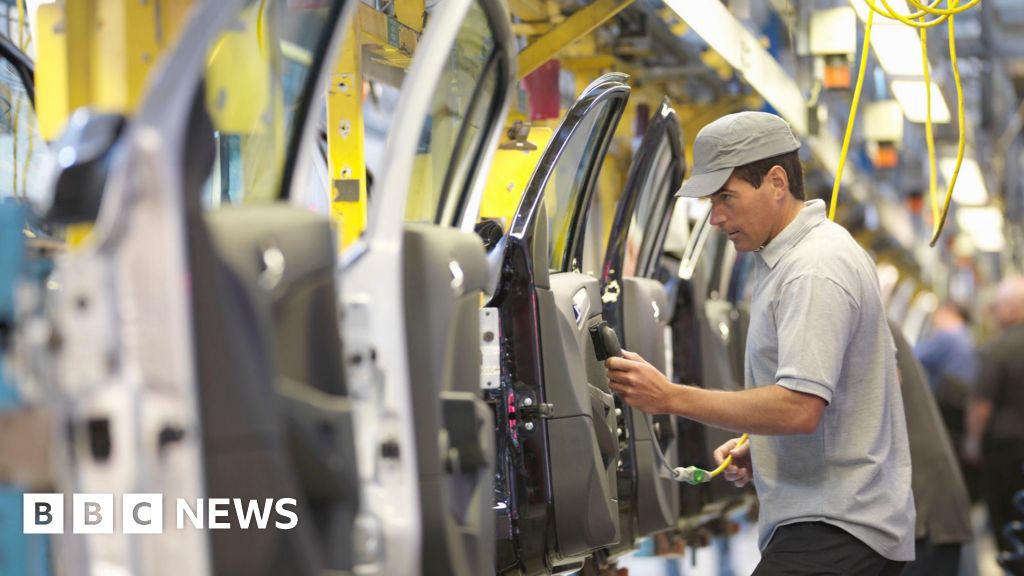
According to data released by the Office for National Statistics (ONS), the primary catalyst for this acceleration was a substantial increase in industrial production. A key contributor to this surge was the recovery of Jaguar Land Rover’s (JLR) manufacturing facilities, which had been severely impacted by a debilitating cyber-attack in September. This incident forced JLR to halt production across its UK plants for the entirety of September, causing significant disruption to the supply chain and manufacturing output. Production began a phased resumption in October, and by November, the carmaker was back in full swing, leading to an impressive 25.5% increase in motor vehicle output for the month. This rapid return to operational capacity at JLR played an instrumental role in propping up the broader industrial sector and consequently, the overall GDP figures.
Beyond manufacturing, the services sector also contributed positively to November’s growth. The period leading up to the Autumn Budget, which was presented on November 26th, saw a surge in activities such as accounting and tax consultancy. Businesses across various sectors, including construction, industrial production, and services, informed the ONS that they were actively awaiting the outcome of the Budget before committing to major decisions. This pre-Budget anticipation likely spurred demand for professional services as companies sought advice on potential policy changes and their implications for future planning, thus providing a temporary but significant boost to this crucial segment of the economy.
While the monthly GDP figures offer an immediate snapshot, they are known for their inherent volatility. For a more stable and indicative picture of underlying economic trends, economists typically refer to the rolling three-month data. In this regard, the ONS reported that the UK economy grew by 0.1% in the three months leading up to November compared to the preceding three-month period. This longer-term view, though more modest than the monthly figure, still points towards a gradual expansion rather than a contraction, providing a foundation for cautious optimism as the year concluded.
Leading economists offered varied interpretations of these latest figures. Yael Selfin, Chief Economist at KPMG UK, acknowledged that the data pointed to an acceleration in economic activity, even amidst the backdrop of pre-Budget uncertainty. Selfin noted, "Despite the relatively mooted consumer sentiment so far and consumer-facing services output declining in November, there are some tentative signs of a pick-up in household spending." This suggests that while overall consumer confidence might remain subdued, there could be nascent signs of increased discretionary spending, potentially driven by factors such as easing inflationary pressures or gradual wage growth. She further expressed confidence that "With the worst of the uncertainty behind businesses, we expect growth momentum to continue over the coming months," implying that the clarity provided by the Budget could unlock previously deferred investments and spending.
Suren Thiru, Economics Director at the Institute of Chartered Accountants in England and Wales (ICAEW), echoed a similar sentiment, describing the November figures as "unexpectedly upbeat." He suggested that most sectors had "seemingly shrugged off pre-Budget uncertainty," demonstrating a degree of resilience previously underestimated. Thiru went on to predict that "November’s uptick means it’s inevitable that the UK economy grew modestly across the final quarter of 2025." He also speculated that easing uncertainty post-Budget would likely have further supported growth in December, despite the potential disruption caused by a "super flu" affecting activity in sectors like education.
However, not all analyses were entirely sanguine. The construction sector, a vital component of the economy, experienced a decline of 1.3% in November. The ONS also highlighted that this sector registered "its largest three-monthly fall in nearly three years," raising concerns about its immediate health. Ruth Gregory, Deputy Chief Economist at Capital Economics, attributed this dip primarily to "unseasonably wet weather," suggesting that the slowdown might be temporary and predicting a likely rebound in December as conditions improved.
Gregory also injected a note of caution regarding the services sector’s performance. While acknowledging the increase in services output, she argued that it "did little more than reverse the big declines in the past few months." From her perspective, "November’s strength is more likely to be a rebound rather than a sign that the economy is fundamentally stronger than we thought." This interpretation suggests that the observed growth might merely be a recovery from previous weakness rather than an indication of robust underlying expansion, urging a more conservative outlook on the economy’s true health.
The unexpectedly strong economic data also had significant implications for monetary policy. Sanjay Raja, Chief UK Economist at Deutsche Bank, suggested that the economic figures should "raise the bar" for a potential interest rate cut by the Bank of England in February. He reasoned that "With the economy now on a firmer footing than expected the impetus to accelerate rate cuts is likely lower." This indicates that the Bank of England might feel less pressure to ease borrowing costs rapidly if the economy demonstrates sustained, albeit modest, growth, potentially leading to interest rates remaining higher for longer than some market participants had anticipated.
In response to the economic data, a Treasury spokesperson emphasized the government’s commitment to making the economy "work for working people." They highlighted ongoing efforts to reverse "years of underinvestment" in critical infrastructure and to implement planning reforms aimed at boosting productivity and growth. The spokesperson also reiterated the government’s focus on bringing down household bills and tackling inflation, acknowledging, however, that "there was still more to do to tackle the cost of living" crisis, which continues to weigh heavily on households across the UK.
Conversely, Shadow Chancellor Rachel Reeves offered a critical perspective, asserting that despite the monthly uptick, the figures showed that economic growth was "still flatlining" over a broader period. She lambasted the government, stating, "The chancellor promised growth as her number one mission, but a failure to grip the benefits bills – and instead putting up taxes – is weighing heavily on business and the economy." This critique aligns with the opposition’s narrative that the government’s fiscal policies, including increased welfare spending and a rising tax burden (often due to fiscal drag), are stifling economic dynamism and hindering long-term prosperity.
In summary, November’s economic performance provided a much-needed boost of optimism, largely propelled by the industrial rebound spearheaded by Jaguar Land Rover and a pre-Budget uplift in the services sector. While the monthly growth exceeded expectations, the broader three-month picture remains more subdued, and expert opinions diverge on whether this indicates a fundamental strengthening of the economy or merely a temporary rebound from previous declines. The data has significant implications for future monetary policy decisions and will undoubtedly fuel ongoing political debate regarding the UK’s economic health and the effectiveness of current government strategies.



 George Anjay
 Nakalama John
 atisusanti