
 Ramos Leo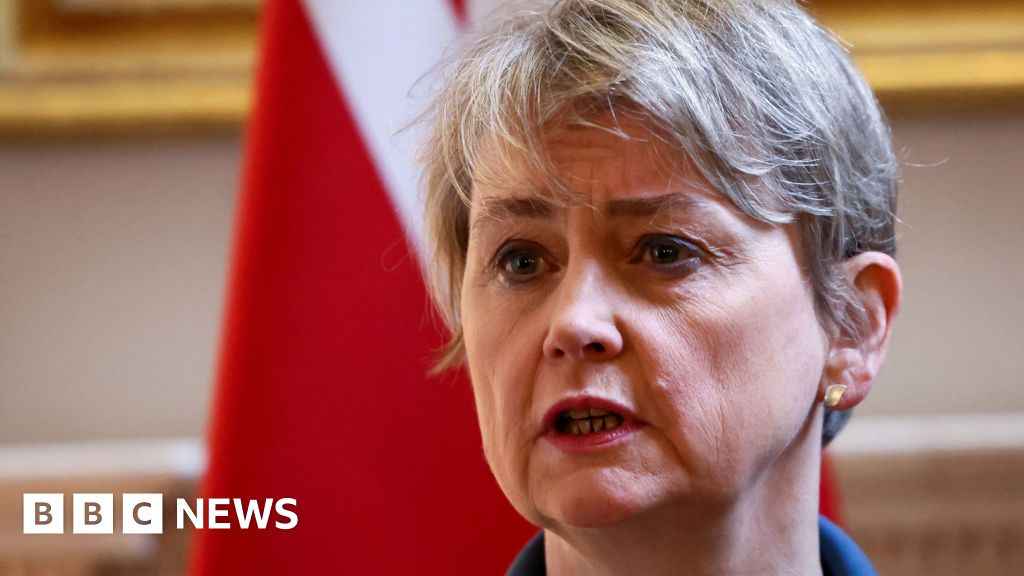
Foreign Secretary Yvette Cooper has publicly stated the United Kingdom’s decision to refrain from immediately signing up to US President Donald Trump’s proposed "Board of Peace," citing profound concerns regarding Russian leader Vladimir Putin’s potential participation. The announcement, made from the prestigious World Economic Forum in Davos, Switzerland, underscored a significant diplomatic divergence between two key Western allies and highlighted the complex geopolitical landscape of current international relations.
Cooper, speaking to the BBC, confirmed that the UK had received an invitation to join the ambitious new initiative, which was slated for a signing ceremony at Davos. However, she unequivocally declared that the UK "won’t be one of the signatories today," emphasizing the profound implications embedded within the board’s structure and proposed membership. Her statement immediately drew attention to the inherent tension between addressing immediate regional conflicts, such as the Israel-Hamas war, and upholding broader principles of international law and accountability, particularly concerning ongoing conflicts like the war in Ukraine.
The Foreign Secretary described the proposed Board of Peace not merely as a diplomatic forum but as a "legal treaty that raises much broader issues" than its initial, stated focus on bringing an end to the protracted conflict in Gaza. This characterization as a "legal treaty" is critical, suggesting that participation would entail binding obligations and potentially far-reaching commitments for signatory nations. Such a formal legal instrument could reshape diplomatic frameworks, establish new precedents for international engagement, and potentially supersede or challenge existing multilateral agreements and institutions.
Further adding to the UK’s reservations, the charter for this new board, as proposed by the White House, notably omits any specific mention of the Palestinian territory. This omission is significant given the board’s stated primary objective of resolving the Israel-Hamas conflict. Critics and analysts have observed that the board appears to be designed to replace or at least sideline some of the long-established functions of the United Nations, an organization that, despite its imperfections, remains the most universally recognized body for global peace and security. The prospect of an alternative, potentially less inclusive, and more politically driven body assuming such functions raises alarms about the future of global governance and the fragmentation of international efforts.
Despite the UK’s hesitancy, several other nations have expressed their intent to join the board. Countries including Saudi Arabia, Turkey, Egypt, and Israel have reportedly affirmed their membership, signaling a willingness to engage with this new American-led framework. At Davos, President Trump himself confidently announced that Vladimir Putin had accepted an invitation to become part of the initiative. This claim, however, has been met with ambiguity from the Russian side. President Putin has not officially confirmed his participation, with earlier statements indicating that Russia was still "studying the invitation," a diplomatic posture that leaves room for strategic maneuver and avoids immediate commitment.
Speaking to the BBC’s Breakfast programme from Davos, Cooper reiterated the UK’s strong support for Trump’s "20-point plan to end the war in Gaza." This distinction is crucial: the UK is not rejecting all of Trump’s diplomatic efforts or his vision for peace in the Middle East. Instead, their concern is specifically targeted at the institutional framework being proposed and, most critically, the proposed membership. Cooper stated, "That’s why we are also clear we want to play our part in phase two of the Gaza peace process," indicating a willingness to contribute to post-conflict stabilization and long-term solutions in the region, independent of the contested "Board of Peace" structure.
The crux of the UK’s objection, however, returned to the question of Russian involvement. Cooper elaborated, "We won’t be one of the signatories today because this is a legal treaty that raises much broader issues. And we do also have concerns about President Putin being part of something that’s talking about peace when we’ve still not seen any signs from Putin that there will be commitment to peace in Ukraine." This statement encapsulates the profound moral and strategic dilemma for the UK. For London, allowing Putin a seat at a "peace board" while Russia continues its unprovoked and illegal invasion of Ukraine would be seen as a grave undermining of international law, an implicit legitimization of aggression, and a betrayal of the principles of sovereign integrity. It would, in effect, reward an aggressor with a platform for peace without requiring any tangible commitment to ending the very conflict for which Russia is responsible.
Cooper further stressed that Putin had shown no willingness "to come and make that agreement and that’s where the pressure needs to be now." This highlights the UK’s belief that genuine peace efforts must be predicated on accountability and a demonstrable commitment to de-escalation from all parties, especially those actively engaged in conflict. The Foreign Secretary assured that despite this specific divergence, the UK would "have continuing international discussions including with our allies," signaling an ongoing commitment to diplomatic engagement even while holding firm on its principles.
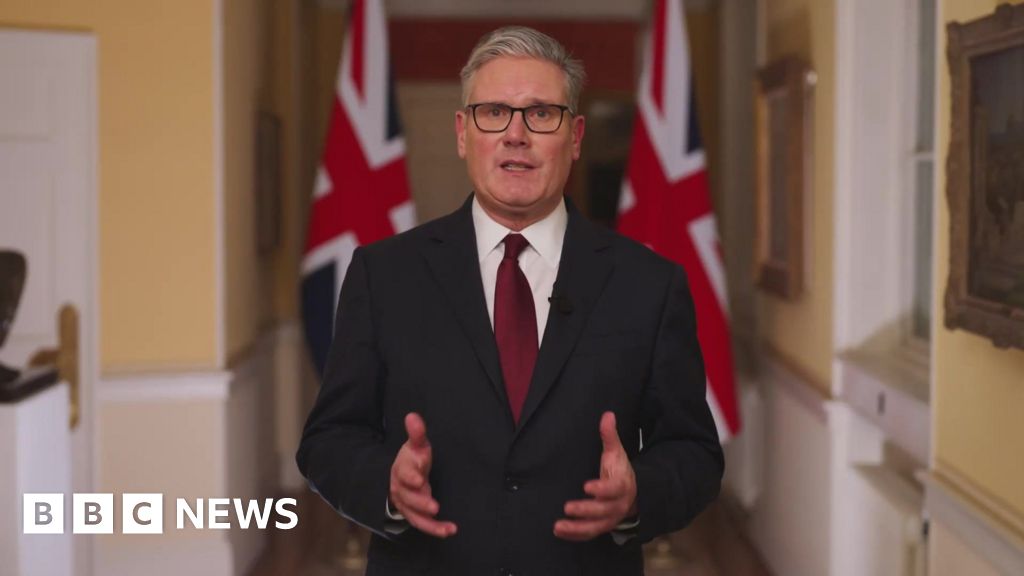
The sentiments expressed by Cooper echo those voiced by other UK cabinet ministers in recent days, all of whom have conveyed deep unease over President Putin’s potential role on the proposed board. The consistent messaging from London underscores a unified front on this issue, reflecting a broader commitment to the rules-based international order and unwavering support for Ukraine’s sovereignty. The context of Russia’s ongoing invasion of Ukraine forms the inescapable backdrop to these discussions.
The World Economic Forum in Davos, a gathering of global leaders, business titans, and policymakers, served as a poignant stage for these diplomatic exchanges. Amidst ongoing talks to end the war in Ukraine, President Trump and Ukrainian President Volodymyr Zelensky were scheduled to meet in Davos, a meeting freighted with geopolitical significance. This juxtaposition – Trump extending an invitation to Putin for a peace board while also meeting Zelensky – underscores the complex and often contradictory nature of current international diplomacy.
On Wednesday, preceding these developments, Trump had repeated his oft-stated belief that Putin and Zelensky were "close to a deal," a claim that has consistently lacked corroborating evidence from either Moscow or Kyiv and is often met with skepticism from Western allies. This perspective from Trump, coupled with his willingness to include Putin on a "peace board," highlights a distinct approach to international conflict resolution that often prioritizes direct negotiation and "deal-making" over established multilateral processes and considerations of international law.
The UK’s decision to hold off joining Trump’s "Board of Peace" is therefore more than a mere diplomatic snub; it is a principled stand. It signals London’s commitment to upholding the integrity of international institutions, to demanding accountability from state actors, and to ensuring that "peace" initiatives do not inadvertently legitimize aggression or undermine the foundational tenets of the global order. The incident in Davos thus serves as a powerful illustration of the profound challenges facing international cooperation in an era marked by geopolitical shifts and divergent approaches to global leadership.

 Nakalama John
 George Anjay

 atisusanti