Nana Banana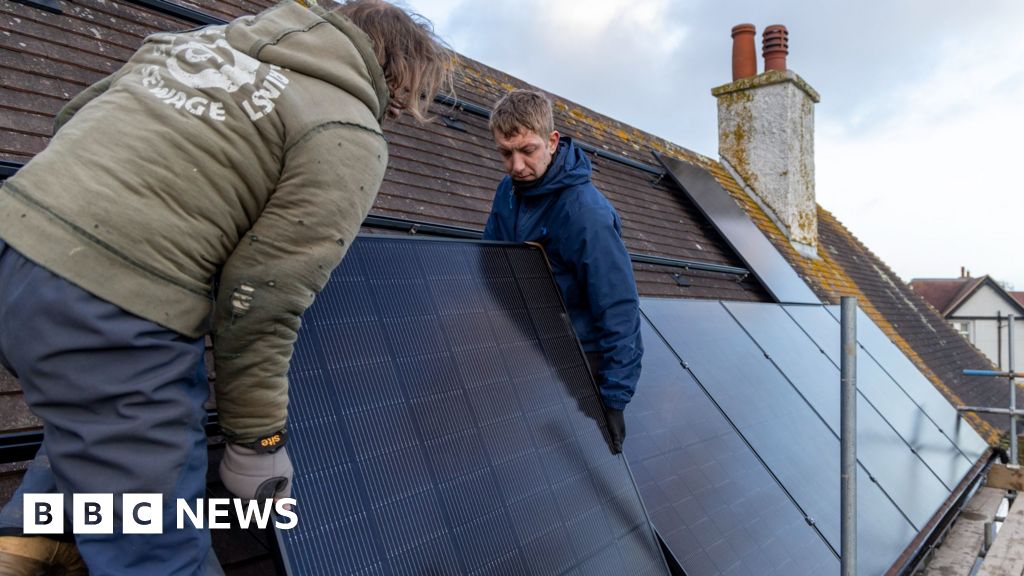
The ambitious plan, first mooted in 2024 amidst a "national emergency" of soaring energy costs, has taken two years to solidify into its final published form. At its core, the Warm Homes Plan focuses on providing financial assistance to homeowners and social housing residents through a combination of low-interest loans and grants for the installation of these green technologies. While grants will significantly offset initial costs, the government acknowledges that able-to-pay households will likely face additional expenses. For instance, after subsidies, the average cost for a heat pump installation is estimated to be around £5,000. However, these upfront investments are projected to yield substantial long-term savings. The government estimates that a typical three-bedroom semi-detached home, equipped with solar panels, a heat pump, and a battery, could save approximately £500 annually on energy bills. Leading social charity Nesta and green energy charity MCS Foundation offer an even more optimistic outlook, suggesting potential savings exceeding £1,000 per year.
Prime Minister Sir Keir Starmer underscored the fundamental principle behind the initiative, stating, "A warm home shouldn’t be a privilege, it should be a basic guarantee for every family in Britain." Echoing this sentiment, Energy Secretary Ed Miliband highlighted the urgency of the "cost of living crisis" and positioned home upgrades as a "crucial part of getting bills down." Speaking to BBC Breakfast, Miliband emphasized the plan’s objective to democratize access to green technology, ensuring that "something like a heat pump or a solar panel isn’t just in the reach of the wealthiest." This move is a strategic shift towards energy independence, aiming to decouple the UK from volatile international fossil fuel markets, a vulnerability starkly exposed by events like Russia’s invasion of Ukraine.
The announcement has been met with widespread acclaim from key players in the energy and finance sectors, as well as workers’ unions. Dhara Vyas, chief executive of trade body Energy UK, lauded the "substantial commitment" of £15 billion, recognizing its pivotal role in providing the certainty necessary to stimulate private investment and business growth in the green energy market. Camilla Born, CEO of Electrify Britain, a joint campaign by Octopus and EDF promoting electric heating, also welcomed the plan as a vital step towards long-term bill reductions. However, Born tempered her enthusiasm with a pragmatic note, remarking that "the bad side is that it is a plan, and we need delivery." While some grant schemes are already active, the precise mechanisms and timelines for distributing new funding to households require "further engagement with the finance sector" this year, according to the government.
Despite the broad positive reception, the plan has drawn criticism from opposition parties. The Conservative Party voiced concerns that the scheme would "saddle households with high ongoing running costs." Richard Tice, deputy leader of Reform, launched a more scathing critique, branding it "a scandalous waste of up to £15bn of taxpayers’ cash primarily buying Chinese made solar panels, batteries and heat pumps, that is bad for British industry." This accusation is underpinned by HMRC trade data from 2024, which indicates that two-thirds (68%) of solar panels imported into the UK originated from China. In response, Energy Secretary Ed Miliband affirmed that efforts were underway to "diversify" supply chains and "unwind that concentration" through strategic investments within the UK.
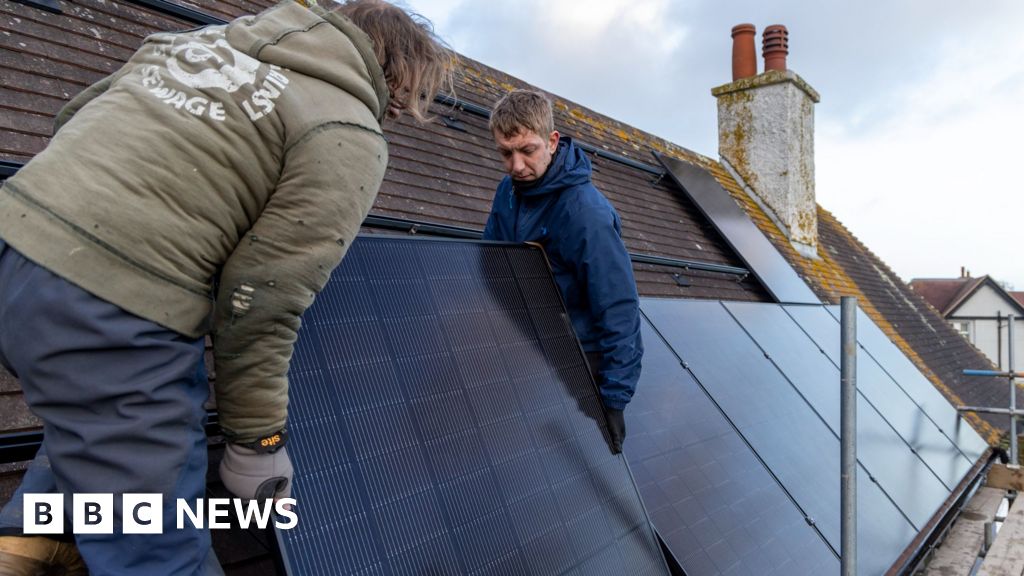
A significant challenge for the widespread adoption of electric heating solutions like heat pumps is the UK’s relatively high electricity prices compared to many European counterparts. These elevated costs are attributed to factors such as network upgrades, government taxes, and the lingering impact of wholesale prices dictated by the gas market. The government’s strategy to counteract this involves encouraging the "trio" of low-carbon technologies – heat pumps, solar panels, and batteries. By meeting a greater proportion of a heat pump’s electricity demand with home-generated solar power, coupled with battery storage, households can significantly reduce their reliance on grid electricity, thereby driving down running costs.
The government projects the scheme will generate 180,000 new jobs within the clean heating sector, although a portion of these are expected to come from retraining existing engineers.
Notably, the original iteration of the Warm Homes Plan placed a stronger emphasis on home insulation, a measure widely regarded as a cost-effective way to mitigate heat loss from the UK’s notoriously leaky housing stock. However, a series of controversies surrounding the government-funded ECO insulation scheme, particularly concerning botched installations, has led to its non-extension. Aadil Qureshi, CEO of Heat Geek, an organization focused on retraining heating engineers for heat pump installations, supported this decision, arguing that a refocus on nascent green technologies like heat pumps offers better value for government investment. Qureshi believes that "unlike insulation, heat pumps are a technology in its infancy, and needed government support to catalyse the industry." He added, "[The plan] allows the industry to commit, to double down – it allows investors, manufacturers to say let’s keep investing to get to a certain point where it is equal with the hydrocarbon alternative."
By transitioning households away from traditional oil heaters and gas boilers to electrically powered heat pumps, fuelled by renewable energy, the government aims to significantly reduce the country’s planet-warming emissions. Home heating currently accounts for approximately 18% of the UK’s total emissions.
Real-world experiences underscore the potential benefits and challenges. Chris and Penny Harcourt, a retired couple from Stowmarket, installed a heat pump two years ago and describe it as the "best update we have done in our house for 20 years." However, they noted that the running costs were initially high due to prevailing electricity prices, and it was only after adding solar panels that they witnessed a substantial fall in their bills. This anecdote perfectly illustrates the government’s rationale for promoting the integrated "trio" of technologies. While heat pumps can be three to four times more efficient than gas boilers, higher electricity tariffs can negate these efficiency gains, making the addition of solar generation crucial for optimal savings.
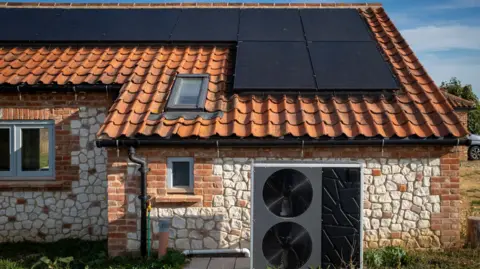
Ed Miliband reiterated the government’s commitment to moving households off gas heating, describing the UK’s dependence on fossil fuels as its "Achilles heel" in the wake of significant price fluctuations. He stated on Radio 4’s Today programme that the rise in gas prices following Russia’s invasion of Ukraine profoundly demonstrated why the "mission for clean power is so important," adding, "We are swapping reliance on imported gas… for homegrown clean power where we control the price."
However, not all voices within the green industry fully align with every aspect of the plan. Dale Vince, CEO of energy company Ecotricity, while praising the new funding for solar, expressed reservations about the high level of subsidy for heat pumps. He argued that while heat pumps have a role, they might not be the universal answer for lowering heating costs and greenhouse gas emissions. Vince asserted, "Solar panels give us the biggest bang for buck there is no doubt about that – cheapest to install and most productive in terms of bringing down energy bills. Heat pumps sit at the other end of that scale." He provocatively compared the impact: "We could put solar panels on 10 million rooftops or heat pumps in one million homes."
Beyond homeowners, the Warm Homes Plan also addresses the rights of renters, although the direct funding for low-carbon tech remains primarily for homeowners and social housing. The plan incorporates recent announcements that from 2030, landlords will be mandated to ensure their rental properties achieve a minimum Energy Performance Certificate (EPC) score of C, an upgrade from the current E requirement. A current hurdle, however, is that EPC scores are based on estimated running costs rather than pure energy efficiency, which can paradoxically lead to a downgraded score after a heat pump installation. The government has pledged to announce changes to this assessment process later this year.
Environmentalists and industry stakeholders had also eagerly awaited updated efficiency requirements for new builds, known as the Future Homes Standard. While these details are still slated for publication in the "next few months," the plan unequivocally confirms that "under these standards, new homes will have low-carbon heating, high levels of energy efficiency and solar panels by default." Jess Ralston, Energy Analyst at the Energy and Climate Intelligence Unit (ECIU), acknowledged the long wait for these decisions. "That timelines are being pushed back is likely to be frustrating for those who are still colder and poorer in shoddy rental homes," she commented, "but the public overwhelmingly back better standards for new builds so should be encouraged to see new requirements on the house builders at long last."
The Warm Homes Plan represents a significant governmental commitment to transforming the UK’s housing stock into a more energy-efficient and low-carbon future. While challenges remain, from supply chain diversification to electricity pricing and the intricacies of implementation, the £15 billion investment signals a determined effort to lower energy bills, create jobs, and accelerate the nation’s journey towards net-zero emissions. Additional reporting by Miho Tanaka contributed to this article.




 George Anjay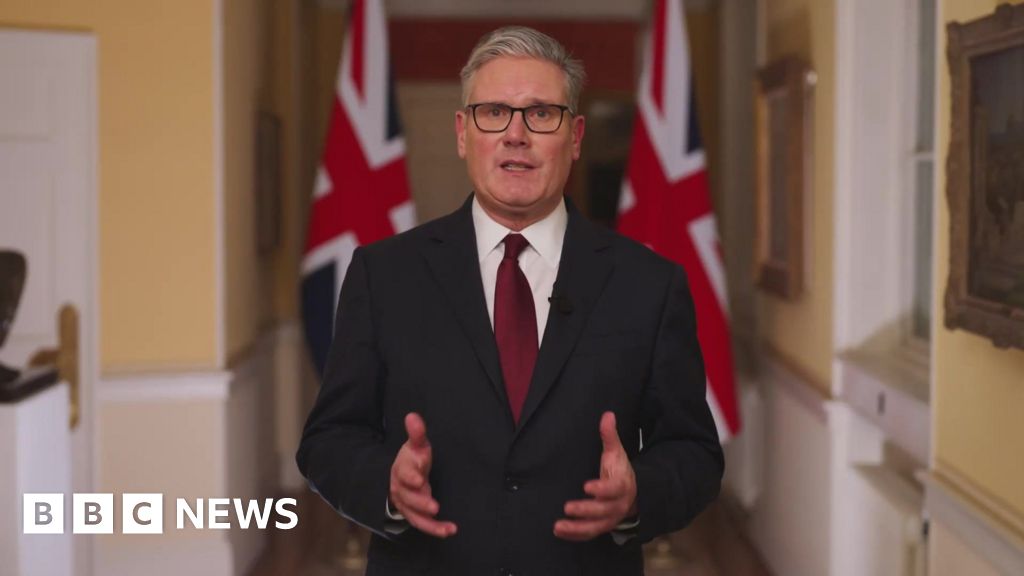
 Ramos Leo
 Nakalama John

 atisusanti