
 atisusanti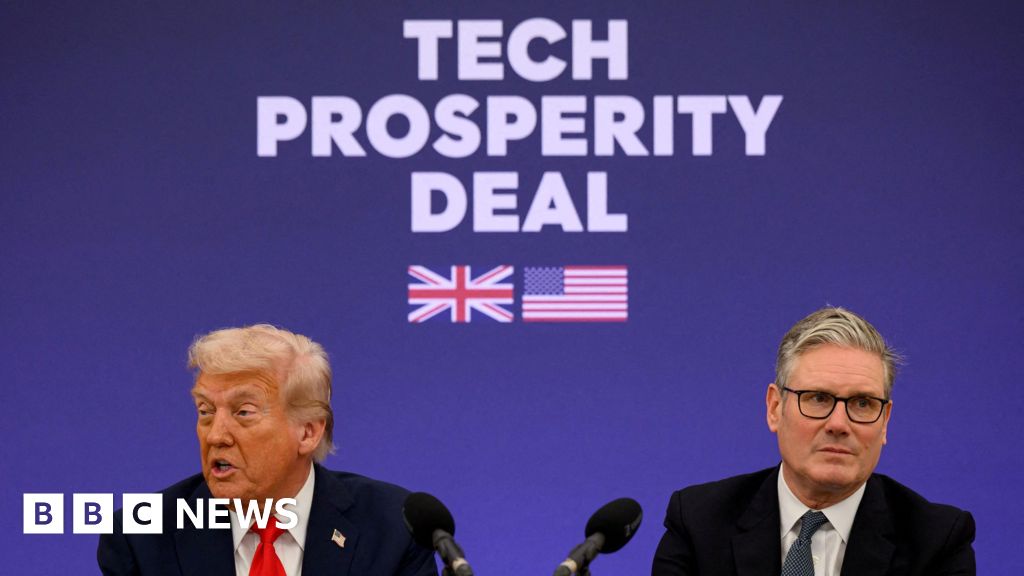
The United Kingdom government is maintaining that discussions surrounding a significant technology partnership with the United States remain very much alive, despite reports of stalled negotiations. Downing Street has affirmed that the UK is engaged in "active conversations with US counterparts at all levels of government" regarding the wide-ranging tech deal, officially known as the Technology Prosperity Deal. This ambitious agreement, unveiled during a state visit by then-US President Donald Trump in September and described at the time as "historic," aims to foster deeper collaboration between the two nations in crucial and rapidly evolving sectors such as artificial intelligence (AI) and quantum computing.
However, the BBC has learned that the talks have encountered significant headwinds, primarily due to concerns raised by the US. These concerns reportedly stem from what the US administration perceives as broader trade barriers within the UK’s economic landscape, extending beyond the specific technological advancements envisioned by the deal. The Prime Minister’s official spokesperson, while declining to comment directly on the specifics of what are described as "live" discussions, expressed confidence in securing an agreement that will "shape the future of millions on both sides of the Atlantic." The spokesperson acknowledged the inherent complexities of such high-level negotiations, stating that "negotiations of this kind are never straightforward."
The initial report on the stalled talks emerged from The New York Times, which highlighted "broader disagreements" between the two nations. These disagreements are understood to encompass a range of issues, including differing approaches to digital regulations and diverging standards for food safety rules. While the UK government has not offered specific commentary on these particular claims, the White House has yet to respond to requests for clarification from the BBC.
Adding to the discourse, Michael Kratsios, who served as the US President’s science adviser, indicated on Tuesday evening that the administration is keen to resume progress on the deal. In a statement shared on the social media platform X, Kratsios articulated the administration’s hope to "resume work with the United Kingdom once the UK has made substantial progress in implementing its commitments under the Economic Prosperity Deal." He further emphasized the US desire to "continu[e] our productive collaboration across AI, quantum, nuclear, and other critical technology areas under the Deal," referencing Section III of the Technology Prosperity Deal.
When the Technology Prosperity Deal was initially announced, the UK government was eager to highlight the substantial benefits it was projected to deliver. Prime Minister Sir Keir Starmer issued a statement at the time, characterizing the agreement as a "generational step change in our relationship with the US." He underscored the potential for the deal to "boost advances in drug discovery, create tens of thousands of jobs, and transform lives." Complementing these sentiments, Technology Secretary Liz Kendall described the partnership as a means to "transform lives across Britain" and a clear "vote of confidence in Britain’s booming AI sector."
Coinciding with the unveiling of the Tech Prosperity Deal, a series of significant investment announcements were made by major US technology firms. Giants such as Microsoft, Nvidia, and Google collectively outlined planned spending amounting to £31 billion in the UK. Crucially, it is understood that these substantial investment plans remain unaffected by the current diplomatic impasse concerning the broader tech deal. Inquiries made to Google, Microsoft, and Nvidia for comment have, as of this report, not yet yielded a response.
The commitment from these tech leaders underscores the UK’s aspiration to become a global leader in AI. Nvidia’s CEO, Jensen Huang, had previously expressed his company’s investment in the UK as a reflection of his belief that the nation could indeed emerge as an "AI superpower," an ambition that has been actively championed by the current government. The planned investments are intended to bolster the UK’s AI infrastructure, including the expansion of data centers and other critical facilities across the country.
The foundational document for this technological pact is a Memorandum of Understanding (MOU), which clearly outlines the intention for both nations to collaborate across AI, quantum computing, and nuclear power. The MOU details potential joint initiatives such as the collaborative development of "powerful quantum machines," the support of innovation in AI hardware, and the exploration of novel applications for advanced nuclear energy technologies. However, a critical caveat within the MOU states that any proposals are non-binding and that the agreement only "becomes operative alongside substantive progress being made to formalise and implement" the broader US-UK Economic Prosperity Deal, which was signed in May.
The Trump administration’s approach to international trade has been characterized by a willingness to renegotiate global rules, including the imposition of tariffs on numerous countries, even those considered close allies like the UK. This has led to a more granular approach to securing new trade agreements, with the US seeking terms it deems more favorable. For the UK, this has translated into a sector-by-sector negotiation process, which has resulted in agreements concerning the automotive industry and, more recently, the pharmaceuticals sector. Nevertheless, a proposed agreement aimed at eliminating tariffs on UK steel exports to the US has reportedly been placed on indefinite hold, according to BBC sources.
Allie Renison, director of the communications firm SEC Newgate UK and a former government trade adviser, views the current stalemate in the tech negotiations as a symptom of the "slightly piecemeal approach" adopted by both the US and UK in finalizing trade deals. She explained to the BBC that instead of a comprehensive, all-encompassing agreement, different aspects of the trade relationship are being linked to distinct negotiation tracks. This, she suggests, means that concerns arising in one trade area can now have a knock-on effect on agreements in entirely separate sectors, such as technology.
While questions linger regarding the potential ramifications of these roadblocks for the pledged investments by US tech firms in the UK, Ms. Renison offered a perspective of cautious optimism. She suggested that any current impasses are unlikely to represent insurmountable obstacles but rather a degree of "posturing in the wider negotiations." The underlying strategic importance of the UK as a hub for technological innovation and collaboration likely remains a key factor for major US tech companies, irrespective of the immediate diplomatic friction.
The Technology Prosperity Deal, as outlined in the Memorandum of Understanding, represents a significant commitment to shared progress in some of the most transformative fields of the 21st century. The MOU explicitly mentions the potential for joint efforts in areas such as building "powerful quantum machines," fostering innovation in AI hardware, and exploring new avenues for the utilization of advanced nuclear energy. This level of cooperation signifies a recognition of the interconnectedness of global technological advancement and the mutual benefits that can be derived from synergistic efforts. The deal’s emphasis on AI and quantum computing aligns with the UK’s stated ambitions to establish itself as a leading nation in these fields, a vision that has been actively promoted by the current government. The investment commitments from major US tech firms further validate this ambition, signaling a strong vote of confidence in the UK’s technological ecosystem and its potential for growth.
The inclusion of nuclear energy within the scope of the deal also highlights a shared strategic interest in developing advanced energy solutions. Both nations are grappling with the challenges of climate change and energy security, and collaborative efforts in nuclear technology could lead to breakthroughs in clean and sustainable power generation. This aspect of the deal underscores a broader commitment to addressing global challenges through technological innovation and international cooperation. The fact that the MOU explicitly states that proposals are non-binding and contingent upon substantive progress in formalizing and implementing the wider Economic Prosperity Deal underscores the complex, multi-layered nature of these trade negotiations. This phased approach, while potentially leading to delays, also allows for a more thorough and considered development of agreements.
The economic implications of these stalled negotiations, particularly concerning the £31 billion in planned investments by US tech giants, are a significant point of interest. While the BBC understands that these investment plans remain unaffected, any prolonged uncertainty could potentially create a ripple effect. However, as Allie Renison points out, the underlying commercial logic for these investments is likely to persist. The UK’s established strengths in research and development, its skilled workforce, and its supportive regulatory environment continue to make it an attractive destination for technological investment. The current situation may, therefore, be more about diplomatic leverage than a fundamental shift in investment strategy.
The broader context of US trade policy under the Trump administration, characterized by a focus on bilateral deals and a willingness to challenge existing trade norms, is crucial to understanding the current impasse. The UK, in seeking to secure favorable trade terms with its largest trading partner, has had to navigate these evolving dynamics. The success of deals in areas like cars and pharmaceuticals demonstrates the potential for progress, but the ongoing challenges with sectors like steel and technology highlight the complexities of aligning diverse economic interests. The approach of "haggling over various sectors" can lead to a fragmented landscape of agreements, where progress in one area is dependent on concessions in another.
The commentary from Michael Kratsios, the former US science adviser, offers a potential pathway forward. His statement suggests that progress on the tech deal is intrinsically linked to the UK’s fulfillment of its commitments under the broader Economic Prosperity Deal. This implies a desire for a more holistic approach to the US-UK economic relationship, where advancements in one area can unlock progress in others. The mention of specific areas like AI, quantum, and nuclear also indicates a continued focus on strategically important sectors, suggesting that the core objectives of the Technology Prosperity Deal remain a priority for the US administration.
In conclusion, while the UK government maintains that negotiations over the US tech deal are "active," the reported stalls and broader disagreements underscore the intricate nature of international trade diplomacy. The deal’s potential to foster innovation and economic growth in key technological sectors remains significant, and both nations appear committed to finding a path forward, albeit one that requires careful navigation of complex trade and regulatory landscapes. The eventual outcome will likely depend on the ability of both sides to bridge their respective concerns and forge a mutually beneficial agreement that reflects the evolving global technological landscape.




 Ramos Leo
 Nakalama John
 George Anjay

 Roy Suryo