Nana Banana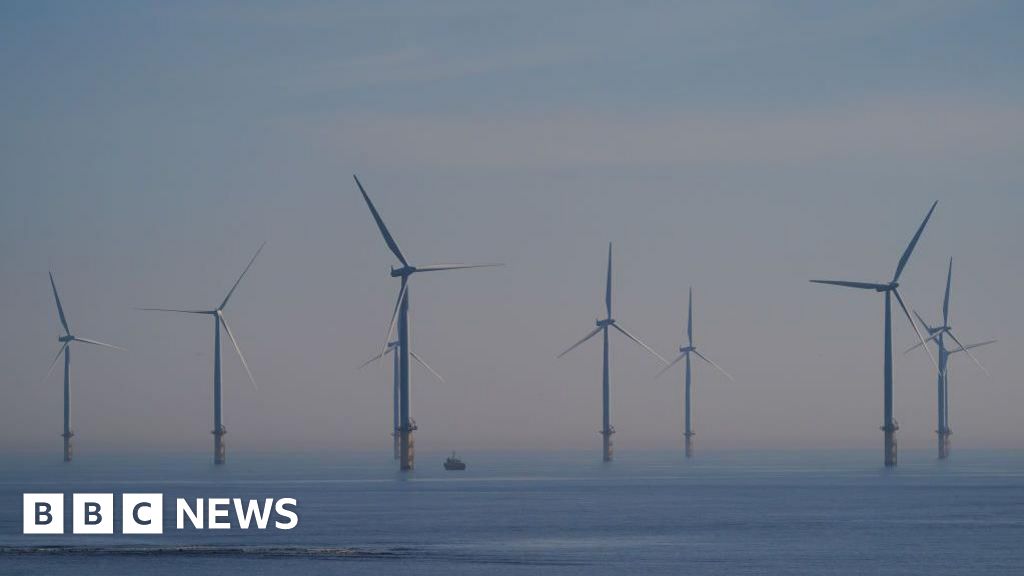
Despite this monumental achievement in securing new capacity, the announcement arrives with a notable caveat: a discernible rise in the contracted price for this renewable energy. While heralded as a critical step towards energy independence and climate targets, some industry analysts and political figures are sounding warnings that even this record haul might not be enough to comfortably meet the government’s stringent 2030 "clean power" target. The intricate balance between scaling up renewable infrastructure and managing the associated costs has become a central point of contention, casting a shadow of economic uncertainty over the otherwise positive news.
The government maintains that these wind projects, even at higher prices, represent a more cost-effective and stable alternative to new gas power stations, ultimately promising to "bring down bills for good." This assertion is rooted in the volatility of global fossil fuel markets, particularly exacerbated by geopolitical events. However, opposition parties, particularly the Conservatives, have been vocal in their criticism, arguing that the current climate targets risk imposing unduly high energy prices on consumers and that the contracts awarded today could lock in elevated costs for several decades.
One of the most significant beneficiaries of this latest auction round is the first phase of the Berwick Bank project, positioned strategically in the North Sea. If fully realised, this colossal undertaking has the potential to eclipse all existing offshore wind farms globally in terms of sheer generating capacity. Other substantial projects that have secured contracts include the Dogger Bank South wind farm, located off the Yorkshire coast, and the Norfolk Vanguard project, situated off the coast of East Anglia. Notably, the Awel Y Mor project achieved a significant milestone by becoming the first successful Welsh offshore wind development in over a decade, underscoring a broader national commitment to renewable energy infrastructure.
Chris Stark, a key figure overseeing the government’s clean power initiative, lauded the auction results as "a great outcome for the country." He emphasised the strategic importance of the geographical spread of these projects across England, Scotland, and Wales, highlighting how this distribution would facilitate more efficient and reliable electricity transmission to homes nationwide. The government’s overarching goal is to ensure that at least 95% of Great Britain’s electricity is derived from "clean" sources by 2030. This ambitious target is primarily driven by the imperative to combat climate change through a drastic reduction in carbon emissions, traditionally generated by burning fossil fuels. The "clean" energy umbrella encompasses a diverse portfolio of technologies, including rapidly expanding renewables like solar and wind power, alongside nuclear energy.
Offshore wind is widely regarded as the cornerstone of Great Britain’s future clean electricity system. The nation’s extensive coastlines offer abundant and consistent wind resources, making it an ideal location for large-scale offshore wind development. To meet its ambitious clean power target, the government has set a specific goal of achieving at least 43 gigawatts (GW) of offshore wind capacity by 2030. This represents a monumental leap from the current operational capacity of 16.6GW, with an additional 11.7GW currently under construction. The journey from conceptualisation to full operational status for offshore wind farms, including critical grid connections, is a protracted process. Consequently, this latest auction was viewed by many as an absolutely critical juncture for the UK to secure sufficient capacity to remain on track for its 2030 target.
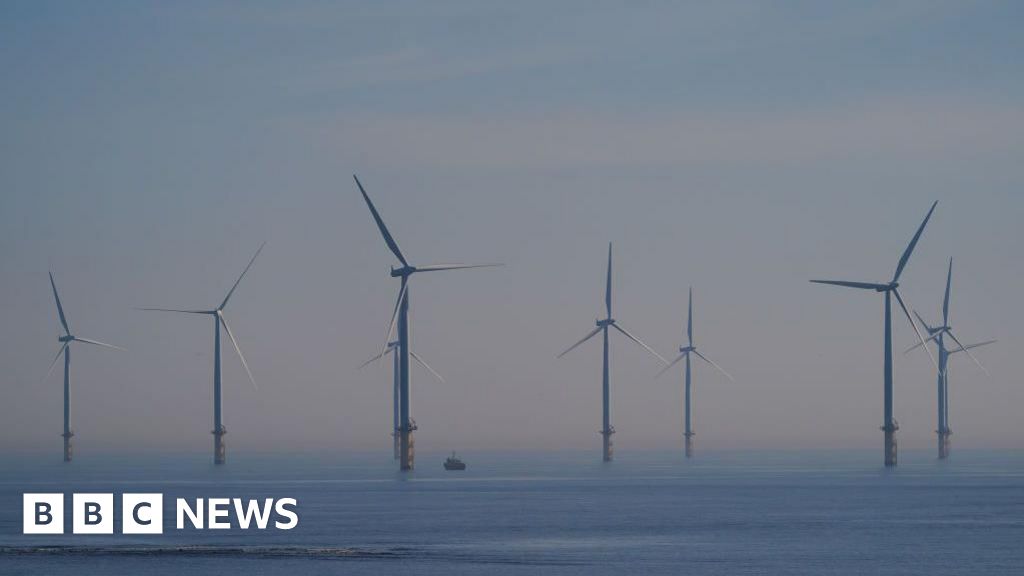
The 8.4GW secured in this recent auction round has, according to several analysts who spoke to the BBC, just about managed to keep the 2030 offshore wind target within reach. However, a significant caveat remains: all these newly contracted projects will still require complex and time-consuming connections to the national grid before they can begin generating electricity. Nick Civetta, a project leader at the respected Aurora Energy Research think tank, articulated the formidable challenge ahead, stating that "getting that amount of capacity online by 2030 will be extremely challenging." This underscores the multifaceted hurdles that extend beyond mere contract awards, encompassing everything from manufacturing and installation logistics to grid infrastructure upgrades and the availability of a skilled workforce.
The upward trajectory in offshore wind costs over the past few years is attributable to a confluence of global economic pressures. These include significant global supply chain disruptions, a sharp increase in the cost of raw materials such as steel, and persistently high interest rates, all of which have been exacerbated by the economic fallout from the Russia-Ukraine war. These factors have had tangible impacts on the sector, as evidenced by energy giant Orsted’s decision last year to "discontinue" Hornsea 4, one of the country’s most significant planned wind projects, despite it having previously been awarded a contract.
In the most recent auction, traditional offshore wind projects—those fixed to the seabed—were awarded an average fixed price of nearly £91 per megawatt-hour (MWh) of electricity generated, benchmarked in 2024 prices. While this figure represents a substantial reduction from the initial auction in 2015, it marks an increase from the £82/MWh awarded at the last auction for new-build projects, also in 2024 prices. This cost escalation is a key point of concern for critics.
The government, while acknowledging the rising cost of offshore wind, vigorously argues that these figures must be contextualised against the escalating cost of constructing and operating new gas power plants. Its internal projections suggest that building and fuelling new gas plants would incur a cost of approximately £147/MWh, a figure that includes a carbon price—a charge levied on emissions. Ed Miliband, the Energy Secretary, robustly defended the government’s strategy in an interview with BBC News, asserting, "We’re confident that the renewables auction as a whole will help bring down bills for consumers." He further warned, "The truth is, those who say we should stick with fossil fuels are making a massive gamble, and they’re gambling with the British people’s energy bills," referencing the dramatic surge in gas prices that occurred at the outset of the Russia-Ukraine war.
However, Claire Coutinho, the shadow energy secretary, countered this narrative, stating, "They promised the British electorate that they would cut bills by £300. In fact, their bills have gone up by £200 since." She sharply criticised the current government’s approach, telling BBC News, "This is Ed Miliband’s new grand plan to lower bills, and he signed up to contracts for offshore wind, which are the highest prices we’ve seen in a decade." Coutinho also highlighted additional hidden costs associated with offshore wind development, such as the substantial investment required for upgrading and expanding the national grid infrastructure to accommodate the influx of new renewable generation.
The debate over the cost of net zero policies has also seen contributions from other political parties. Reform UK has repeatedly attacked the overall cost implications of the net-zero agenda, while the Liberal Democrats and the Green Party both staunchly support the expansion of renewables, viewing it as essential not only for tackling climate change but also for fostering green jobs and economic growth. The Scottish National Party (SNP) and Plaid Cymru also advocate for the robust growth of offshore wind but maintain that Scotland and Wales should exert greater control over their indigenous energy resources and planning.
The auction results have generally been met with a positive reception from both the energy industry and climate advocacy groups, who recognise the imperative of scaling up renewable capacity. However, not all reactions have been uniformly enthusiastic. RSPB Scotland, a prominent conservation charity, voiced specific concerns regarding the potential ecological impacts of the vast Berwick Bank farm on vulnerable seabird populations, calling for rigorous environmental assessments and mitigation strategies.
The ultimate impact of these new contracts on household bills remains a complex and uncertain equation. The prices awarded by the government are fixed for a substantial period, typically 20 years, under a mechanism known as Contracts for Difference (CfD). This long-term price certainty is specifically designed to provide developers with the financial assurance necessary to justify their massive upfront investments. The projects’ final effect on consumer bills can fluctuate, depending significantly on how their fixed prices compare to the dynamic wholesale market price of electricity. A myriad of factors, including future electricity demand—which is widely projected to increase—and the inherently volatile price of gas, will all play a crucial role in determining the net effect.
Historically, previous renewable projects funded through this CfD scheme have often necessitated an effective subsidy when wholesale prices were low. However, analysts also point out that these projects have generated indirect savings elsewhere, primarily by displacing more expensive gas power stations from the grid and consequently driving down prices in the wholesale electricity market. Today, wholesale market prices are predominantly dictated by the cost of gas. Yet, with the accelerating integration of clean energy sources, it is anticipated that renewables will increasingly set the wholesale price in the future, potentially offering greater stability and predictability.
Recent policy decisions have added further layers of complexity to the bill impact. In the latest Budget, the government announced changes that could theoretically reduce energy bills by approximately £150, achieved by shifting some costs associated with older renewable energy schemes onto general taxation and by discontinuing a particular energy efficiency programme. Conversely, plans for extensive grid upgrades, unveiled last year by the energy regulator Ofgem, are expected to begin adding new charges to consumer bills, creating a conflicting set of financial pressures for households.




 George Anjay
 Ramos Leo
 Nakalama John