George Anjay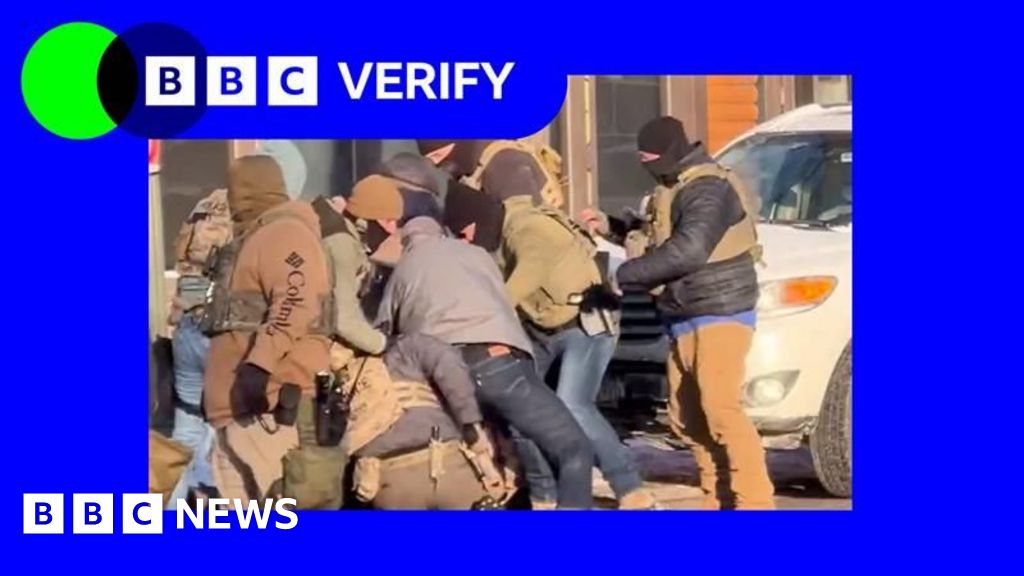
The incident involving Alex Pretti, a 37-year-old Minneapolis man, marks a deeply concerning escalation in the use of force by federal immigration officers within the city. The fact that this shooting occurred so shortly after the death of Renee Good at the hands of an immigration agent paints a stark and troubling picture of law enforcement operations in the area. BBC Verify’s decision to conduct a frame-by-frame analysis of bystander video footage highlights the critical need for transparency and accountability in such high-stakes situations. By meticulously dissecting the visual narrative from various perspectives, the investigative team seeks to move beyond initial reports and establish a definitive timeline and sequence of events. This approach is crucial for understanding the circumstances that led to the use of lethal force and for informing any subsequent reviews or investigations.
The initial reports indicate that Alex Pretti was killed by federal immigration officers. While the exact circumstances surrounding the encounter remain under scrutiny, the availability of bystander video footage provides a vital, albeit often fragmented, source of information. These videos, captured by individuals present at the scene, can offer an unfiltered perspective on the actions and reactions of both the officers and the individual involved. BBC Verify’s methodology of analyzing this footage frame by frame suggests a commitment to an exhaustive and objective examination. This process likely involves scrutinizing every second of the video, identifying key moments, movements, and any potential indicators of threat or de-escalation. The use of multiple angles is particularly important, as it allows for a more complete spatial understanding of the scene and can help to corroborate or challenge accounts from a single viewpoint.
The proximity of the two fatal shootings by immigration agents in Minneapolis within a three-week period raises significant questions about operational protocols, training, and the broader context of immigration enforcement in the city. The death of Renee Good, followed so swiftly by that of Alex Pretti, creates a palpable sense of urgency for a thorough understanding of these events. It is imperative that the public has access to accurate information, and that the actions of law enforcement are subject to rigorous scrutiny, especially when lethal force is involved. The BBC Verify report, with its promise of a detailed reconstruction, is therefore of paramount importance. The inclusion of a disclaimer regarding potentially distressing images serves as a necessary warning, acknowledging the graphic and emotionally charged nature of the evidence being presented.
The frame-by-frame analysis employed by BBC Verify is a sophisticated investigative technique that can reveal nuances often missed in casual viewing or brief news reports. This meticulous process likely involves slowing down the footage, isolating specific actions, and examining body language, the positioning of individuals, and the presence of any objects that might have been perceived as weapons. The graphics created by Mesut Ersoz will play a crucial role in visually representing the reconstructed events, potentially using animated sequences or diagrams to illustrate the spatial relationships and movements of those involved. This visual aid can significantly enhance the audience’s comprehension of a complex and potentially chaotic scene. The production of the video by Tom Joyner ensures that this detailed analysis is presented in an accessible and impactful manner.
The verification by Emma Pengelly, Paul Brown, and Benedict Garman underscores the commitment to journalistic rigor and accuracy. Their roles as verifiers suggest that they have meticulously cross-referenced information, confirmed details, and ensured that the conclusions drawn from the footage are well-supported by the evidence. This level of verification is essential for building public trust, especially in cases where the actions of law enforcement are under intense scrutiny. The report aims to provide a factual account, free from speculation, and grounded in the visual evidence.
The implications of these shootings extend beyond the immediate victims and their families. They raise broader societal concerns about the powers granted to federal agencies, the oversight mechanisms in place, and the impact of immigration enforcement policies on communities. By unpicking the events frame by frame, BBC Verify seeks to contribute to a more informed public discourse on these critical issues. The detailed analysis can help to clarify whether the use of force was justified, whether protocols were followed, and whether there are systemic issues that need to be addressed.
The report’s focus on the moments before the killing is particularly significant. This emphasis suggests that the investigation is not solely concerned with the fatal shot itself, but also with the preceding interactions, any warnings issued, any attempts at de-escalation, and the perceived threat level at the time. Understanding the full sequence of events leading up to the shooting is crucial for a comprehensive assessment of the incident. It allows for a more nuanced understanding of the decisions made by all parties involved.
The two separate incidents involving federal immigration officers in Minneapolis within such a short timeframe demand a thorough and impartial investigation. The use of bystander video footage, analyzed with meticulous detail, offers a powerful tool for achieving this. The BBC Verify report, with its emphasis on frame-by-frame reconstruction and expert verification, promises to shed light on these tragic events. The inclusion of graphics and a dedicated video production further underscores the commitment to presenting this complex information in a clear and comprehensible manner, even when dealing with sensitive and distressing content. The ultimate goal is to provide the public with a factual and detailed account, fostering transparency and accountability in the critical area of law enforcement and immigration. The report’s contribution lies in its ability to dissect the chaos of a live event into understandable components, offering a narrative that is built on observable facts rather than conjecture, thereby contributing to a more informed public understanding of these critical incidents.



 Ramos Leo
 Nakalama John