Roy Suryo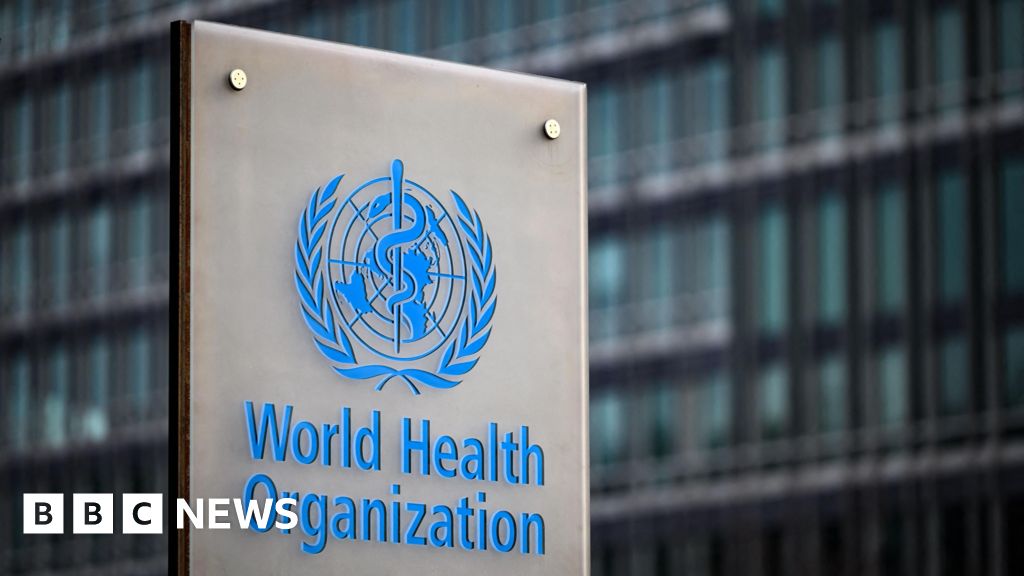
The United States has now officially severed its ties with the World Health Organization (WHO), marking a seismic shift in global public health diplomacy and leaving the United Nations agency without one of its most significant financial contributors. This withdrawal, a culmination of a year-long process initiated by President Donald Trump, stems from deep-seated criticisms leveled against the WHO, particularly its perceived "China-centric" approach during the tumultuous early stages of the COVID-19 pandemic. The US Department of Health and Human Services formally stated that the decision was driven by the WHO’s alleged "mishandling" of the pandemic, a persistent inability to enact meaningful reforms, and what the US government deemed as undue political influence exerted by member states.
The WHO, however, has vehemently rejected these accusations. Director-General Tedros Adhanom Ghebreyesus characterized the US withdrawal as a profound loss, not only for the United States itself but for the entire global community. He underscored the organization’s decades-long track record of vital public health interventions, citing its instrumental role in the global eradication of polio, its ongoing efforts to combat HIV/AIDS, its work to reduce maternal mortality rates, and its successful implementation of an international treaty on tobacco control as testaments to its indispensable contributions.
In the wake of the pandemic, a concerted effort was made among WHO member states to forge a new international pandemic treaty. This ambitious initiative aimed to establish a robust framework for preventing, preparing for, and responding to future global health crises, with a particular emphasis on ensuring equitable access to vaccines and essential medicines. While the treaty was ultimately agreed upon in April of the previous year by a united front of WHO member states, the United States notably stood apart, declining to endorse the agreement.
Historically, Washington has been a cornerstone of the WHO’s financial support, consistently ranking as one of its largest donors. However, the US has now ceased its contributions for the 2024 and 2025 fiscal years, a move that has already precipitated significant job losses within the organization. Despite arguments from WHO legal counsel asserting that the US remains contractually obligated to settle its outstanding arrears, estimated to be around $260 million (£193 million), the US government has maintained its stance, seeing no justification for payment.
The implications of this withdrawal are far-reaching. The US Department of Health and Human Services has confirmed that all US government funding to the WHO has been terminated. Furthermore, US personnel and contractors have been recalled from the WHO’s headquarters in Geneva, Switzerland, and its various offices worldwide. Consequently, hundreds of ongoing US engagements with the WHO have been suspended or entirely discontinued.
A joint statement released by US Health Secretary Robert F. Kennedy and Secretary of State Marco Rubio articulated a stark assessment of the situation, asserting that "The WHO tarnished and trashed everything that America has done for it." They further elaborated that the organization had "abandoned its core mission and acted repeatedly against the interests of the United States," citing, among other grievances, the failure to return the American flag that had been displayed at its Geneva headquarters. The statement concluded with a firm declaration: "Going forward, U.S. engagement with the WHO will be limited strictly to effectuate our withdrawal and to safeguard the health and safety of the American people."
The US Department of Health and Human Services indicated that, in the absence of WHO collaboration, the United States would pursue bilateral relationships with other nations to ensure continued disease surveillance and pathogen sharing. However, officials were unable to provide specific details regarding which countries these new links would be established with at this juncture. When questioned about the continuation of efforts to combat diseases such as polio or HIV, representatives stated that the US would pivot to partnering with "NGOs and faith-based groups" to sustain these critical public health initiatives. Again, no concrete details of such established partnerships were immediately available. Similarly, in response to inquiries about the US commitment to participating in the information sharing and development of the annual global flu vaccine, officials expressed uncertainty.
Following President Trump’s signing of the withdrawal order at the commencement of his second term, the WHO had issued a statement expressing hope for reconsideration. The organization emphasized that "The WHO and the USA have saved countless lives and protected Americans and all people from health threats," and that any reconsideration would be "for the benefit of the health and well-being of millions of people around the globe." The WHO confirmed that the US withdrawal was on the agenda for its upcoming board meeting, scheduled to take place from February 2nd to 7th. The organization stated that its secretariat would proceed in accordance with the guidance provided by its governing bodies.
The COVID-19 pandemic exposed significant vulnerabilities and challenges in the pandemic response strategies of many nations with advanced health services, including the United States and the United Kingdom. A common thread in the critiques leveled against these countries is the perceived slowness and inherent flaws in their initial responses. Many governments exhibited hesitation in implementing stringent measures such as lockdowns, fearing a lack of public acceptance and potential economic repercussions. Studies conducted in the aftermath of the pandemic have indicated that these delays significantly contributed to the rapid and widespread transmission of the virus.
Drew Altman, a former US public health official, has argued that the disproportionately high death rate observed in the United States was, in part, a consequence of a fragmented response to WHO guidance on crucial public health measures like mask-wearing and social distancing. In a 2020 article published in The BMJ, Altman criticized the federal administration under President Trump for its failure to provide unified national guidance. He contended that the policy response to COVID-19 became heavily politicized, with Democrat-led states mandating mask-wearing while Republican-led states relaxed social distancing measures and permitted large gatherings. Altman concluded that "The disappointing US response to Covid-19 has been because of a failure of policy and leadership."
Further analysis of the US response to the COVID-19 pandemic was presented in a research paper published in the US National Library of Medicine. This study also characterized the Trump administration’s federal response as "slow and mismanaged." The departure of the United States from the WHO signifies a critical juncture in global health governance, raising profound questions about the future of international cooperation in addressing shared health threats and the capacity of organizations like the WHO to effectively navigate complex geopolitical landscapes while upholding their core mission of safeguarding global health. The implications of this withdrawal will undoubtedly reverberate through the international public health community for years to come, impacting everything from disease surveillance and outbreak response to the development and equitable distribution of life-saving medical interventions.


 Ramos Leo
 Nakalama John
 George Anjay