
 Nakalama John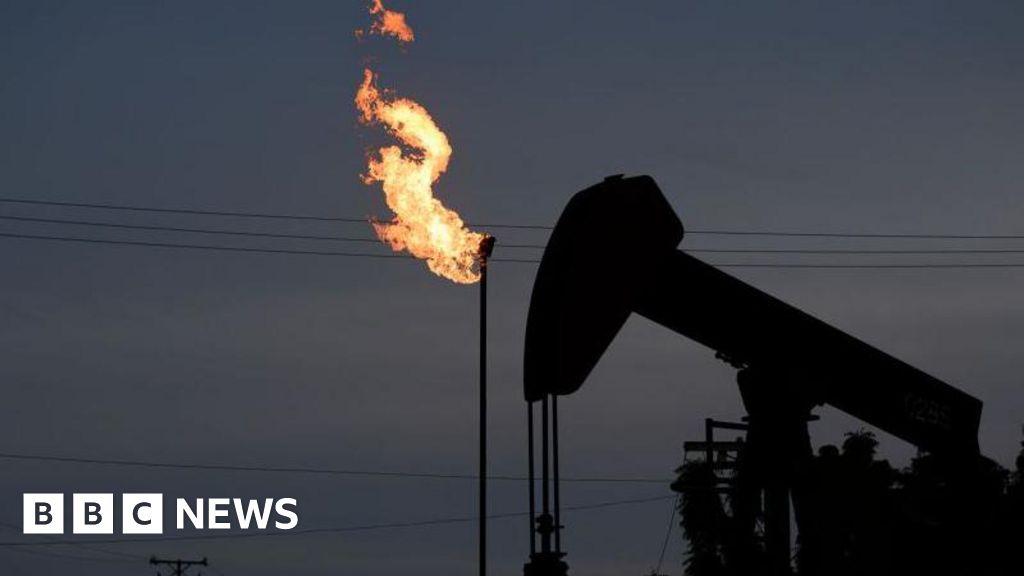
Officials indicated that the initial phase of these controlled sales is projected to involve a substantial volume, estimated between 30 million and 50 million barrels of oil. Critically, the revenue generated from these transactions will not immediately flow to Caracas but will instead be managed and controlled by the US government. This mechanism is explicitly designed to serve as a powerful economic tool in Washington’s ongoing diplomatic and political campaign against the administration of President Nicolás Maduro.
"We’re going to let the oil flow," declared Energy Secretary Chris Wright, addressing a conference of oil and gas executives in Miami, signaling the administration’s intent to reintroduce Venezuelan crude into the international supply chain. However, the precise portion of the revenues from these sales that would eventually be shared with Venezuela remains unclear, a critical detail that will heavily influence the policy’s perceived fairness and effectiveness. Analysts anticipate that the initial sales alone could generate approximately $2.8 billion (£2.1 billion), a significant sum that would be under US stewardship.
Wright further elaborated on the strategic rationale, stating, "We need to have that leverage and control of those oil sales to drive the changes that simply must happen in Venezuela." He added a caveat, acknowledging that some of the money would eventually "flow back into Venezuela," presumably for humanitarian aid or specific projects approved by the US, rather than directly into the coffers of the current government. This dual objective—exerting pressure while claiming to benefit the Venezuelan people—lies at the heart of the controversial policy.
White House officials confirmed on Wednesday that preparatory steps to market the oil were already underway. The administration is actively collaborating with key international banks and prominent commodity trading firms to facilitate and execute these complex sales. This coordination highlights the intricate financial and logistical infrastructure required to manage such a large-scale, politically charged operation.
These pronouncements provide crucial additional insight into the plans initially unveiled by US President Donald Trump via social media on Tuesday. Trump’s earlier posts indicated that Venezuela would be "turning over" up to 50 million barrels of oil to the US, which would then be sold at its prevailing market price. He further specified that the funds generated would be deposited into US-controlled accounts, asserting that he, as president, would directly control these accounts and utilize the proceeds "to benefit the people of Venezuela and the US." This direct claim of presidential control over another nation’s assets, even under sanction, raised eyebrows regarding the scope of executive authority.
US Secretary of State Marco Rubio underscored the humanitarian and anti-corruption aims of the initiative. He stated that the primary objective was to disburse the money "in a way that benefits the Venezuelan people – not corruption, not the regime – so we have a lot of leverage to move on the stabilisation front." This rhetoric frames the US intervention as a measure to combat corruption and foster stability, implicitly criticizing the Maduro government’s management of the nation’s vast natural resources.
Analysts, while acknowledging the potential impact of such a policy shift, cautioned that its effectiveness would largely hinge on the granular details, particularly the pace and transparency of the sales, as well as the ultimate allocation of funds. The immediate market reaction was one of anticipation mixed with uncertainty.
Venezuela possesses the world’s largest proven oil reserves, an estimated 303 billion barrels, dwarfing those of Saudi Arabia. However, decades of chronic disinvestment, systemic mismanagement, and a progressively tightening regime of US sanctions have crippled its once-mighty oil industry. Consequently, the country’s oil output has plummeted to approximately one million barrels per day – a stark contrast to its peak production of over three million barrels per day in the late 1990s and now representing less than 1% of global production. This dramatic decline has starved the Venezuelan government of its most critical source of revenue.
In recent years, the limited supply that Venezuela could produce had been primarily directed to China, often through complex barter arrangements or debt repayment schemes, circumventing earlier US sanctions. However, even this lifeline has been severely disrupted in recent months. The US has intensified its pressure campaign against the Maduro government, escalating strikes and implementing a de facto blockade of Venezuelan tankers, further isolating the country from international oil markets.
The international community’s reaction to the US’s latest move has been mixed. On Wednesday, Beijing’s foreign minister issued a strong condemnation of what it described as the US seizure of Venezuelan assets and its explicit plans to exert control over Venezuela’s oil resources. China, a key economic partner and creditor to Venezuela, views such actions as an infringement on national sovereignty and a dangerous precedent in international relations.
Domestically, the US policy is expected to have specific beneficiaries within the oil industry. President Trump is scheduled to meet with oil executives at the White House on Friday, likely to discuss the implications and potential opportunities arising from this policy change. Analysts suggest that in the short term, US oil firm Chevron, which has historically maintained a limited presence in Venezuela through joint ventures, and various US oil refineries are particularly well-positioned to benefit. These refineries are specifically configured to process the "heavy" crude characteristic of Venezuela’s vast output, making them ideal recipients for any increased flow of oil from the country.
Such a significant shift in supply could, however, create competitive pressure on other traditional suppliers of heavy crude to US refineries, notably Mexico and Canada. These two North American nations have consistently been the main sellers of similar crude types to the US market, and an influx of Venezuelan oil could potentially reduce demand or depress prices for their exports.
Global oil prices, already experiencing a period of relative lows due to steady supply and muted demand expectations, saw a further downward slip over the last week. The prospect of increased access for Venezuelan crude to the global market, even if controlled by the US, contributed to this decline, as it suggested an additional source of supply at a time when markets are not facing acute shortages.
However, industry experts have tempered expectations regarding any rapid, substantial expansion of Venezuela’s overall output. They warn that meaningful revitalization and expansion of the country’s dilapidated oil infrastructure would require years of sustained effort and billions of dollars in new investment. Furthermore, international firms may remain hesitant to undertake such high-risk investments, particularly given the availability of less risky and more profitable opportunities in the United States’ booming shale sector and in other burgeoning oil-producing nations like Guyana, which has recently discovered massive offshore reserves. The long-term viability of Venezuela’s oil industry, even under new management, remains a complex and challenging question.




 George Anjay
 Ramos Leo

 atisusanti