George Anjay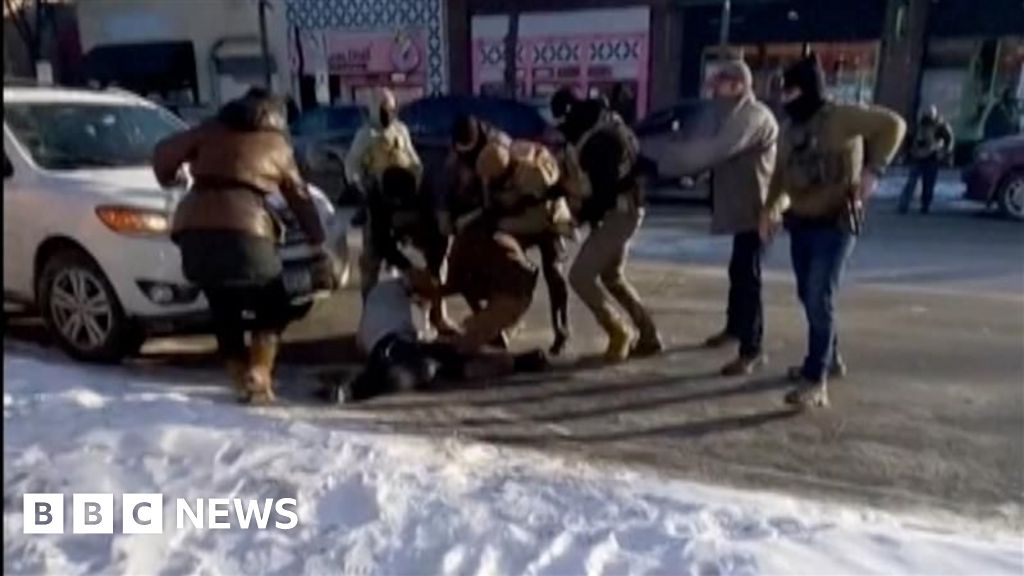
The bystander video, which has been widely circulated and analyzed, reportedly depicts the tense moments preceding the fatal encounter. While the precise visual evidence remains under scrutiny, preliminary reports suggest it offers a crucial, albeit potentially incomplete, perspective on the unfolding events. This footage has become a focal point for both law enforcement agencies and the public, serving as a visual anchor in a rapidly developing and highly charged situation.
At the heart of the controversy lie starkly opposing accounts of what transpired. Homeland Security Secretary Kristi Noem has asserted that federal agents were compelled to fire "defensive shots" after Mr. Pretti "reacted violently." This statement implies that Mr. Pretti posed an immediate and significant threat to the safety of the officers involved, necessitating a lethal response. Secretary Noem’s characterization paints a picture of a dangerous confrontation where officers acted in self-defense, a narrative that aligns with the official protocols for use of force in law enforcement.
However, this official narrative has been vehemently challenged by Minnesota Governor Tim Walz. Governor Walz has publicly denounced the account provided by federal authorities, labeling it as "nonsense" and "lies." This strong repudiation suggests that Governor Walz and his administration have access to information or an interpretation of the events that contradicts the federal version. His forceful rejection of the official explanation points towards a potential cover-up, a misrepresentation of facts, or a fundamental disagreement on the necessity and proportionality of the force used.
The timing of Mr. Pretti’s death is particularly sensitive, occurring less than three weeks after another fatal shooting involving an immigration agent in Minneapolis. American citizen Renee Good was also shot and killed by an immigration agent in the city just a short time prior to this incident. This prior event has undoubtedly heightened public anxiety and distrust surrounding the actions of federal immigration enforcement in the area, creating an environment where any new fatality involving these agencies is met with heightened scrutiny and immediate suspicion. The recurrence of such tragic events within such a short timeframe amplifies concerns about systemic issues and the protocols governing federal immigration operations.
The conflicting statements from Secretary Noem and Governor Walz highlight a deep-seated division between federal and state perspectives on law enforcement and immigration policy. This jurisdictional friction is not uncommon, but in the context of a fatality, it becomes a critical impediment to achieving clarity and justice. The differing interpretations of the events suggest a potential breakdown in communication, a divergence in investigative priorities, or even a deliberate attempt by one party to control the narrative.
The bystander footage, while a key piece of evidence, may also be subject to interpretation. The quality, angle, and duration of the recording could all influence how the events are perceived. Law enforcement agencies often conduct their own internal investigations, which may involve additional evidence such as body-worn cameras, witness testimonies, and forensic analysis, that are not immediately available to the public or even state officials. The ongoing investigation will aim to reconcile these differing accounts by meticulously examining all available evidence.
The case of Alex Pretti raises broader questions about the powers and accountability of federal immigration officers. While these officers are tasked with enforcing federal immigration laws, their actions, especially those resulting in death, are subject to intense public and governmental oversight. The use of deadly force is a grave matter, and any instance of it requires rigorous investigation to ensure it was lawful, justified, and in accordance with departmental policies.
The Minneapolis Police Department, as the local law enforcement agency, is likely involved in the investigation, either leading it or cooperating with federal authorities. The extent of their involvement and their ability to conduct an independent and impartial inquiry will be crucial in determining the truth. The relationship between local and federal law enforcement agencies can be complex, and in situations like this, their collaborative efforts are essential for a comprehensive understanding of the incident.
The public’s right to know and the need for transparency are paramount in cases of this nature. The release of additional information, including the full bystander video, official reports, and potentially body camera footage, will be critical in shaping public opinion and ensuring accountability. However, law enforcement agencies often withhold such information during active investigations to avoid compromising the integrity of the process.
The community of Minneapolis is likely experiencing a range of emotions, from grief and anger to fear and uncertainty. The two recent fatal shootings involving immigration agents could have a chilling effect on community relations and trust in law enforcement. It is imperative that a thorough and impartial investigation be conducted to provide answers to the grieving family of Alex Pretti and to the wider community.
The political ramifications of this incident could also be significant. Governor Walz’s strong stance against the federal account could be interpreted as a challenge to federal authority and a defense of state interests. Secretary Noem’s position, on the other hand, reflects the federal government’s commitment to enforcing immigration laws and protecting its agents. This incident could become a flashpoint in the ongoing national debate about immigration policy and border security.
The legal ramifications are equally important. Depending on the findings of the investigation, there could be criminal charges filed against the officers involved, or civil lawsuits filed by the family of Alex Pretti. The legal system will play a crucial role in determining responsibility and seeking justice for all parties involved.
The ongoing live coverage, as indicated by the BBC link, suggests that this story is developing rapidly and that new information is expected to emerge. The public will be eagerly awaiting further updates, hoping for a resolution that brings clarity, accountability, and a measure of peace to a community grappling with tragedy and controversy. The investigation will undoubtedly be lengthy and complex, requiring careful consideration of all evidence and perspectives. The outcome will have lasting implications for how federal immigration enforcement operates in Minneapolis and potentially across the nation. The pursuit of truth in such sensitive matters is a cornerstone of a just society, and the events surrounding Alex Pretti’s death demand nothing less than a comprehensive and unwavering commitment to uncovering that truth. The bystander footage, while a catalyst, is only one piece of a much larger puzzle that investigators are now tasked with assembling.



 Ramos Leo
 Nakalama John