Roy Suryo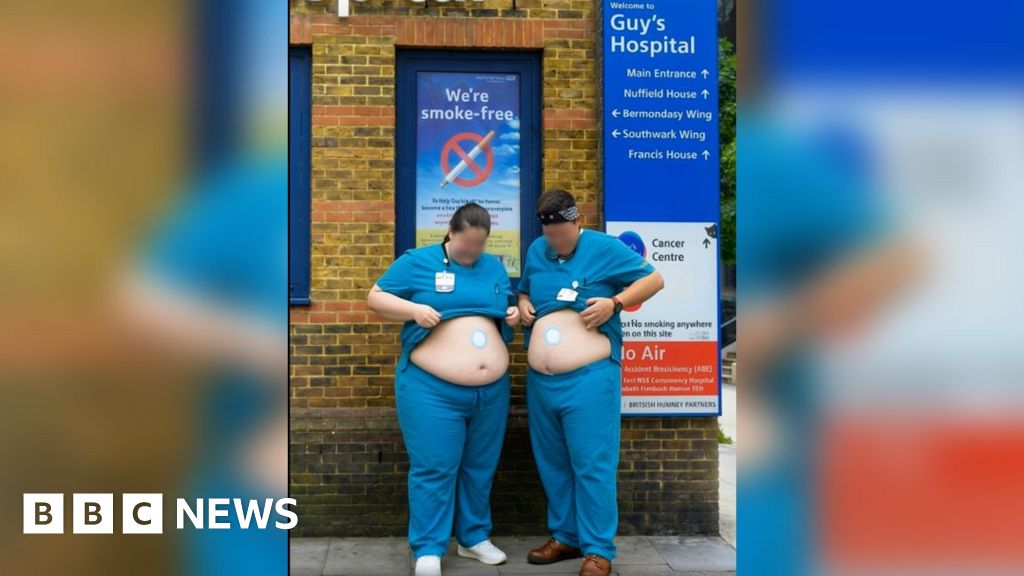
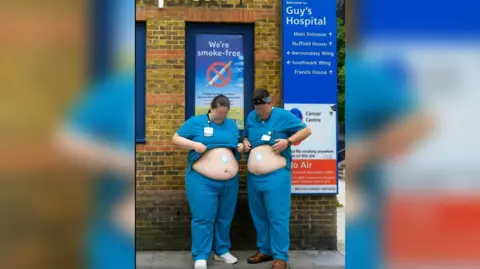
A prominent South London hospital trust has issued an urgent alert to the public after discovering a surge of deceptive online videos featuring what appear to be AI-generated doctors promoting unverified weight loss products. Guy’s and St Thomas’ NHS Foundation Trust has stated that these fraudulent videos, circulating widely on platforms such as Facebook and TikTok, falsely claim that their clinicians are actively using and endorsing these commercial weight loss solutions. The trust has emphasized that the individuals depicted in these videos, who are shown applying weight loss patches and seemingly experiencing significant weight reduction over time, are not affiliated with the hospital and are believed to be entirely fabricated using artificial intelligence technology. The BBC has attempted to contact the company and a purported doctor associated with these products, but has received no response to date.
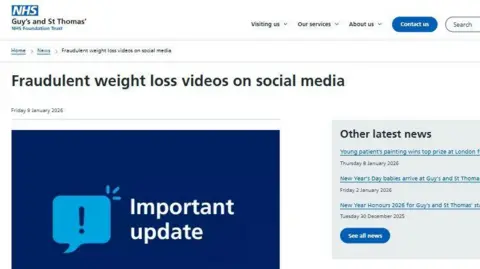
The deceptive nature of these online advertisements has prompted the Trust to take decisive action, including posting a prominent warning on its official website. The alert, displayed in bold lettering, explicitly addresses "Fraudulent weight loss videos on social media," urging the public to exercise extreme caution. Dr. Daghni Rajasingam, Deputy Chief Medical Officer at Guy’s and St Thomas’ NHS Foundation Trust, has confirmed that hospital staff are actively engaged in efforts to have these misleading videos removed from social media platforms. "They are fraudulent and they’re misleading," Dr. Rajasingam stated emphatically to the BBC. "NHS clinicians would never endorse or promote commercial products such as this." She strongly advised the public to seek all health and weight loss advice from reputable and trusted NHS sources, highlighting the increasing sophistication of AI-generated imagery and the potential for it to be used for malicious purposes. "We have to be aware that AI-generated images can be very good," she added, underscoring the need for critical evaluation of online content.
Further investigation into the online campaign has been conducted by Graham Barrow, a financial crime expert and host of The Dark Money Files podcast. Barrow has unequivocally described the advertisements and the social media accounts disseminating the content as "baloney," attributing the motivation behind these schemes to financial gain. He noted that while the advertised weight loss product itself might be obtainable through legitimate online marketplaces, the entire premise of the endorsements is a fabrication. Barrow described the product as a "natural herbal product" but stressed that the true scam lies in the deceptive marketing tactics employed. "The real scam here is it’s really trying to persuade you to buy a product that may or may not work – I don’t know – but everything they’re representing themselves to be – doctors, successful previous dieters – is absolute garbage."
Barrow’s analysis suggests that the allure of weight loss, coupled with the perceived authority of medical professionals, creates a potent combination designed to bypass rational consumer judgment. He explained that scammers exploit the strong desire for weight loss, leading individuals to suspend critical thinking and impulsively purchase products based on emotional appeals. "The point is, the people selling this stuff are trying to bypass your rational response, they want you to really want to buy this stuff because you want to lose weight and it’s so easy when that emotion takes you over to stop thinking clearly and just think ‘oh yeah this is for me,’ and then spend your money," Barrow elaborated. He strongly advocates for consumers to conduct basic due diligence before making any online purchases, especially for health-related products.
In his investigative process, Barrow utilized online tools to scrutinize the Facebook profile of one of the individuals falsely presented as a doctor endorsing the weight loss products. Through an image search, he discovered that the profile photograph was originally from a Romanian bank advertisement, further corroborating the fraudulent nature of the claims. Additional inconsistencies were identified by Barrow, including the claim that the weight loss patches were "made in the UK," while the packaging displayed in the video clearly bore the French flag. Another significant red flag was the composition of the doctor’s Facebook follower base, which consisted entirely of individuals from Vietnam, a detail that Barrow suggests should serve as a clear indicator of a fake account. These cumulative pieces of evidence underscore the elaborate deception being perpetrated.
The creators of these deceptive videos are capitalizing on the rapid advancements in artificial intelligence, particularly in the realm of synthetic media. AI technologies can now generate highly realistic images and videos, creating convincing but entirely fabricated individuals and scenarios. This makes it increasingly challenging for the average consumer to discern between authentic endorsements and sophisticated digital manipulation. The use of AI allows scammers to create a virtually limitless supply of "doctors" and "satisfied customers," each seemingly with their own compelling narrative of transformation, without any actual human involvement or ethical oversight. This technological capability significantly amplifies the potential for widespread deception and exploitation.
The financial crime expert further elaborated on the pervasive nature of such scams, noting that "If there’s a chance to make money out of something, scammers will be the first in the queue to do it – and a big thing like these weight loss drugs is too good an opportunity to miss." This highlights the opportunistic and predatory nature of these operations, which are constantly seeking out lucrative markets to exploit. The weight loss industry, with its vast consumer base and often emotional decision-making processes, presents a particularly fertile ground for such fraudulent activities. The promise of a quick and easy solution to a common personal concern makes individuals more susceptible to persuasive, albeit false, claims.
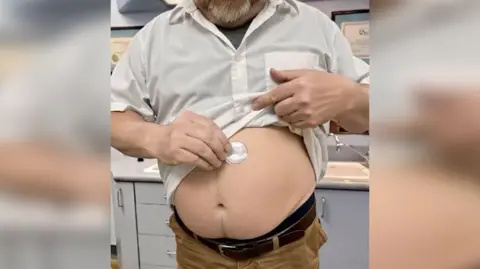
The Guy’s and St Thomas’ NHS Foundation Trust is urging anyone who encounters these fraudulent videos online to report them to the respective social media platforms where they are being shared. This collective effort is crucial in combating the spread of misinformation and protecting the public from falling victim to these deceptive marketing schemes. The trust’s proactive stance and clear warnings are vital in empowering consumers with the knowledge to critically assess online content and prioritize credible health information. The incident serves as a stark reminder of the evolving landscape of online fraud and the importance of digital literacy in safeguarding oneself against such sophisticated deceptions. The Trust reiterates that genuine medical advice and product endorsements from NHS professionals are always provided through official channels and are rooted in evidence-based practice, not in unsubstantiated commercial promotions. The reliance on AI for creating these deceptive endorsements represents a disturbing new frontier in online scams, necessitating a heightened level of vigilance from consumers and a robust response from both regulatory bodies and social media platforms.
Additional reporting by Lotta Haegg.




 George Anjay
 Ramos Leo
 Nakalama John

 atisusanti