George Anjay
US President Donald Trump has announced the existence of a "framework of a future deal with respect to Greenland," a statement that emerged as a surprising development following weeks of escalating tensions, including implicit threats of military action to seize the semi-autonomous territory, a key ally of Denmark and a member of NATO. This intricate geopolitical dance raises critical questions about the potential composition of such a deal, its viability for acceptance by both Denmark and Greenland, and the fundamental question of sovereignty, which both nations have unequivocally stated is non-negotiable.
The announcement of this "framework" was made by President Trump from the World Economic Forum in Davos, Switzerland, a setting that often serves as a stage for significant international pronouncements. "Based upon a very productive meeting that I have had with the Secretary General of NATO, Mark Rutte, we have formed the framework of a future deal with respect to Greenland," he declared via his Truth Social media platform. While the specifics of this framework remain undisclosed, Trump indicated that ongoing discussions are aimed at finalizing an agreement. However, NATO Secretary General Mark Rutte offered a contrasting perspective, stating that the crucial issue of Danish sovereignty over Greenland was not a subject of discussion during his meeting with the US President. Danish Prime Minister Mette Frederiksen reiterated Denmark’s firm stance, asserting that while Danes are open to negotiating various matters, "we cannot negotiate on our sovereignty." Echoing this sentiment, Greenland’s Prime Minister, Jens-Frederik Nielsen, emphatically declared sovereignty as a "red line," adding a significant caveat that he was not privy to the details of the proposed deal.
The scant details available regarding the potential framework suggest a complex and potentially contentious path forward. Anonymous officials, as reported by The New York Times, have alluded to a proposal wherein Denmark might cede sovereignty over specific, limited areas of Greenland, paving the way for the establishment of additional US military bases. This hypothetical arrangement draws a parallel to the status of two military bases in Cyprus, which have remained under British sovereignty since Cyprus gained independence in 1960. The feasibility and acceptance of such a model are questionable, especially given the firm opposition from both Denmark and Greenland to any relinquishment of their sovereign rights. President Trump has previously articulated his rationale for pursuing Greenland by citing concerns about the growing presence of Chinese and Russian vessels in the Arctic region. However, Danish assessments, as reported by Politico, indicate no immediate threat, with Denmark’s Arctic commander refuting claims of imminent danger. In response to these US security concerns, NATO allies have pledged to bolster Arctic security, and Mark Rutte has indicated that this increased contribution will be a component of the framework deal. Rutte expressed confidence in the swift implementation of these security enhancements, hoping for their early finalization in 2026. The United Kingdom’s Foreign Secretary, Yvette Cooper, has also advocated for the establishment of an "Arctic Sentry," a mission envisioned to mirror NATO’s approach to the Baltic Sentry, which focuses on enhanced surveillance of maritime traffic in the Baltic Sea.
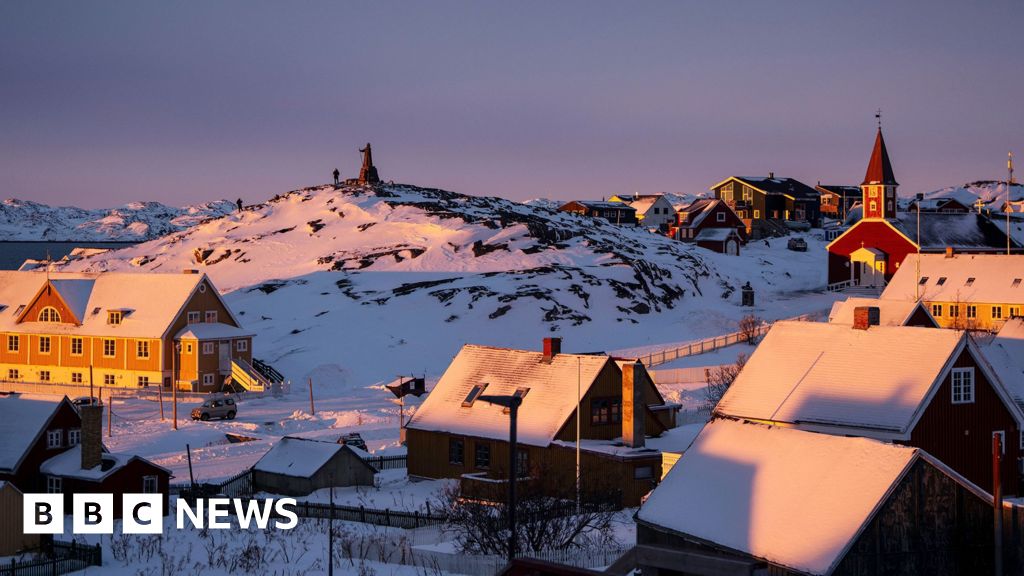
The core of the protracted negotiations appears to revolve around President Trump’s persistent desire to "own" Greenland, a position that transcends mere strategic or economic interests. Under a standing agreement from 1951 with Denmark, the United States already possesses the right to deploy an unlimited number of troops to Greenland and currently maintains a presence of over 100 military personnel at its Pituffik base in the northwestern part of the island. Consequently, discussions may focus on amending this existing defense pact rather than establishing entirely new sovereign arrangements. The constitutional prohibition in Greenland against the sale of land presents a significant legal hurdle to any outright acquisition. The US naval base at Guantánamo Bay in Cuba, operating under a perpetual lease agreement that grants total US control since 1903, offers a potential, albeit controversial, precedent. It remains unclear whether these hypothetical models informed President Trump’s apparent shift at Davos away from the threat of military action towards the pursuit of a negotiated "framework." This de-escalation was a considerable relief to NATO allies, given that the alliance’s founding principle, established in 1949, posits that an attack on one member is an attack on all. Denmark had made it clear that any military aggression by an ally against another would fundamentally undermine the transatlantic alliance, with the US as its principal partner.
The timing of President Trump’s announcement of a "framework" immediately following his meeting with Mark Rutte has, however, sparked concern in Greenland. Some fear that crucial negotiations concerning their future are being conducted in their absence, with their government not directly involved in these high-level discussions. Vivian Motzfeldt, Greenland’s Foreign Minister, stated on Thursday that his government had not authorized any representatives to negotiate on their behalf, but rather to convey "the red lines directly to President Trump." Rutte has not confirmed whether this direct communication occurred. Notably, Rutte has faced criticism for his consistent expressions of praise towards President Trump.
The underlying motivations behind President Trump’s persistent interest in Greenland are multifaceted, encompassing strategic defense initiatives and potential economic gains. Trump has asserted that Greenland’s acquisition is integral to his vision for a "Golden Dome" defense system, designed to shield the United States from missile threats emanating from Russia and China, and has suggested potential co-operation with European allies in this endeavor. Furthermore, Greenland is known to possess vast, largely untapped reserves of rare earth minerals, which are indispensable for the production of critical technologies, including mobile phones and electric vehicles. While President Trump has not explicitly stated that the US is pursuing Greenland for its mineral wealth, he has articulated that US control over the island would "put everybody in a really good position, especially as it pertains to security and to minerals." The geopolitical implications and the potential for resource exploitation, coupled with the strategic importance of the Arctic, appear to be the driving forces behind this complex and ongoing international discussion. The "framework" announced by Trump signifies a potential shift towards diplomatic engagement, but the path forward remains fraught with challenges, particularly concerning the core issue of sovereignty and the differing interpretations of what constitutes a mutually acceptable agreement.



 Ramos Leo
 Nakalama John