George Anjay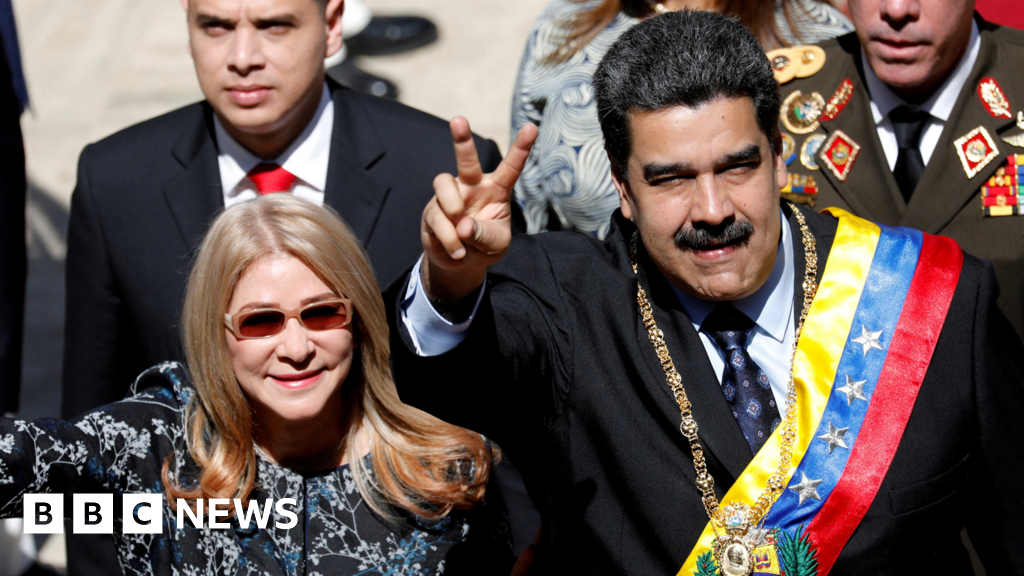
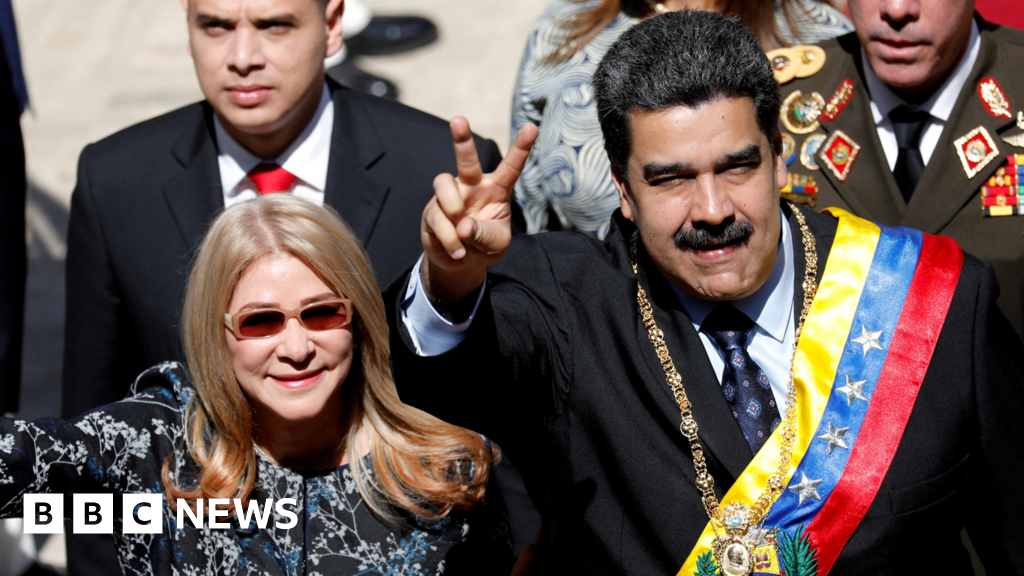
The United States has launched a significant military operation against Venezuela, resulting in the capture of President Nicolas Maduro and his wife, Cilia Flores, US President Donald Trump announced on Saturday. The operation, described by Trump as a "brilliant operation," involved a coordinated effort between the US military and law enforcement agencies. Maduro and Flores have been charged with drug and weapons offenses in New York, with Attorney General Pam Bondi stating they will "soon face the full wrath of American justice on American soil in American courts." The capture follows a period of escalating tensions between the US and Venezuela, marked by US accusations of Maduro’s involvement in drug trafficking and his illegitimacy as a leader, which Maduro has consistently denied, branding them as US intimidation tactics.
The operation, reportedly carried out by the US Army’s elite Delta Force, targeted Maduro at a location described by President Trump as "more like a fortress." Trump recounted to Fox and Friends that US forces were prepared with "massive blowtorches" to breach the defenses, but Maduro was apprehended before reaching the most heavily fortified areas. The President stated that no US forces were killed in the operation, with only a "few" injuries reported, and that he witnessed the entire operation live. According to Trump, Maduro and his wife were en route to New York City by ship following their capture. Further details are anticipated from a press conference scheduled by President Trump at his Mar-a-Lago residence in Florida. Republican Senator Mike Lee, after consulting with US Secretary of State Marco Rubio, indicated that no further military action in Venezuela is anticipated now that Maduro is in US custody, and that the strikes were executed to safeguard those carrying out the arrest warrant.
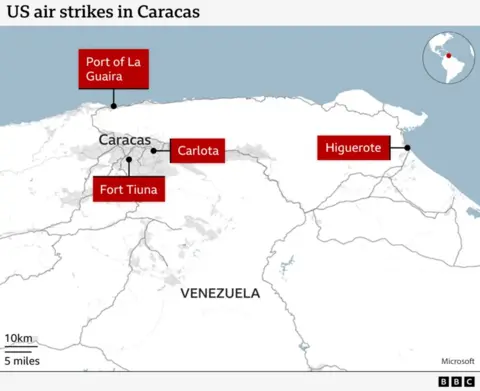
The US strikes were accompanied by reports of explosions across Venezuela’s capital, Caracas, in the early hours of Saturday morning, including at several military bases. Around 02:00 local time (06:00 GMT), loud explosions were heard, and plumes of smoke were observed rising over the city. While videos circulating on social media depict explosions and helicopters, these have not yet been independently verified. The Venezuelan government reported that the states of Miranda, Aragua, and La Guaira were also affected, leading to widespread power outages in surrounding communities. The extent of casualties remains unknown.
BBC Verify is currently analyzing numerous videos showing explosions, fire, and smoke in various locations around Caracas to ascertain the precise sites targeted by the strikes. So far, three locations have been confirmed: Fuerte Tiuna, one of Venezuela’s largest military installations; the Simón Bolívar International Airport (CCS) in Maiquetía, impacting its primary runway; and a naval base in El Palito, Carabobo state, which was reportedly heavily damaged.
President Trump confirmed US involvement in the strikes via his Truth Social platform, stating, "The United States of America has successfully carried out a large scale strike against Venezuela and its leader, President Nicolas Maduro, who has been, along with his wife, captured and flown out of the Country." He further elaborated in a phone call with The New York Times, describing the operation as "brilliant," and later to Fox and Friends, detailing that US forces were prepared for a "second wave" but it was not necessary due to the overwhelming success of the initial assault. Trump revealed he had spoken with Maduro a week prior, urging him to surrender, and noted that Maduro had expressed a desire to negotiate.

The charges against Maduro and his wife, First Lady Cilia Flores, were announced by US Attorney General Pam Bondi, who revealed they have been indicted in the Southern District of New York. The charges include conspiracy to commit narco-terrorism and import cocaine, possession of machine guns and destructive devices, and conspiracy to possess machine guns and destructive devices against the US. The current location of the couple remains undisclosed.
Venezuela’s Vice-President Delcy Rodríguez stated that the government was unaware of Maduro and his wife’s whereabouts and demanded "immediate proof of life." Defense Minister Vladimir Padrino López claimed the strikes hit civilian areas and asserted that Venezuela would "resist" foreign troop presence. The Venezuelan government issued a formal statement denouncing the "extremely serious military aggression" by the US as a violation of Venezuelan territory and its population, an attempt to seize strategic resources, and a threat to international peace and stability.
Nicolás Maduro rose to power under the leadership of Hugo Chávez, succeeding him as president in 2013. He was controversially declared the winner of the 2024 presidential election, despite opposition tallies indicating a landslide victory for candidate Edmundo González. Maduro has been in conflict with the Trump administration over the influx of Venezuelan migrants into the US and the trafficking of drugs, particularly fentanyl and cocaine. The US had previously designated Venezuelan drug gangs, Tren de Aragua and Cartel de los Soles, as Foreign Terrorist Organizations, with allegations that Maduro led the latter. The US had offered a $50 million reward for information leading to Maduro’s arrest. Maduro has consistently denied these accusations, portraying them as a pretext for US intervention to seize Venezuela’s oil reserves. In recent months, US forces have conducted over two dozen strikes in international waters targeting vessels suspected of drug trafficking, resulting in over 100 fatalities.
The news of the strikes elicited strong reactions from Venezuela’s allies. Russia condemned the US action as an "act of armed aggression." Iran’s foreign ministry labeled the strikes a "flagrant violation of the country’s national sovereignty." Colombian President Gustavo Petro decried it as an "assault on the sovereignty" of Latin America, while Cuba’s President Miguel Díaz-Canel described it as a "criminal attack." The EU’s High Representative for Foreign Affairs, Kaja Kallas, reiterated the bloc’s stance on Maduro’s lack of legitimacy but emphasized the need to respect international law. UK Prime Minister Sir Keir Starmer stated he was seeking to "establish facts" and consult with President Trump regarding the rapidly developing situation.

 Ramos Leo
 Roy Suryo
 atisusanti
 Nakalama John