
 Nakalama John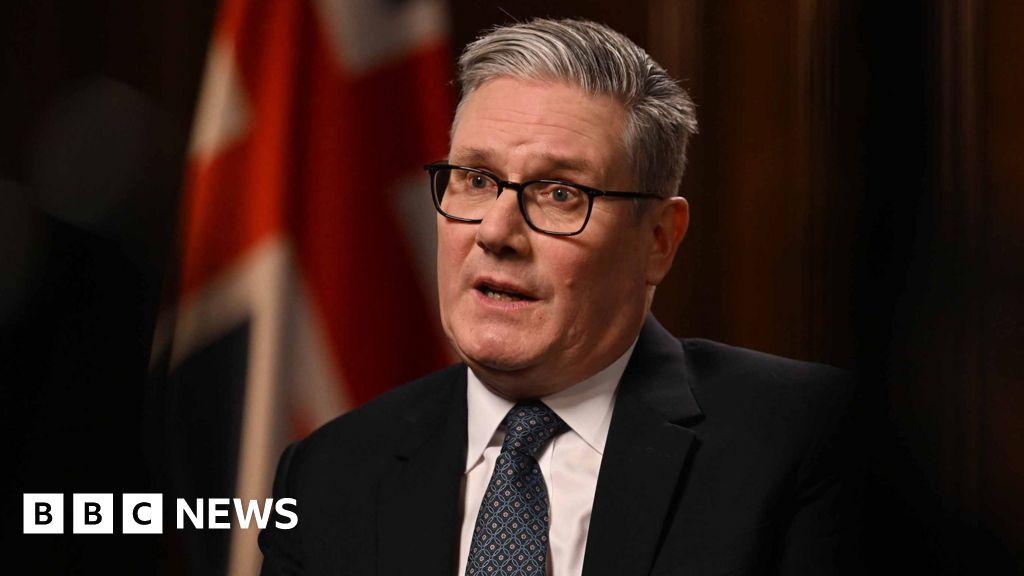
Sir Keir Starmer’s recent, more definitive articulation of Labour’s approach to post-Brexit relations with the European Union marks a significant moment, signalling a strategic recalibration designed to send clear messages to diverse audiences: the UK business community, Brussels, other European capitals, and crucially, his own party’s backbenchers and the broader British electorate. This nuanced stance emerges amidst a wider political landscape where even the sitting Prime Minister, Rishi Sunak, has demonstrated a notable tilt towards considering closer post-Brexit economic relations, proposing an annual bilateral review process rather than confining discussions to a single formal review of the existing UK-EU deal. While the Prime Minister’s move was perceived as Downing Street’s answer to persistent political questions about a more ambitious "Brexit reset," specifically one involving rejoining the customs union, it simultaneously provided the backdrop against which Starmer could sharpen his own party’s vision.
For Starmer, the "shift" lies not in abandoning the ambition for closer ties, but in precisely defining the pathway to achieve them, thereby differentiating Labour’s position. Calls for rejoining the customs union have gained traction from various quarters, including some Labour backbenchers, influential union leaders, and even cabinet ministers within a previous Labour shadow government, echoing sentiment crystallised by Liberal Democrat parliamentary manoeuvres last year that culminated in a non-binding vote. However, Sir Keir Starmer, in a candid interview with Laura Kuenssberg, emphatically clarified that rejoining the customs union is "not the priority at the moment." This definitive statement represents a crucial pivot. He justified this position by highlighting what he considers one of the past year’s successes: the successful negotiation of "best-in-class" trade deals with economic giants like the United States and India, with further agreements anticipated in the Middle East. Rejoining the customs union, he argued, would fundamentally undermine the UK’s ability to forge independent trade agreements, thus negating a perceived benefit of Brexit.
Instead, Starmer’s refined focus is squarely on forging a "closer relationship" with the EU’s single market. This strategy is designed to offer the economic benefits of deeper integration without necessitating the dismantling of the new trade agreements secured elsewhere. "We are better looking to the single market rather than the customs union for our further alignment," Sir Keir stated, providing a clear directional steer for Labour’s future policy. This distinction is critical: while the customs union primarily addresses tariffs and common external trade policy, the single market focuses on the free movement of goods, services, capital, and people, underpinned by regulatory alignment. By prioritising single market alignment in specific sectors, Starmer aims to reduce non-tariff barriers and red tape that have plagued British exporters since the UK formally left both the EU single market and customs union at 11pm on 31 December, 2020.
Boris Johnson’s initial deal, struck upon the UK’s departure, deliberately prioritised "freedom from EU regulations" over "frictionless trade" for British exporters across Europe. This philosophical divergence has had tangible economic consequences. Starmer’s "Brexit reset" directly confronts this by envisaging a pragmatic realignment with EU rules in targeted areas to facilitate the free flow of trade. Specifically, Labour’s plan currently focuses on three key sectors: food and farm exports, electricity, and emissions trading. In these areas, regulatory convergence with EU standards would significantly ease the burden of customs checks, sanitary and phytosanitary controls, and other bureaucratic hurdles that have hampered trade. For instance, aligning on food and farm standards would allow British agricultural products to enter the EU market with far fewer inspections, reducing costs and delays for producers. Similarly, integrating the UK’s electricity grid more seamlessly with Europe’s, and participating in a unified emissions trading scheme, would offer mutual benefits in energy security, efficiency, and climate action.
The economic imperative for such a shift is undeniable. The British Chambers of Commerce (BCC) last month published a comprehensive list of further requests from businesses across various sectors, all aimed at alleviating the post-Brexit red tape that has demonstrably hindered the trade of goods. Their report highlighted a stark reality: a staggering majority of 989 business members surveyed agreed that the current UK-EU trade deal was not effectively supporting sales growth. This widespread sentiment underscores the tangible damage inflicted by new trade barriers and the urgent need for a more practical framework.
Beyond the initial three focus areas, a number of other sectors could realistically benefit from a similar approach – targeted alignment with single market rules in exchange for reducing existing post-Brexit barriers. Manufacturing, a cornerstone of the British economy, could see significant advantages through harmonised standards and certifications, particularly in the automotive industry where complex supply chains crisscross the continent. The chemicals sector, heavily regulated, would also benefit immensely from streamlined processes. Even seemingly minor adjustments, such as harmonising arrangements for Value Added Tax (VAT) on cross-border transactions, could collectively unlock substantial efficiencies and cost savings for businesses of all sizes. This sector-specific approach allows for flexibility, enabling the UK to pick and choose areas of alignment without committing to the full breadth of single market rules, which would inevitably entail adopting EU legal oversight, a red line for many Brexiteers.
From the perspective of European capitals, there has been a palpable sense of disappointment regarding the ambition, or lack thereof, in the UK’s previous "reset" attempts. Last year’s efforts were largely met with an underwhelming response, particularly given the British rejection of proposals, floated by some experts, for the "virtual readmission of British goods" to the single market. Such a concept would have involved the UK effectively mirroring EU product standards and regulations in exchange for frictionless access, a pathway that many in Brussels saw as a pragmatic compromise. The rejection of this idea highlighted the fundamental divergence in priorities between London and Brussels.
While discussions on electricity and food/farm standards are ongoing, their specific arrangements have yet to be finalised. Other areas of potential cooperation have also faced hurdles. A plan for UK manufacturers to participate in the €150bn (£131bn) Security Action For Europe defence loan fund, for instance, has stalled due to objections from France regarding the size of the UK’s proposed membership fee. This impasse is particularly notable given that Canada, a non-EU nation, has successfully joined the scheme, underscoring the complexities of post-Brexit relations. Despite these challenges, there have been some positive breakthroughs, notably the UK’s agreement to rejoin the Erasmus university exchange programme and further negotiations on a youth jobs scheme. These successes, while specific, have been instrumental in clearing the political air and creating a more conducive environment for broader UK-EU discussions.
The context for Starmer’s refined position is not solely domestic or bilateral; it is deeply intertwined with evolving geopolitics. The publication of the US National Security Strategy (NSS) last month has, according to some UK insiders, significantly altered the landscape of UK relations with Europe. The NSS, in a contentious passage, stated that the US would "cultivate resistance to Europe’s current trajectory within European nations" and explicitly praised the "growing influence of patriotic European parties." This statement, interpreted by some as encouraging Eurosceptic or nationalist movements within the EU, has added a layer of complexity to the UK’s strategic calculations. In Downing Street, there is a growing recognition that even the rapidly changing global order has shifted once more, demanding a re-evaluation of alliances and priorities. For Starmer, this geopolitical backdrop likely reinforces the need for a stable, predictable, and economically robust relationship with the EU, positioning the UK as a reliable partner rather than an outlier.
Domestically, Labour faces increasing pressure from electoral rivals. The party expects to be outflanked on the Brexit issue not only by the Liberal Democrats, who advocate for a much closer relationship with the EU, but also by the Green Party, which is increasingly targeting Labour’s traditional heartlands, particularly in council elections in May. This competitive environment forces Starmer to articulate a Brexit strategy that is both economically credible and politically palatable, appealing to segments of the electorate who feel let down by the current arrangements without alienating those who voted for Brexit. His nuanced approach aims to thread this difficult needle, offering pragmatic solutions while maintaining the UK’s sovereign decision-making capacity.
Ultimately, the Prime Minister’s public statements and Starmer’s more detailed "Brexit reset" are both products of a powerful confluence of economics, politics, and geopolitics. As the UK embarks on a year that will mark the tenth anniversary of the Brexit referendum, the debate over its relationship with Europe remains central to its future prosperity and international standing. Starmer’s notable shift, therefore, represents a strategic attempt to navigate these complex currents, seeking to define a pathway that can deliver tangible economic benefits while reconciling the deep political divisions that Brexit continues to engender.



 Ramos Leo
 atisusanti
 George Anjay

 Roy Suryo